
By Bosphorus News Türkiye Desk
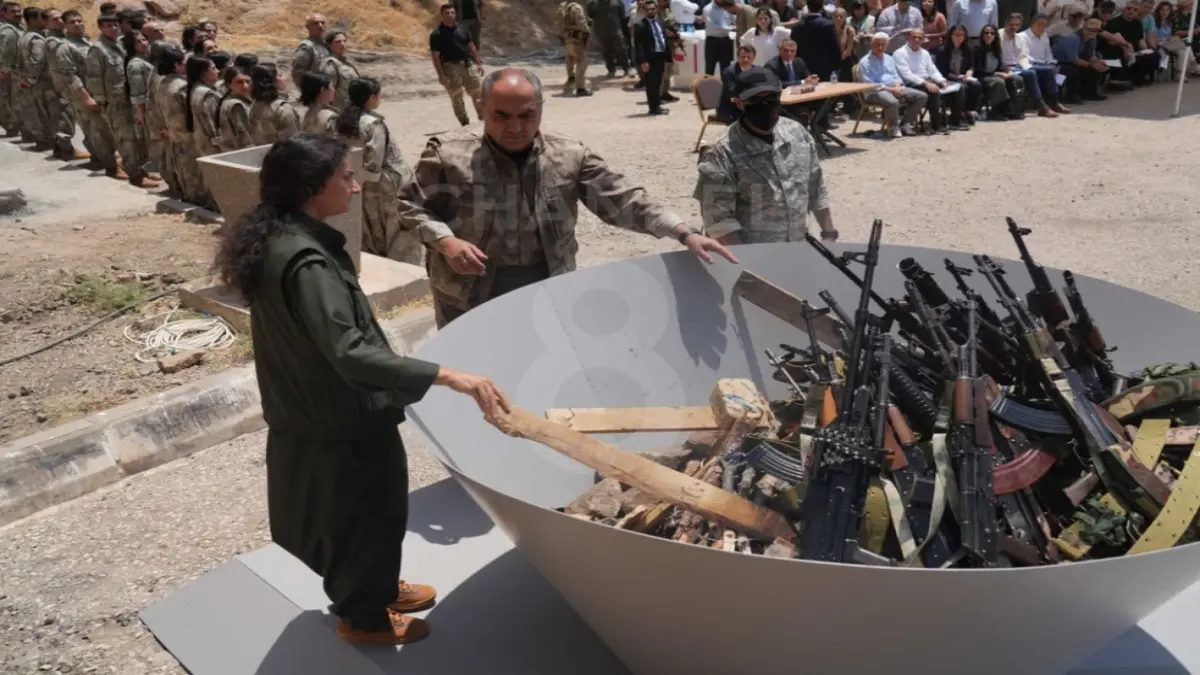
Türkiye is preparing a possible legal framework to monitor the PKK's disarmament process and manage the return of former militants into civilian life, according to reports first carried by Turkish media on May 11 and later followed by Kurdish and opposition outlets.
The reported draft, described by Haberler.com reporter Şerife Güzel as the "Toplumsal Bütünleşme ve Milli Dayanışma Kanun Teklifi", would create a Toplumsal Bütünleşme İzleme ve Koordinasyon Kurulu, or Social Integration Monitoring and Coordination Board, to oversee the process.
The proposal has not yet appeared as an official bill in the Grand National Assembly of Türkiye, Türkiye's parliament. The measure should therefore be treated as a reported draft under preparation, not as legislation already submitted to parliament.
According to Haberler.com, the planned board would include representatives from the National Intelligence Organization, the Interior Ministry, the National Defence Ministry, the Justice Ministry, the Family and Social Services Ministry, the Labour and Social Security Ministry and the Health Ministry.
The same reporting says the board would follow the disarmament process through objective, measurable and verifiable criteria, while also coordinating social integration work for those leaving the armed structure. BirGün also carried the report on May 12, giving the claim wider political visibility beyond pro-government media.
The story was also picked up by Kurdistan24, which framed the reported draft as a new step in Türkiye's effort to oversee PKK disarmament and reintegration. Several regional outlets, including Van-based and southeastern Turkish local media, carried similar versions of the report.
The official basis for such a move already exists in parliament's own work. The Grand National Assembly of Türkiye's Millî Dayanışma, Kardeşlik ve Demokrasi Komisyonu, or National Solidarity, Brotherhood and Democracy Commission, said in its final report that a specific, temporary and legally defined arrangement was needed to manage the disarmament process and its aftermath.
The commission report also recommended a framework broad enough to support democratic politics, social integration and institutional oversight after the weapons phase. It placed the process under a legal and parliamentary lens rather than leaving it only to security channels.
The regional timing is important. President Recep Tayyip Erdoğan met Iraqi Kurdish Regional Government Prime Minister Masrour Barzani in Istanbul on May 9. In the official Presidency statement, Erdoğan said Türkiye was determined to bring the "Terörsüz Türkiye," or "Terror-Free Türkiye," process to a successful conclusion and wanted stability both inside Türkiye and in neighbouring countries.
The May 9 meeting also came as Ankara and Erbil have been trying to rebuild a wider cooperation agenda around energy security, oil flows and Iraq's internal stability. Bosphorus News recently examined that agenda in the context of Barzani's talks in Türkiye, Ceyhan oil flows and regional security calculations, a backdrop that gives the reported disarmament mechanism a broader Iraq-facing dimension.
The reported draft does not by itself confirm a final government decision. It does, however, indicate that Ankara may be moving from political messaging toward a more formal mechanism built around verification, interagency coordination and controlled reintegration.
A legal framework could give the process a measurable structure, while also opening new political arguments over amnesty boundaries, judicial accountability, parliamentary oversight and the treatment of former militants.
Until an official bill is submitted, the safest reading is that Türkiye's disarmament file has entered a preparatory legislative phase. The strongest confirmed point is no longer only the political language around "Terror-Free Türkiye," but the parliamentary groundwork for turning that language into a managed institutional process.
***Sources and credit: This article is based on reporting by Haberler.com, Kurdistan24, BirGün, regional Turkish outlets, the Grand National Assembly of Türkiye Commission report, Bopshorus News reporting and the Presidency's May 9 statement
.