
By Bosphorus News Defense Desk
Türkiye is moving to deepen its defence relationship with Brazil after a key parliamentary step on April 27, 2026, when a commission in Ankara approved a bilateral defence cooperation agreement originally signed in Brasília on March 25, 2022. The dual-track process combines a government-level framework with an expanding industrial partnership, opening the way for joint production of unmanned aerial systems and broader access to Latin America's largest defence market.
The intergovernmental agreement establishes a framework for joint research and development, production, technology transfer and exports to third countries. It targets Brazil's defence market, estimated at around $25 billion annually, the largest in Latin America, while creating a formal mechanism for sustained bilateral cooperation.
A joint commission bringing together Türkiye's Presidency of Defence Industries and Brazil's Ministry of Defence is expected to coordinate implementation, providing a structured channel to translate the agreement into concrete programmes.
Alongside the political framework, a parallel industrial track is taking shape through cooperation between Turkish Aerospace Industries and Brazil's Embraer, with aerospace firm Akaer also involved. Memorandums of understanding signed since 2025 are designed to explore joint development and production across civilian and military aviation sectors.
At the centre of the defence dimension are discussions over the joint production of Türkiye's ANKA and AKSUNGUR unmanned aerial systems. The platforms are being assessed for adaptation to Brazilian operational requirements, with talks focused on local production, customisation and technology sharing rather than direct procurement.
The Embraer link moves the cooperation beyond a conventional defence sale. It connects Türkiye's UAV ecosystem with one of the world's established aerospace manufacturers, creating a pathway for co-development and integration into wider aviation supply chains.
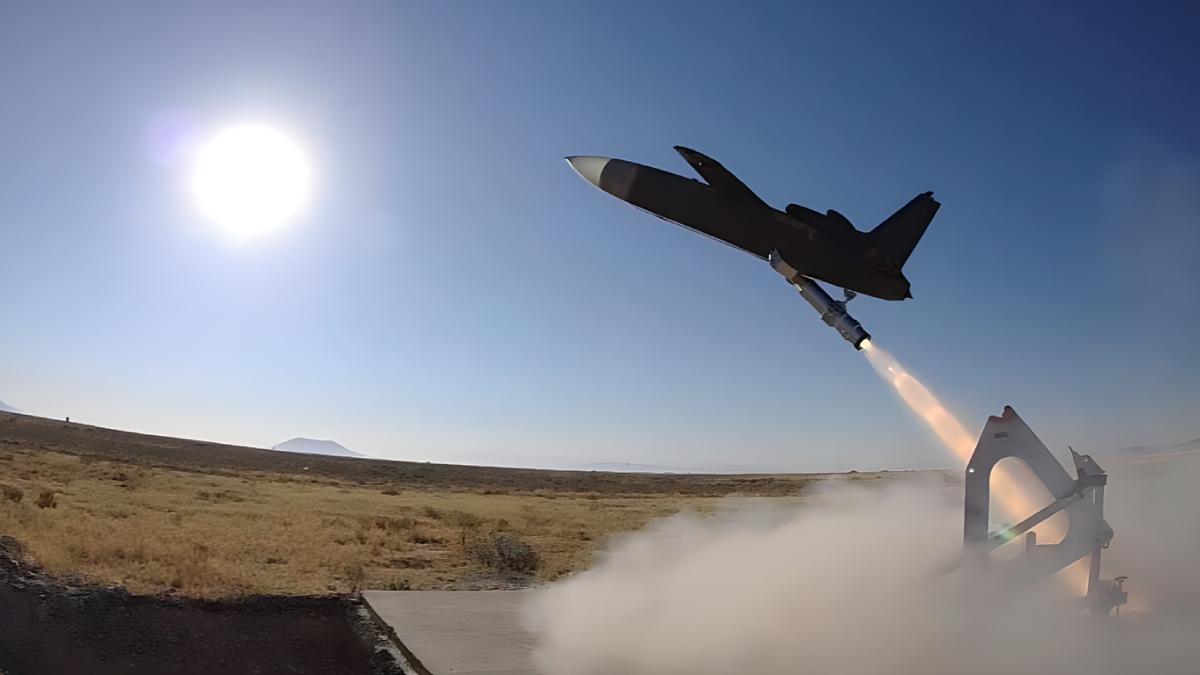
That industrial base is becoming more advanced. As detailed in Bosphorus News coverage of the ANKA III stealth UAV's successful autopilot tests, Türkiye's aerospace industry is moving deeper into autonomous systems, low-observable platforms and unmanned combat aircraft technologies. These capabilities give the Türkiye–Brazil track more weight than a standard export agreement.
Additional industry contacts reinforce the broader scope of the relationship. Turkish defence firms including Roketsan and Baykar are engaged in parallel discussions with Brazilian counterparts on product sales, co-production and technology transfer, while earlier deals have already covered engines, munitions and land systems.
The agreement's third-country export provisions could turn Brazil into a regional platform for Turkish defence products. This would give Ankara a stronger entry point into Latin American markets where governments are seeking cost-effective systems, flexible industrial terms and alternatives to traditional Western suppliers.
The Brazil track reflects a wider shift in Türkiye's defence export model. Ankara is moving beyond direct platform sales toward localisation, joint production and long-term industrial partnerships in markets where domestic defence industries already have depth.