
By Bosphorus News Geopolitics Desk | April 30, 2026 | World
A reported Indian interest in the Greek port of Alexandroupoli has opened a new layer in the Eastern Mediterranean's shifting strategic map, linking New Delhi's expanding defence and maritime cooperation with Greece and Cyprus to a logistics hub already central to NATO movement, energy routes and Black Sea access.
Greek City Times reported on April 28 that the Greek government is in talks with an Indian company over the possible acquisition of Alexandroupoli port. The report has not been confirmed by the Greek government or Indian authorities, but the timing is significant. Alexandroupoli has become one of the most sensitive infrastructure nodes in northern Greece, connecting the Aegean Sea to the Balkans, the Black Sea region and NATO's eastern flank.
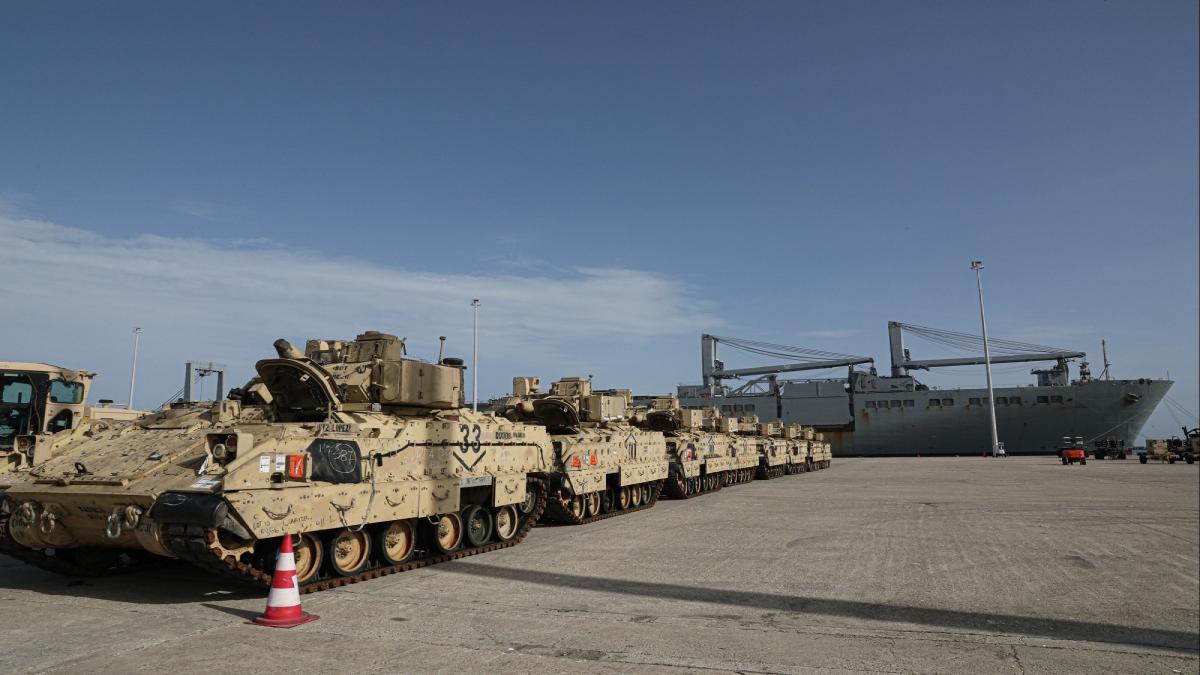
The port's strategic value has grown sharply since Russia's full-scale invasion of Ukraine. It has been used for the movement of military equipment, allied logistics and energy infrastructure tied to efforts to reduce regional dependence on Russian routes. Any Indian role in Alexandroupoli would therefore carry implications beyond commercial port management.
The report also fits a wider pattern. India and Greece have been moving their relationship from diplomacy into defence industry, maritime security and logistics cooperation. Bosphorus News previously reported that the two countries approved a 2026 defence industrial cooperation roadmap, covering shipbuilding, aerial platforms, electronics, cyber technologies and advanced defence systems.
That roadmap was followed by a separate maritime track. As Bosphorus News detailed in its coverage of the inaugural India-Greece Maritime Security Dialogue, the two sides discussed maritime domain awareness, port connectivity, sea lanes of communication and cooperation linking the Indian Ocean and the Mediterranean.
Alexandroupoli would give that track a harder geographic anchor. It would place India's Mediterranean outreach near a port that serves not only Greece's northern infrastructure network but also NATO's military mobility architecture. The port sits close to Bulgaria and Türkiye, with access routes leading toward the Black Sea and southeastern Europe.
Cyprus adds another layer to the same corridor. During Prime Minister Narendra Modi's June 2025 visit to Cyprus, India and Cyprus moved to deepen defence, maritime and cybersecurity cooperation. The two sides discussed more frequent Indian naval visits, joint training and search-and-rescue cooperation, while Cyprus promoted itself as a gateway for Indian access to Europe and the India-Middle East-Europe Economic Corridor.
The Cyprus Defence Ministry pushed the relationship further in March 2026, describing the Cyprus-India partnership as entering a "new strategic phase." The ministry linked the relationship to defence industry, maritime security, artificial intelligence, quantum technologies, space applications and Cyprus's role as a bridge between India and Europe.
The naval dimension is no longer theoretical. In September 2025, India and Greece held a maiden bilateral naval exercise involving INS Trikand, with activity linked to Salamis Naval Base and the Mediterranean. The same Indian warship then moved to Limassol, where India and Cyprus advanced their own naval engagement in the Eastern Mediterranean.
This creates a more coherent picture. India's regional posture is not limited to trade corridor language or diplomatic visits. It is moving through defence roadmaps, maritime dialogues, naval exercises, port connectivity and Cyprus-based strategic access. Greece and Cyprus are becoming the two principal entry points for that movement.
The India-Middle East-Europe Economic Corridor gives the story its wider frame. IMEC has often been presented as a connectivity project linking India, the Gulf, Israel and Europe. In practice, the corridor is acquiring a security and logistics dimension, especially as Greece and Cyprus seek larger roles in energy, maritime security and European access routes.
Türkiye sits directly beside that emerging architecture. Ankara is not formally part of IMEC and has repeatedly promoted alternative connectivity routes through its own territory, including land and rail corridors linking Europe, the Middle East and the Gulf. A stronger India-Greece-Cyprus track would therefore intersect with Türkiye's existing role as a transit state, maritime actor and NATO member on the alliance's southeastern edge.
The issue also carries a South Asian layer. India's closer defence and maritime engagement with Greece and Cyprus comes as Türkiye maintains close strategic ties with Pakistan. That does not make Alexandroupoli an anti-Türkiye project by itself, but it gives the reported Indian interest a sharper geopolitical context.
If confirmed, an Indian move into Alexandroupoli would mark more than a commercial foothold. It would anchor New Delhi inside a Greece-Cyprus security and logistics track that is steadily expanding across the Eastern Mediterranean. Türkiye would face a corridor taking shape along its western and southern periphery, linking maritime security, defence cooperation and energy routes in ways Ankara cannot ignore anymore.