
By Bosphorus News Türkiye Desk
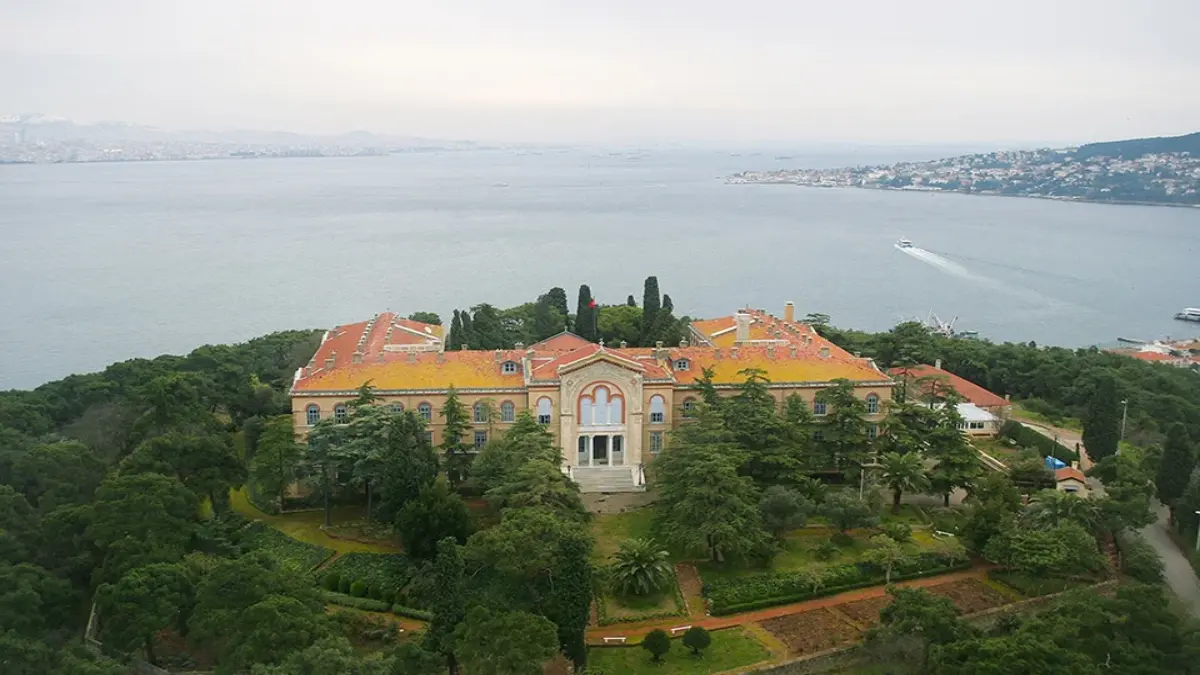
Patriarch Bartholomew I made the announcement in Athens on 10 May during a fundraising event at the Basil and Elise Goulandris Foundation Museum of Contemporary Art. "In the coming months, the extensive renovation works on the school's building complex will be completed, and, God willing, we shall celebrate its inauguration this coming September," Bartholomew said.
The remarks came two days after a meeting with Greek Prime Minister Kyriakos Mitsotakis at the Maximos Mansion on 8 May. Mitsotakis said at that meeting: "The positive news you have brought us regarding the reopening of the Halki Theological School is extremely important. I know this has been a long-standing aspiration of yours."
What the Patriarchate Confirmed
The announcement was widely read as a signal that the school would resume classes. The patriarchate moved to narrow that interpretation the same day.
Nikos Papachristou, a spokesman for the Istanbul-based Ecumenical Patriarchate of Constantinople, told Agence France-Presse: "What he said in Athens is that we are expecting that the renovation will be finished by September, so at the end of September, he will be able to inaugurate the renovated building. He is always expressing the wish that it would be a nice coincidence if, when he inaugurates the renovated building, the licence for reopening the school will come."
Papachristou confirmed there are no immediate plans to restart teaching.
The Legal Obstacle
The Halki Seminary has been closed since 1971, when Türkiye's Constitutional Court upheld legislation placing all private higher education institutions under state supervision. The Ecumenical Patriarchate, which trains Orthodox clergy, refused to place the school under state control and was forced to close its theological faculty.
Reopening the school would require new legislation or a specific legal carve-out. Bishop Kassianos of Aravissos, who oversees the site, has said talks are ongoing with Türkiye's Council of Higher Education, known as YÖK, on possible frameworks. Three models are under discussion: a theology faculty inside a foundation university, an institute affiliated with a state university, or a limited-enrolment institution with a special status allowing theological training under public oversight.
The school, founded in 1844 and located on Heybeliada, one of the Princes' Islands near Istanbul, educated 990 graduates over 127 years of operation, including 12 patriarchs. Patriarch Bartholomew himself studied there.
The Diplomatic Chain
The issue entered the highest levels of bilateral diplomacy in September 2025, when Bartholomew met US President Donald Trump at the White House. Trump pledged support for the seminary's reopening. Days later, President Recep Tayyip Erdogan spoke with Trump and said: "We are ready to do whatever falls upon us regarding the seminary in Heybeliada."
US Ambassador to Ankara Tom Barrack subsequently named September 2026 as a target date, telling a Greek television journalist: "This matter is of high importance for both President Trump and President Erdogan. We are evaluating what we can do to facilitate, accelerate, and support the talks."
The renovation works have been privately funded by Greek shipping magnate Athanasios Martinos.
Resistance and Conditions
Nationalist opposition in Türkiye has pushed back against any framework that would allow the school to operate independently of YÖK. Umit Ozdag, leader of the Victory Party, said reopening the seminary outside the YÖK structure "would mark the first step toward recognising the Ecumenical Patriarchate," a move he characterised as a concession to US pressure.
Ankara has also signalled that progress on the seminary may be linked to reciprocal steps by Greece. Turkish officials have pointed to the status of Muslim minorities in Western Thrace, including the right to elect muftis, and the opening of a mosque in Athens as relevant factors.
September's Significance
The September inauguration, if it proceeds, would formally mark the completion of a multiyear restoration and place the building back in public view as an active site. Whether a teaching licence follows, and on what legal basis, remains a political decision Ankara has not publicly committed to.
The patriarchate's announcement lands in the same week that Türkiye presented a draft maritime law seeking to codify its Aegean and Eastern Mediterranean sea-zone claims into domestic legislation. The two developments reflect the range of open issues Ankara is managing with Athens and with Western partners simultaneously.