
By Bosphorus News Geopolitics Desk
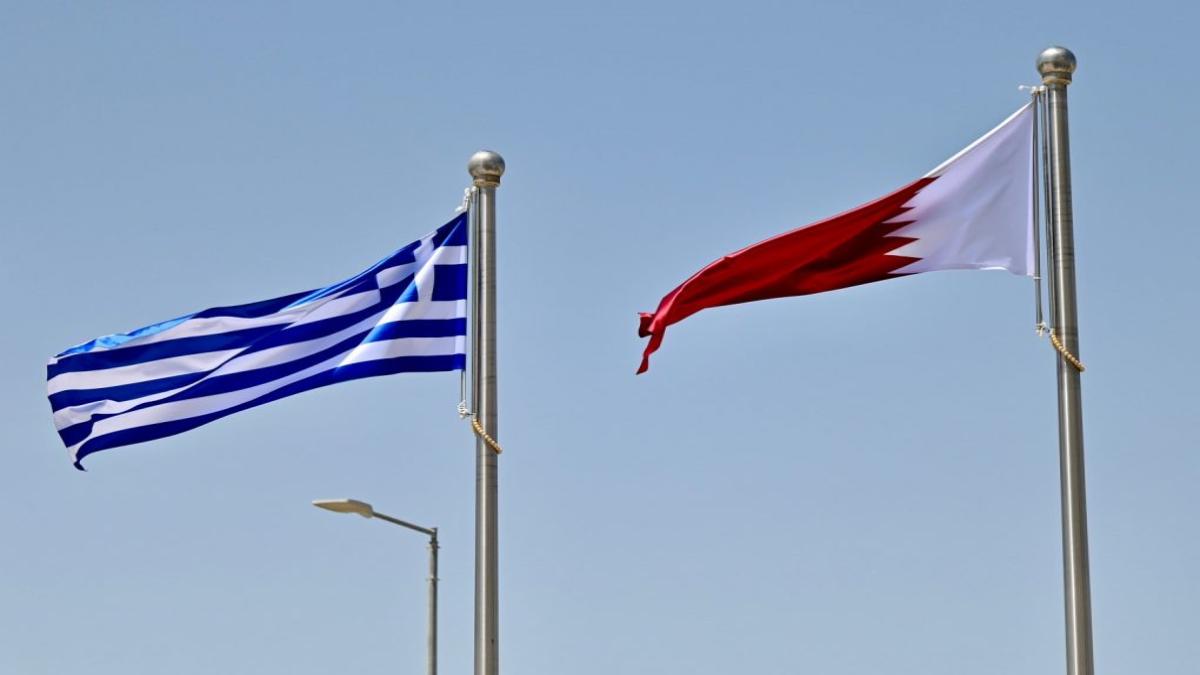
Greece has moved to expand its partnership with Qatar across energy, defence, infrastructure and data investment, positioning the Gulf state as a key partner in its broader Eastern Mediterranean strategy.
The agreements, confirmed this week, reflect a wider shift. Gulf capital is no longer entering the region as passive investment. It is aligning with infrastructure, energy and security frameworks that carry geopolitical weight.
Athens is using that alignment to support several objectives at once. Energy cooperation with Qatar strengthens Greece's role in Europe's supply diversification efforts, while defence and infrastructure ties expand its claim to be a regional connector between the Gulf and European markets.
The move comes as Greece accelerates its engagement with Gulf actors more broadly. In recent years, this has expanded beyond economic cooperation into the security domain.
Greece's role in Gulf security is no longer theoretical. Greek-operated Patriot air defence systems deployed in Saudi Arabia have intercepted Iranian missiles and drones targeting energy infrastructure during recent escalation cycles, placing Athens directly inside the protection architecture of Gulf energy assets.
This marks a structural shift. Greece is not only building partnerships with Gulf states, but actively contributing to the defence of critical infrastructure under real conflict conditions.
That operational presence adds weight to Athens' expanding cooperation with Qatar. Defence agreements are no longer limited to procurement or training frameworks. They are now backed by demonstrated deployment and integration into regional security systems.
The development is strategically notable when viewed alongside Türkiye's existing position.
President Recep Tayyip Erdoğan has repeatedly described Qatar as a "brotherly country," a formulation that reflects sustained political alignment and deep institutional ties. The relationship extends across defence cooperation, joint force presence and long-term financial integration, giving Türkiye a level of access to Gulf capital and security coordination that operates beyond project-based partnerships.
This creates an asymmetry. Greece is building targeted cooperation with Qatar across energy, defence and infrastructure. Türkiye is already embedded in a broader Gulf economic and security network.
As Bosphorus News has reported in its analysis of Türkiye's expanding energy and security footprint, Ankara's regional reach is not limited to bilateral agreements. It extends into a wider strategic geography linking Africa, the Middle East and maritime energy routes.
Greece and Türkiye are also competing across the Libyan file, where energy, maritime jurisdiction and military access remain closely linked. Ankara has built its position through defence cooperation and maritime agreements with Tripoli, while Athens has sought to counter that influence through diplomatic engagement and alternative energy alignments in the Eastern Mediterranean.
At the same time, Greece's outreach reflects a parallel effort to anchor Gulf partnerships within European-facing projects. Energy cooperation, data infrastructure and defence ties are being positioned to support Athens' role in emerging supply and connectivity frameworks.
The overlap is becoming harder to ignore. Gulf security, energy routes, Libya and Eastern Mediterranean positioning are now intersecting in ways that directly involve both Türkiye and Greece.
Ankara has not publicly framed Greece's Gulf engagement as a challenge. But the convergence of interests suggests a quiet strategic competition is taking shape beneath the surface, driven less by rhetoric than by geography, capital flows and operational presence.