
By Bosphorus News Energy Desk
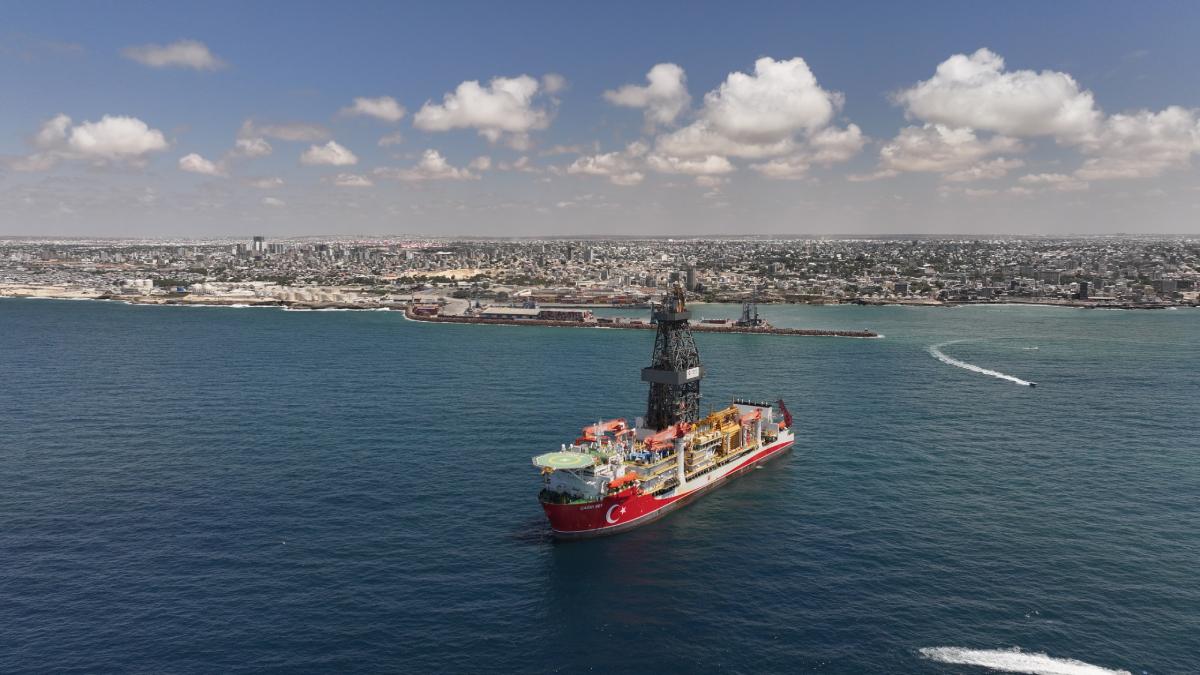
Türkiye has moved into the offshore drilling phase in Somalia, the Energy and Natural Resources Ministry said on April 8, marking the start of its first deep-sea exploration operation abroad and opening a new stage in its overseas energy strategy.
The drillship Çağrı Bey reached Somali waters after a 53-day voyage and is expected to begin drilling within days at the CURAD-1 well, located about 372 kilometres offshore from Mogadishu. Operations will take place in water depths of 3,495 metres, with drilling extending a further 4,005 metres below the seabed to a total target depth of 7,500 metres. The campaign is expected to last around 288 days and will involve the use of a deep-sea remotely operated vehicle.
The move follows a formal reception in Mogadishu and marks the transition from exploration planning to active drilling.
The operation rests on a security and maritime framework already in place. Turkish naval vessels were deployed to Somalia in February under a defined mandate linked to maritime security and offshore activity, with multiple platforms assigned to operate across the Gulf of Aden and the Arabian Sea in support of exploration zones, as detailed in Bosphorus News reporting on the naval task group deployment.
The drilling phase builds on a broader expansion of Türkiye's footprint in Somalia. In recent months, cooperation has widened to include a maritime agreement covering ports and transport, a naval mission tasked with protecting offshore assets, and reinforced air and ground support linked to security operations, reflecting a deepening Turkish role on the ground, as outlined in our earlier coverage of Türkiye's expanding security and maritime role in Somalia.
Somali officials have described the development as a major step in unlocking offshore energy potential, while Turkish authorities frame the project as part of a longer-term partnership that extends beyond energy into maritime governance and security coordination.
The Somalia operation reflects a wider Turkish approach in Africa that combines diplomacy, commercial activity, security cooperation and soft power into a structured operational model, a pattern explored in Bosphorus News analysis on Türkiye's expanding footprint in Africa.
Somalia is emerging as one of the clearest examples of that model in practice, where offshore energy ambitions are directly linked to maritime security arrangements and sustained bilateral engagement.