
By Bosphorus News Staff
TRNC President Tufan Erhürman met UN Secretary-General António Guterres in New York on 11 February 2026, describing the encounter as constructive and highlighting the UN chief's pledge of closer engagement on the Cyprus file.
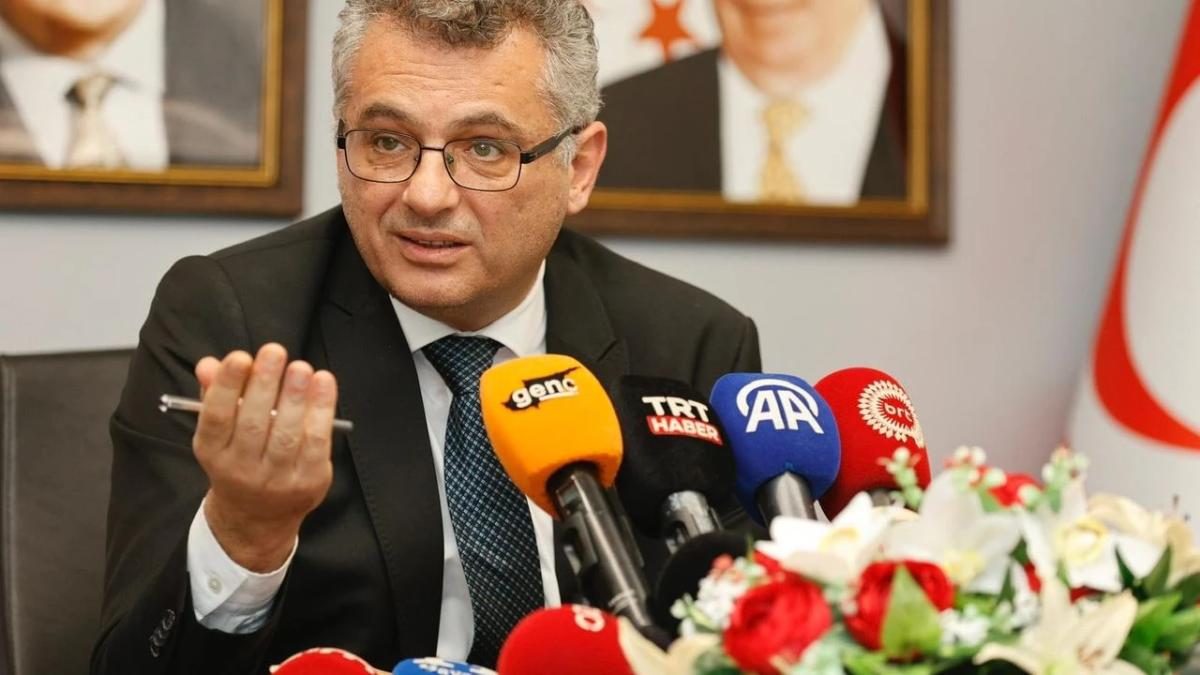
Speaking after returning to the island and addressing reporters at Ercan Airport, Erhürman said the meeting lasted approximately one hour and 10 minutes and marked his first face-to-face discussion with Guterres. He noted that the Secretary-General responded swiftly to his request for an early appointment following his election.
The New York visit came against the backdrop of clear pre-conditions set by Erhürman before departing for the United States. As Bosphorus News previously reported, ahead of his trip he had warned against what he described as "negotiation for the sake of negotiation," insisting that any renewed Cyprus talks must be structured, rules-based and aimed at a binding outcome.
"We do not want negotiations merely for the sake of negotiating; we want negotiations aimed at reaching a solution," Erhürman had said days before traveling to New York, stressing that dialogue has value only if it is designed to conclude.
In his remarks after meeting Guterres, Erhürman reiterated that he conveyed "our people's will for a solution" directly to the UN chief, alongside a structured methodology his team has outlined publicly since before the election campaign. He said the positions were clearly understood by the Secretary-General.
A central pillar of Erhürman's approach remains political equality, which he frames not as a distant objective but as a starting condition. Referring specifically to rotating presidency and shared authority arrangements, he stated that "without clarifying fundamental headings such as rotating presidency, it is not possible to move to the second stage."
He argued that past processes failed because political equality was treated symbolically while shared authority mechanisms remained unresolved. "These shared authority areas were taken from us. They must be exercised jointly, on the basis of political equality," he has said in previous remarks.
Erhürman also addressed what he sees as a structural erosion of trust. He said that since 2017, the prolonged absence of substantive negotiations created a vacuum that "weakened trust" between the sides. In addition, he pointed to recent security and energy arrangements undertaken by the Greek Cypriot administration with third countries, arguing that such moves deepen the trust deficit and directly affect areas tied to Turkish Cypriots' rights, including maritime jurisdictions, hydrocarbons and broader security architecture.
At the UN level, Erhürman indicated that Guterres emphasized that a Cyprus settlement would contribute not only to stability on the island but also to regional peace. According to Erhürman, the Secretary-General concluded by saying the two sides would remain in "much more frequent contact," which the TRNC leader described as a meaningful signal of continued UN engagement.
Despite his criticism of past formats, Erhürman has drawn a distinction between rejecting unproductive negotiation models and withdrawing from diplomacy. "We will not walk away from the table," he has previously stated, while insisting that the process must not normalize stalemate.
The New York meeting, in Erhürman's framing, was therefore less about reopening talks immediately and more about establishing clarity on method and sequencing. Whether that structured approach gains traction in the coming weeks will shape the next phase of the Cyprus file.