
By Murat YILDIZ
In Greek diplomacy, absence is rarely accidental.
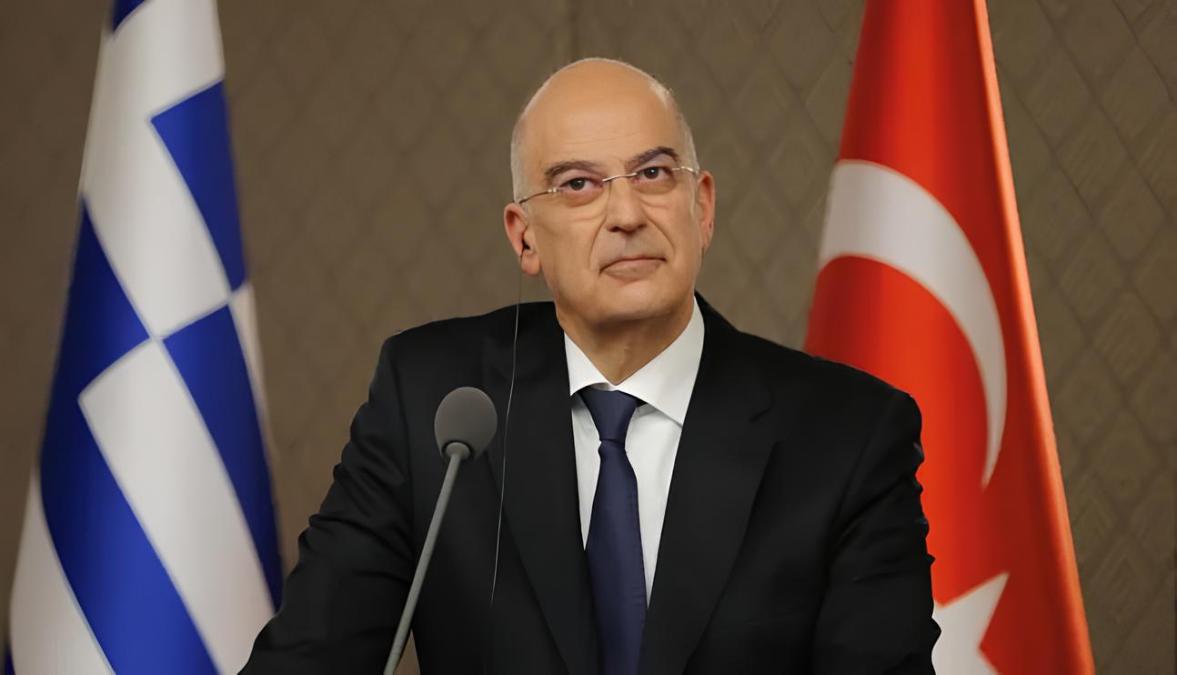
Whether Greek Defence Minister Nikos Dendias attends a meeting in Ankara is not the real story. The story is what his absence is meant to signal.
The official explanation is a scheduling clash with an EU defence ministers' meeting in Brussels. It may be true. It is not the point.
In Athens and Ankara, the episode is read as boundary setting.
Dialogue, on Dendias's Terms
Greece says dialogue continues. Türkiye says the same. Dendias has never treated the word as a substitute for substance.
He made that clear in Ankara in April 2021, standing beside Mevlüt Çavuşoğlu during a live press conference. "If you expected me not to say these things here, in Ankara, I would be surprised," he said. The line was simple. Greece would not soften its positions for the sake of atmosphere.
He was just as direct on sovereignty. Greece, he said, has red lines. Territorial integrity and sovereign rights sit at the centre of them.
That posture still shapes how his moves are read. If a meeting risks turning presence into approval, absence becomes the cleaner choice.
The NavTex Context
The immediate backdrop is Türkiye's NavTex issued with indefinite validity in late January 2026, widely described by Greek legal scholars as a challenge to sovereignty via administrative overreach.
In Greek commentary, it was not treated as a routine notice. It was treated as a deliberate act, timed to test the limits of engagement. Dendias dismissed it publicly, saying Greece cannot take such an approach seriously. In Athens, that sentence served as a warning against acting as if nothing had changed.
A high-profile visit to Ankara under those conditions would not look neutral. It would look like tolerance.
Two Tracks in Athens
The gap between Prime Minister Kyriakos Mitsotakis and Dendias is often described as political tension. It is better described as role separation.
Mitsotakis keeps the channel open. Dendias defines what the channel cannot normalise.
There is also a domestic dimension. Within Greek politics, Dendias is often seen as the bridge to the more traditionalist wing of New Democracy, long associated with former prime minister Antonis Samaras. His absence serves a stabilising function at home. It limits accusations of appeasement from the party's right and allows Mitsotakis to keep the dialogue channel open without facing internal backlash.
Ankara understands this structure. Unlike Türkiye, where foreign and security policy is concentrated around President Erdoğan, Greece operates through several actors with real weight. Engagement with the prime minister does not automatically settle defence posture or legal positioning.
This is why attendance matters. It is read as intent, not logistics.
Security Before Symbolism
There is also an elephant in the room. Dendias's confidence is reinforced by Greece's deepened defence cooperation with the United States under the Mutual Defense Cooperation Agreement ("MDCA"), which expanded Washington's military access and logistics footprint across Greece. The enhanced U.S. presence at Alexandroupoli, in particular, has embedded Athens into the U.S. Balkan and Black Sea supply chain, providing strategic depth that allows a defence minister to speak bluntly without fearing isolation.
Projects such as the Achilles' Shield are designed to hold regardless of diplomatic tempo. Air and missile defence, anti-drone systems, surveillance, and external partnerships are treated as protection against uncertainty, not as rewards for good behaviour.
Dialogue may continue. Defence planning does not pause for it.
Ankara 2021, Still in the Room
Greek media return to April 2021 because it remains the clearest guide to Dendias's political method.
He rejected the expectation of diplomatic restraint in front of cameras. On the casus belli, he argued that it was unacceptable for a country seeking EU membership to threaten Greece with war for exercising legal rights. The exchange triggered immediate backlash in Ankara. It also set a template.
Presence can be used. A visit can become a stage. A stage can become leverage.
From that perspective, avoiding Ankara now is not retreat. It is risk control.
Naming, Not Hinting
In later years, Dendias used language that left little space for misreading. He described Türkiye as Greece's primary threat, a formulation that drew sharp reactions but clarified his baseline.
He repeatedly described Turkish policy as revisionist, arguing that Ankara seeks to reopen settled arrangements, including Lausanne. On migration, he accused Türkiye of using people as pressure, calling it extortion diplomacy.
On the Türkiye–Libya maritime memorandum, Dendias has systematically dismantled the legal logic of the agreement. He treats it as a legal fiction and has argued that Greece must not allow it to harden into customary law through silence.
These are not lines that prepare a symbolic visit. They narrow it.
What This Means
If Dendias does not go to Ankara, the contact track will not collapse. Meetings will still happen. Statements will still be issued.
What changes is what anyone expects those meetings to produce.
In Athens, the episode underlines a preference for engagement without concessions. In Ankara, it reinforces a long-standing assessment that Greece does not speak through a single channel and that internal balances in Athens shape what dialogue can deliver.
The point is not who sits at the table. The point is who defines what cannot be placed on it.
That calculation, more than the meeting itself, explains why not going matters.