
By Bosphorus News Geopolitics Desk
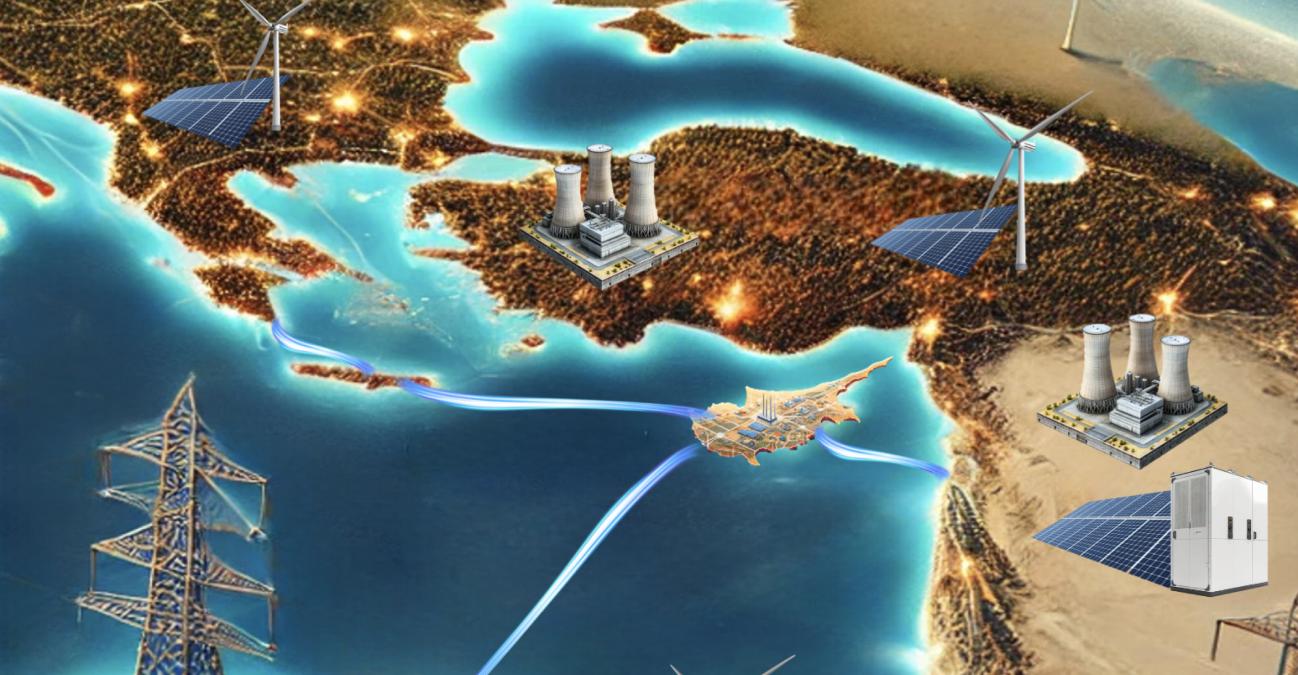
European Commission President Ursula von der Leyen used talks in Nicosia this week to push a line that goes well past supply diversification. Planning now treats exposure around the Strait of Hormuz as a structural risk. Cyprus is being recast from a peripheral energy node into a forward platform within a wider crisis-response design.
The immediate driver is vulnerability in Gulf shipping. The response is not limited to new contracts or storage. It is geographic. European planning is shifting toward maritime-linked energy chains in the Eastern Mediterranean, with distribution into southeastern Europe tied to LNG, floating regasification and interconnectors. Cyprus sits at the intersection of these routes, close to Middle Eastern supply and inside a European security perimeter. As detailed in Bosphorus News' report on France's Eastern Mediterranean naval deployments, Hormuz risk has already begun pulling military attention toward Cyprus and surrounding sea lanes.
What changes the picture is the second track running alongside energy. Infrastructure on the island is being upgraded to handle heavier aircraft, sustain higher operational tempo and support rotary-wing operations. The expansion at key facilities, including new heliport capacity and heavy-lift handling, points to planning that anticipates prolonged contingency use rather than episodic missions. As reported by Bosphorus News on the U.S.-backed Cyprus base upgrades, new air and naval infrastructure adds the physical layer to the island's forward-access role.
A third layer comes from civilian crisis systems that can be scaled during emergencies. As outlined in Bosphorus News' coverage of Cyprus as an EU firefighting hub, the island is also being built into a wider European crisis-response platform. In practice, this broadens Cyprus' function into a standing coordination point during regional stress, where civil and military assets can be sequenced from a single location.
These overlapping tracks produce a different map. Energy routing, logistics and access are being designed in one frame. Cyprus becomes the fixed node where these functions converge, allowing the European Union to move supply, personnel and equipment through a controlled gateway when pressure builds across the Levant and the Gulf.
This has direct implications for Türkiye. Pipeline geography and existing corridors still matter, yet the expansion of LNG chains and maritime distribution creates a parallel system that does not depend on overland transit. The result is a dilution of exclusivity rather than outright displacement. The gap between alliance layers also becomes clearer. NATO planning continues to lean on Türkiye's geography and military capacity, while EU financing and infrastructure build redundancy around it. As covered by Bosphorus News on the Cyprus-EU summit, Nicosia is pairing energy diplomacy with a sharper security posture toward Türkiye.
As that role expands, Cyprus is no longer just a place on the route. It is becoming part of the machinery that decides which energy flows remain usable, which military assets can be sustained, which logistics chains can keep moving, and which actors can move first when the Eastern Mediterranean comes under pressure.