
By Bosphorus News Geopolitics Desk
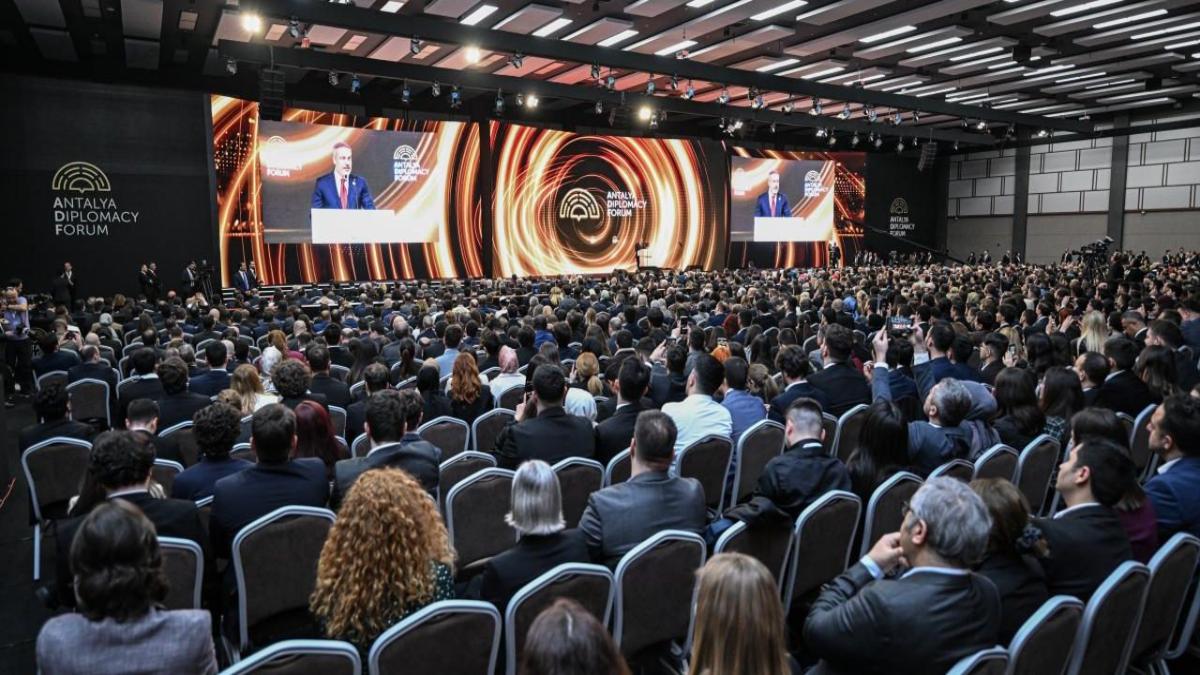
The fifth Antalya Diplomacy Forum opens on Thursday under conditions that have transformed what was already a significant diplomatic gathering into something closer to an emergency summit. The United States naval blockade of Iranian ports entered into force on Monday. The two-week ceasefire expires on April 22. The Islamabad talks collapsed without agreement. A new round of US-Iran negotiations is expected to resume in Islamabad later this week. Into this moment, Türkiye is receiving more than 20 heads of state, 50 foreign ministers and nearly 5,000 participants from over 150 countries.
The forum runs from April 17 to 19 in Antalya under the theme "Mapping Tomorrow, Managing Uncertainties." It is hosted by the Foreign Ministry under the auspices of President Recep Tayyip Erdoğan, with Foreign Minister Hakan Fidan delivering the opening address before Erdoğan speaks.
The Quadrilateral at the Center
The most consequential session on the sidelines will be the meeting of foreign ministers from Türkiye, Pakistan, Saudi Arabia and Egypt. The four countries first convened in Islamabad on March 20, and again on March 29, building a joint diplomatic track aimed at sustaining dialogue between Washington and Tehran. Fidan personally invited Pakistani Foreign Minister Ishaq Dar to the forum during a phone call on April 12, the day the Islamabad talks concluded without a deal. Pakistan has described its engagement as an ongoing "Islamabad process" rather than a single round of talks, and Antalya now provides the next formal meeting point for the four mediating states.
The quadrilateral carries weight beyond its members. Saudi Arabia is the primary energy and financial stakeholder in Hormuz stability. Egypt controls the Suez Canal, the alternative route for energy flows diverted from the Gulf. Pakistan brokered the April 8 ceasefire. Türkiye holds the rotating presidency of the mediating group and has positioned itself as the architect of a post-war regional security framework.
That positioning is not new. Fidan outlined Ankara's vision in a live interview with Anadolu Agency on Monday, calling for a formal Middle East security pact and confirming that Türkiye was already in contact with US envoy Steve Witkoff and Iranian Foreign Minister Abbas Araghchi. On the same day, Fidan said both Washington and Tehran were sincere in seeking a ceasefire, even as nuclear disagreements blocked progress at Islamabad. "Both sides are sincere about the ceasefire and aware of the need," he said, adding that starting positions in any negotiation are "always somewhat maximalist" and that what matters is whether the parties have a genuine intention to reach a durable agreement. Türkiye has spent the period since the Islamabad collapse assessing where its involvement could add value, he said.
Eight Days to the Deadline
The forum takes place with the ceasefire clock running. The agreement brokered by Pakistan on April 8 expires on April 22, three days after the forum closes. No permanent deal has been reached. The central unresolved issues remain Iran's nuclear programme and the status of the Strait of Hormuz, where the US blockade now targets all vessels entering or leaving Iranian ports across the Arabian Gulf and Gulf of Oman.
Oil has remained above 100 dollars a barrel since Monday. France and the United Kingdom are organizing a separate conference on restoring freedom of navigation in the strait. Iran's IRGC has declared maximum combat alert. Trump has claimed Iran reached out through "the right people" to signal interest in a deal, but Tehran has not publicly confirmed the contact.
Fidan has been explicit about Hormuz: the strait must reopen through negotiation, not force. He described the standoff as a reciprocal blockade in which both Iran and the United States are positioning themselves on opposite sides of the waterway. "What the entire world wants is for international transit to be free and unobstructed," he told Anadolu Agency on Monday.
He has also named what Ankara sees as the principal disruptive factor in the process. "We always have to account for Israel's spoiler role here," Fidan said on Monday. "We keep saying this to the Americans and to the other parties." The warning echoed remarks he made on April 9, when Fidan said the international community should be prepared for Israeli moves aimed at undermining the ceasefire track. "The world public opinion, in particular, must be prepared for Israel's possible sabotage moves and be in a position to deliver the necessary response," he said then, speaking after talks in Ankara with Syrian Foreign Minister Asaad al-Shaibani. President Erdoğan made the same point directly to Iranian President Masoud Pezeshkian in a phone call on April 9, stressing that attempts to undermine the process must be prevented and that Türkiye would continue coordinating with relevant countries to sustain the ceasefire.
Türkiye's Strategic Posture
The forum is Ankara's clearest statement of its diplomatic weight at a moment when that weight is being actively tested. Türkiye sits at the intersection of several live crises: it holds the Bosphorus and Dardanelles, controls NATO's southeastern flank, shares a land border with Iran, maintains a gas import contract with Tehran expiring in July, and has cultivated working relationships with both Washington and Tehran simultaneously.
The forum also arrives less than three months before the NATO Ankara Summit on July 7 and 8, which Fidan described on Monday as potentially the most important in the alliance's history. That summit will take place in a city now hosting some of the same leaders for what amounts to a rehearsal of the same conversations.
Against this backdrop, Fidan's eight-party Gaza session and the Balkans Peace Platform meeting on the forum's sidelines are likely to be overshadowed by the Iran file, even if Hormuz does not appear explicitly on the official programme.
Scale and Format
Participation at ADF2026 is the largest in the forum's history. Nearly half of attending heads of state come from Africa and Europe. Among foreign ministers, 40 percent represent Africa, 35 percent Europe and 22 percent Asia. More than 75 representatives from international organisations will attend alongside academics and students. The programme includes over 40 sessions and leader-level panels. All major sessions will be livestreamed on the forum's official website and broadcast on TRT.
The Antalya Diplomacy Forum was founded in 2021 by then-Foreign Minister Mevlüt Çavuşoğlu. Its 2022 edition hosted the first face-to-face meeting between the Russian and Ukrainian foreign ministers since the start of the war in Ukraine. The 2026 edition opens with an active naval blockade on the world's most critical energy chokepoint and a ceasefire countdown measured in days.
***Sources: Turkish Foreign Ministry, Anadolu Agency, Hürriyet Daily News, TRT World, Yeni Şafak, Pakistan Today, Al Jazeera, CNN, Bosphorus News reporting