
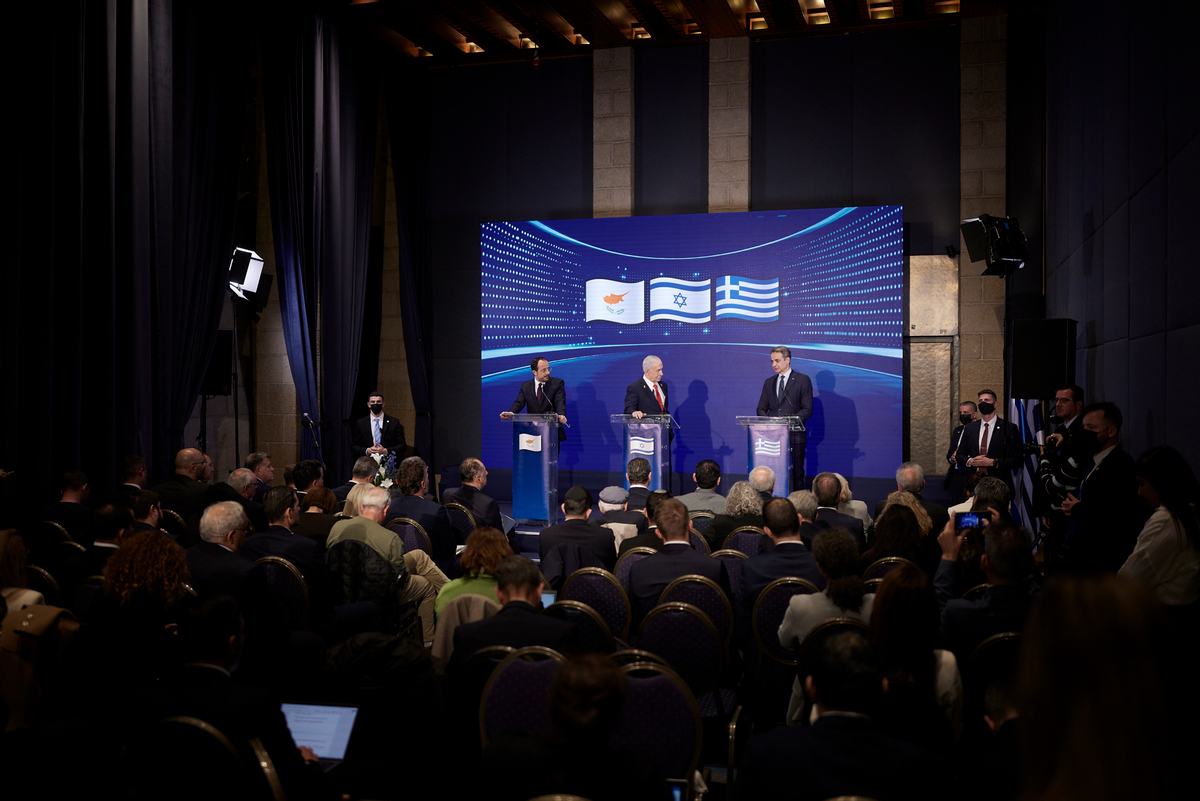
Türkiye has played down the military significance of the recent Israel–Greece–Greek Cypriot trilateral meeting, with the Turkish Ministry of National Defense (MSB) stating that the format does not constitute a military threat to Türkiye and has no concrete impact in operational terms.
Speaking in response to questions about the expanding trilateral cooperation, defense officials underlined that Ankara is closely monitoring all regional developments but sees no change in the strategic balance in the Eastern Mediterranean as a result of the meeting.
Ankara's Core Message: "No Reality on the Ground"
According to MSB assessments, while the trilateral meetings generate political messaging and diplomatic signaling, they do not translate into capabilities or deployments that would alter Türkiye's security environment.
Officials emphasized that Türkiye's military presence, deterrence posture, and operational reach in the Eastern Mediterranean remain unchanged and robust, adding that Ankara evaluates security risks based on concrete actions rather than rhetoric or symbolic alignments.
The Trilateral Format Under the Microscope
The Israel–Greece–Greek Cypriot format has gained visibility in recent years through regular leader-level meetings and statements emphasizing cooperation in security, energy, and regional stability. Supporters of the format present it as a stabilizing mechanism, while critics argue it reflects an exclusionary approach that sidelines Türkiye.
From Ankara's perspective, such frameworks cannot produce lasting regional security if they ignore Türkiye's role as a key Mediterranean and NATO actor. Defense officials stress that regional security architectures built without inclusivity lack credibility and sustainability.
Military Balance vs. Political Signaling
Turkish defense sources draw a clear distinction between political coordination and military capability. While trilateral partners may align diplomatically or rhetorically, MSB assessments indicate that there has been no shift in force posture, joint deployment capacity, or operational readiness that would disadvantage Türkiye.
This view aligns with Ankara's long-standing position that Eastern Mediterranean tensions should be addressed through dialogue, legal frameworks, and inclusive regional mechanisms rather than bloc politics.
Context: Hardening Rhetoric, Limited Leverage
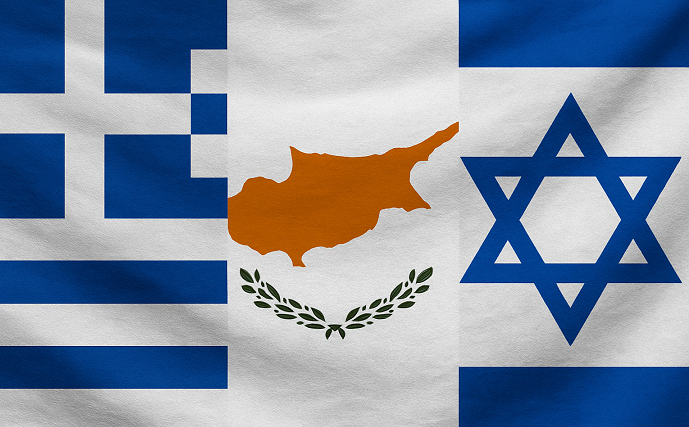
The latest trilateral meeting comes amid sharper rhetoric from Israeli leadership toward Türkiye and closer coordination with Athens and the Greek Cypriot administration. Ankara, however, maintains that such political messaging should not be overstated in strategic terms.
As previously analyzed in our report on Israel's evolving posture toward Türkiye, recent statements reflect diplomatic positioning rather than immediate military recalibration.
🔗 Related analysis: https://www.bosphorusnews.com/article/netanyahu-signals-hard-line-on-t-rkiye-as-israel-deepens-axis-with-greece-and-cyprus-1766465963288
Türkiye's Broader Eastern Mediterranean Approach
Defense officials reiterate that Türkiye continues to prioritize deterrence, preparedness, and diplomatic engagement simultaneously. Ankara's approach rests on maintaining a credible military posture while keeping channels open for dialogue, particularly in a region marked by overlapping disputes and shifting alliances.
From Ankara's viewpoint, security cannot be compartmentalized through selective partnerships that exclude major regional actors.
Bottom Line
While trilateral meetings among Israel, Greece, and the Greek Cypriot administration are likely to continue drawing attention, Türkiye's defense establishment sees no immediate military implications arising from the latest gathering.
For Ankara, the message is clear: symbolic alliances do not substitute for realities on the ground, and Türkiye remains confident in its position in the Eastern Mediterranean.