
By Bosphorus News Geopolitics Desk
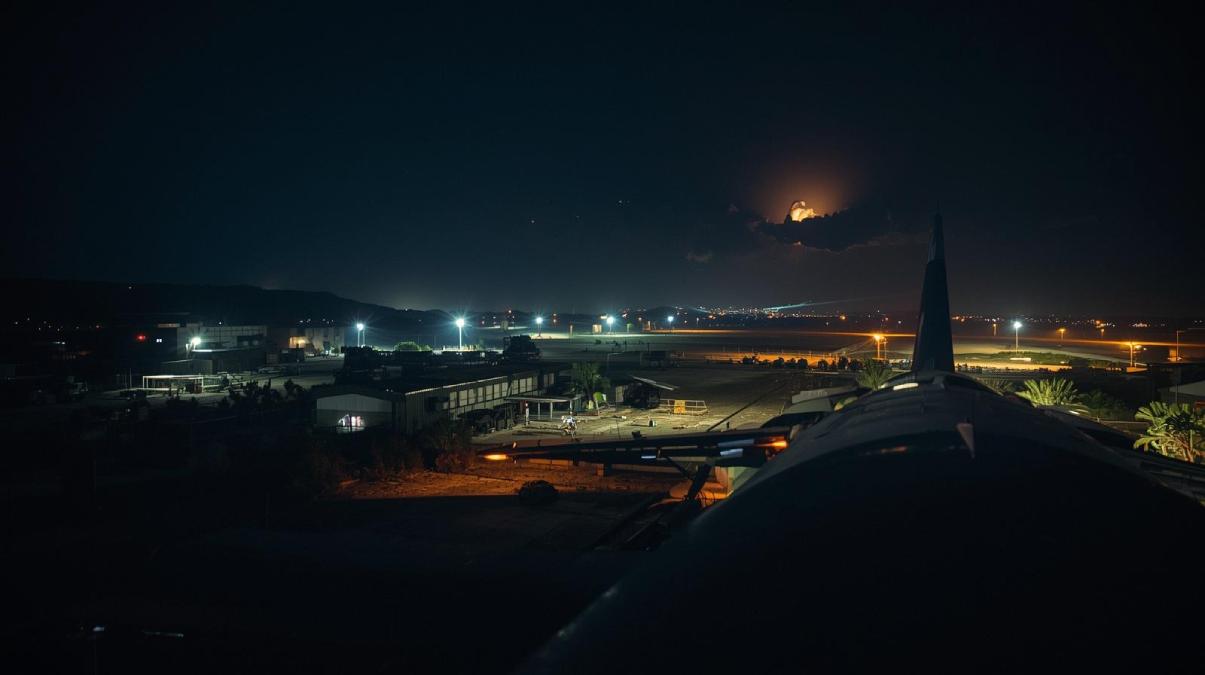
A drone believed to be Iranian made struck RAF Akrotiri, Britain's sovereign base on Cyprus, shortly after midnight on March 2, triggering a partial evacuation and a security alert for nearby residents. Two more drones were intercepted the next morning. London said there were no casualties and only limited damage, but the breach exposed more than a weakness at Akrotiri. It also showed how quickly Cyprus itself could be pulled into the line of fire and how vulnerable the island remains when regional conflicts move closer to its shores.
The aircraft was likely a Shahed type one way attack drone launched from Lebanon by a Hezbollah affiliated group. The sequence of events matters. The drone was already airborne before Prime Minister Keir Starmer announced that Britain would allow the United States to use its Cyprus bases for strikes on Iranian missile sites. That detail suggests Akrotiri may have been selected as a target before London publicly aligned itself with the US operation.
Debris from the wreckage has been sent to the United Kingdom for analysis. The Times reported that the drone carried a Russian made Kometa B navigation system, hardware previously identified in drones intercepted by Ukrainian air defences. The Washington Post, citing officials familiar with Western intelligence assessments, reported that Russia has been providing Iran with real time information on the location of US military assets in the region, including warships and aircraft. British defence chief Sir Richard Knighton said he had "no doubt" Russia had been sharing intelligence with Iran. Moscow's ambassador to London said Russia's position was "supportive to Iran." Donald Trump said he had seen "no indication" of Russian assistance, though he added that if such help existed it had not changed the battlefield picture.
The strike quickly created political friction in Nicosia. Cyprus's ambassador to the United Kingdom, Dr. Kiryakos Kouros, said the Republic of Cyprus was "disappointed" that Britain had not shared information about the attack. President Nikos Christodoulides also voiced frustration over the lack of clarity surrounding the use of the British sovereign bases during the crisis. For Nicosia, the issue was not only the drone that reached Akrotiri. It was the realisation that Cyprus could find itself exposed to the consequences of a regional conflict while receiving only limited information from the power operating sovereign military territory on its soil. The sense of exposure quickly translated into closer coordination with Athens, as Greece moved to reinforce Cyprus with fighter aircraft and naval assets.
The responses around the island did not unfold at the same pace. Greece moved first. Athens activated its Unified Defence Doctrine and deployed four F 16 fighter aircraft to Andreas Papandreou Air Base in Paphos. Two frigates, Kimon and Psara, were also sent to waters around Cyprus and began maritime patrols. Both vessels are equipped with the Centavros combat management system, which proved effective against drone attacks in the Red Sea in 2024.
France added a European layer to the security picture. The frigate Languedoc was dispatched toward Cyprus and the aircraft carrier Charles de Gaulle began moving toward the Eastern Mediterranean. Britain reinforced its own presence at Akrotiri with 400 additional personnel and deployed HMS Dragon, a Type 45 destroyer. Airborne surveillance assets were also moved closer to the island to address the low altitude detection gap that the Akrotiri strike had exposed.
Türkiye's response initially remained limited to political signalling. Bosphorus News noted that contrast in an analysis published on March 4, pointing out that while Greece, France and Britain were adding military cover around Cyprus, Ankara had so far limited itself to statements despite its long standing framing of the island as a central national cause.
A shift came on March 7. The Turkish Ministry of National Defence said phased planning was under way to ensure the security of the Turkish Republic of Northern Cyprus and confirmed that deploying F 16 aircraft to the island was among the options being evaluated. The Cyprus Mail, citing competent sources, reported that four aircraft were expected at Ercan Airport on Sunday and that security around the airport had already been tightened. Ankara did not lodge a protest when Greece deployed its own F 16s to Paphos earlier in the week. Instead, the Turkish defence ministry announced that a Greek air force delegation would visit Ankara on Monday as part of confidence building measures.
Britain, Türkiye and Greece are the three guarantor powers under the 1960 Treaty of Guarantee. All three now either have combat aircraft on the island or are preparing to. Cyprus is no longer defined only by division and diplomacy. Military facts are returning to the island.