
Bosphorus News Geopolitics Desk
Ukraine is no longer simply a recipient of Western military support. It is becoming a security provider in its own right, and its partnership with Türkiye is expanding well beyond their bilateral relationship into a broader regional alignment.
That is the central argument of an analysis published on April 14 by the Atlantic Council's TurkeySource blog. Written by Yevgeniya Gaber, a former Ukrainian diplomat and nonresident senior fellow at the Atlantic Council Türkiye Program, the piece examines what Zelenskyy's recent tour of Saudi Arabia, Qatar, the UAE, Türkiye, and Syria reveals about the shifting architecture of Middle Eastern security.
Gaber's starting point is Ukraine's counter-drone record. Having intercepted more than 85 percent of over 100,000 Shahed-type drones launched against it since 2022, Kyiv has developed adaptive, scalable, and cost-effective air defence capabilities that Gulf states now want. Zelenskyy deployed more than 200 Ukrainian specialists to the Middle East to assist regional partners in countering Iranian drones, and signed defence cooperation agreements with Saudi Arabia and Qatar whose details have not been made public but are understood to lay the foundation for long-term partnerships: Ukrainian expertise in exchange for financial support, energy, and strategic investment.
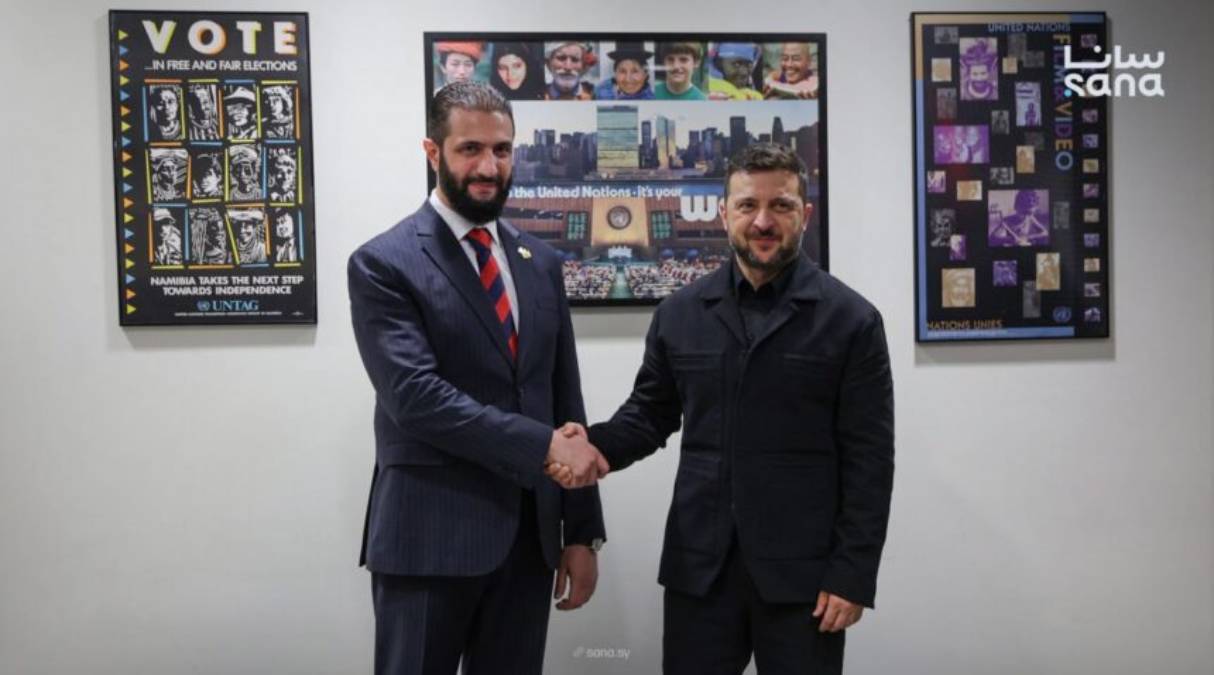
The Syria dimension is where the Türkiye angle sharpens. Ankara's established ties with Syria's post-Assad leadership gave Kyiv a diplomatic gateway to visit Damascus, reestablish its embassy, and contest Russia's remaining military presence in the country. Zelenskyy's April 5 visit to Syria, a country that was until recently one of Moscow's closest allies, would have been unthinkable a few years ago. Gaber argues it was made possible by Türkiye's facilitation, and that it reflects a broader pattern: Kyiv and Ankara acting in synergy across Syria, the Black Sea, the South Caucasus, and the Mediterranean.
Russia's fading regional footprint runs through the analysis as a structural condition. Moscow's failure to preserve Assad, sustain Maduro, or assist Armenia during the Karabakh war has exposed it as an unreliable ally. The Iran war has brought Russia economic gains but little political return and a significant reputational cost. Into that space, Ukraine and Türkiye are moving together.
Gaber closes with a pointed formulation. Zelenskyy said on April 10 that without Ukraine and Türkiye, Europe cannot match Russia. Gaber frames this not as rhetoric but as a structural reality: European control of its seas, skies, and land forces will require sustained cooperation with both Ankara and Kyiv, alongside the United Kingdom and Norway.
***Full analysis: Yevgeniya Gaber, "Zelenskyy's Middle East and Turkey tour reveals a new regional order in the making," Atlantic Council TurkeySource, April 14, 2026.