
By Bosphorus News Geopolitics Desk
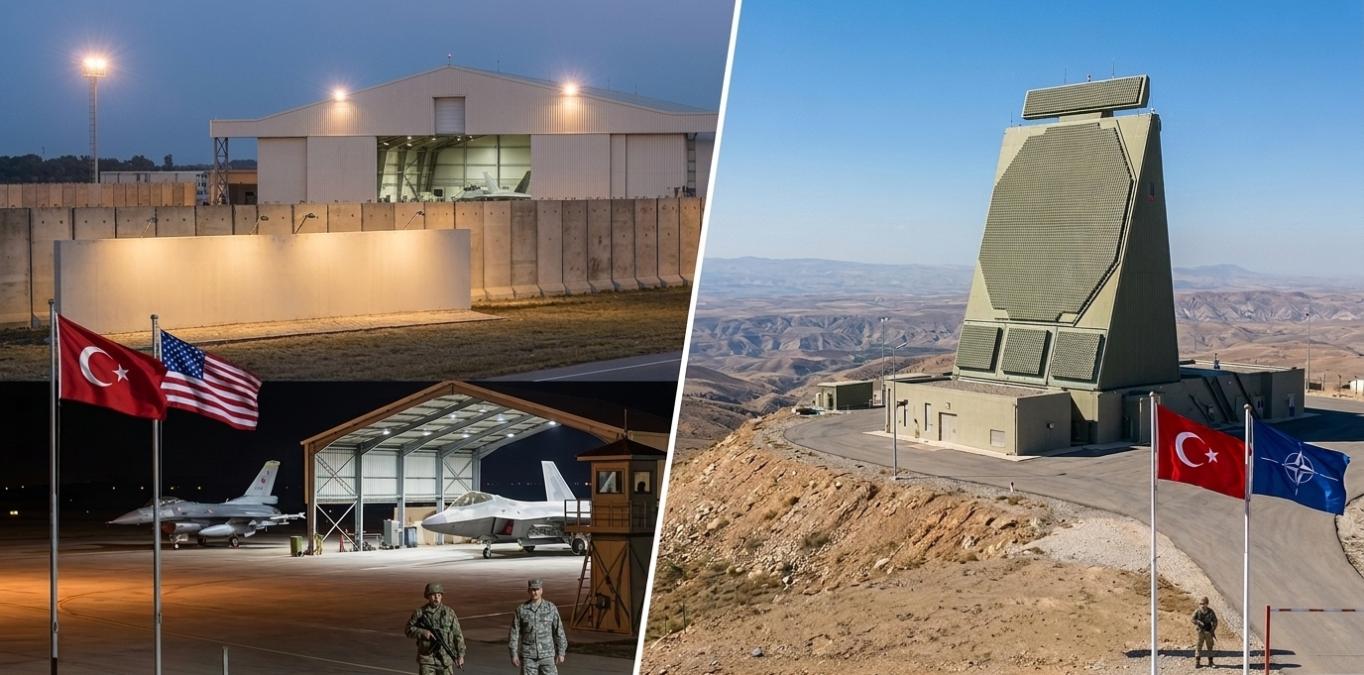
Türkiye hosts two of the most strategically significant US military installations in the region: Incirlik Air Base in southern Türkiye, which carries nuclear weapons and operates with a degree of US autonomy, and the Kürecik radar base, which provides early warning coverage across a wide arc of the Middle East. Both lie within range of Iranian missiles that have already reached Israel and Cyprus. Since Iran began its retaliatory strikes on February 28, neither has been touched.
The explanations offered tend to focus on Türkiye's conduct during the crisis. Ankara did not allow its bases or airspace to be used in attacks against Iran, President Erdoğan and Foreign Minister Fidan pursued active diplomacy from the outset to position Türkiye as a mediator, and the government refrained from any public alignment with the US-Israeli operation while repeatedly calling for de-escalation. On this reading, Tehran exercised restraint because Ankara earned it through consistent, principled neutrality.
The Oman test
The argument has a test case, and it does not pass it. Oman played a comparable mediating role throughout the crisis, hosting negotiations between Washington and Tehran before talks moved elsewhere, and it neither participated in the strikes on Iran nor offered its territory for offensive operations, pursuing exactly the kind of neutral, dialogue-oriented posture that Türkiye is credited with. Iran struck it anyway. If neutrality and active mediation were sufficient to deter Iranian retaliation, Oman would not have been hit, and the fact that it was points toward a different variable entirely.
The variable Oman does not have
The variable that Oman lacks and Türkiye has is Article 5 of the North Atlantic Treaty, under which an Iranian strike on Turkish territory would constitute an attack on every member of the alliance, with all the escalatory consequences that entails. Iran has shown a consistent willingness to absorb punishment from the United States and Israel throughout this conflict, but it has shown no appetite for widening the war to include the full weight of the alliance, and striking Türkiye would risk exactly that. Türkiye's diplomatic posture may have made restraint easier to justify in Tehran, but the institutional architecture of NATO is what produced it.
A guarantee with a managed threshold
The distinction matters because it reframes what Türkiye's security in this conflict actually rests on. Ankara has presented itself as a principled neutral, and its diplomacy has been active and consistent throughout the crisis, but the protection it has enjoyed is not the product of that diplomacy. It is the product of a collective defence guarantee that Türkiye has been a party to since 1952, one that Tehran has clearly chosen not to test. That guarantee has limits, as NATO Secretary-General Mark Rutte demonstrated when he explicitly ruled out triggering Article 5 over the ballistic missile that crossed into Turkish airspace on March 4, even as the alliance raised its overall defence posture in response, sending a careful message from Brussels that Türkiye is protected but that the alliance, not Ankara, will manage the threshold of that protection.
Türkiye's room to manoeuvre in this conflict is real and its diplomatic leverage is genuine, but the foundation beneath both is not neutrality. It is membership, and that is a conclusion that cuts against a current within Turkish politics, inside and outside the government, that has long questioned the value of NATO alignment. Those voices have grown louder in recent years. The missiles that did not fall on Incirlik have quieted them, at least for now.