
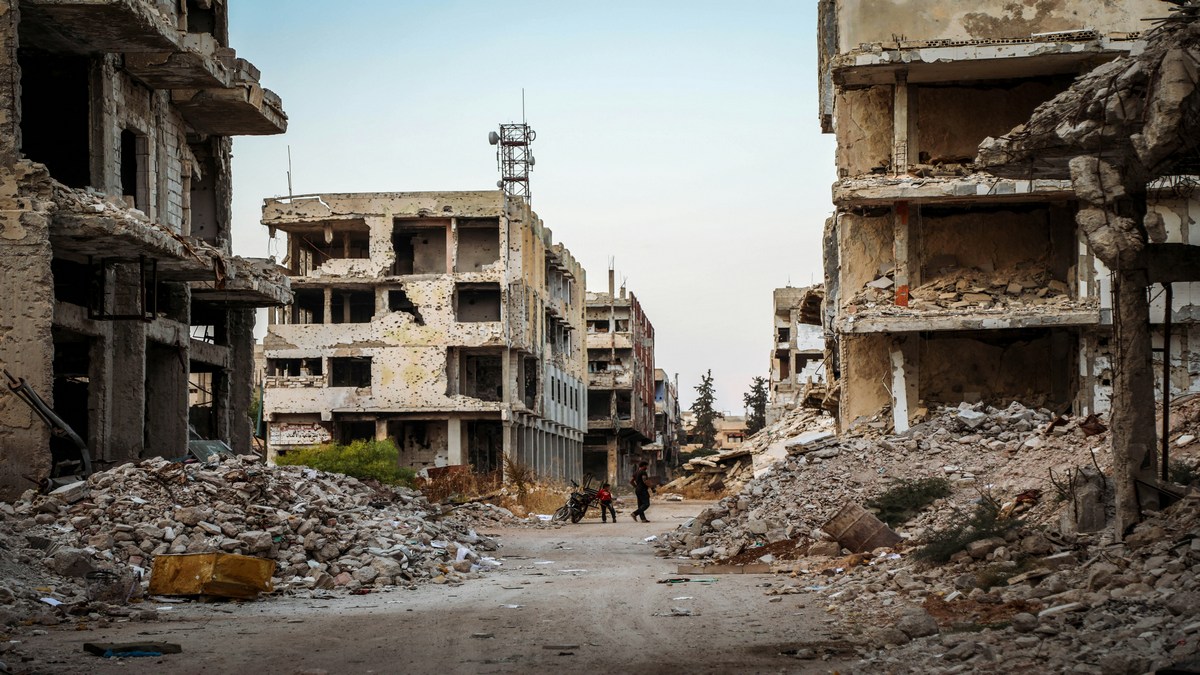
Recent research published by CEPR on its policy platform VoxEU takes a sober look at what war leaves behind once the battlefield falls quiet. The study, authored by Efraim Benmelech and João Monteiro, argues that the economic consequences of conflict are not temporary shocks that fade with peace agreements. They are structural scars that reshape economies for decades.
The central claim is simple but often ignored: war changes how economies function long after the violence ends.
Destruction Is the Beginning, Not the Main Cost
The most visible legacy of war is physical damage. Cities are flattened, infrastructure is destroyed, and production collapses. Yet the authors show that these losses, while severe, are not the main reason economies struggle after conflict.
What matters more is what happens beneath the surface. War disrupts institutions, erodes trust, and alters incentives. These changes are slower to repair than roads or bridges, and they shape economic behaviour long after reconstruction begins.
Investment Does Not Return as Expected
One of the paper's key findings is that war permanently weakens investment dynamics. Capital formation falls sharply during conflict, but more importantly, it does not fully recover afterward. Even when reconstruction is underway, private investors remain cautious.
Risk perceptions stay elevated. Legal uncertainty lingers. Financial systems fragment. As a result, economies emerge from war with lower capital intensity, constraining productivity and long-term growth.
This helps explain why post-war recoveries often look stronger on paper than they feel on the ground.
Human Capital Losses Accumulate Quietly
Labour markets carry some of the deepest scars. Conflict disrupts education, displaces skilled workers, and forces households into survival strategies that reduce long-term productivity. The loss is not only in numbers, but in skills, experience, and expectations.
According to the authors, these human capital losses compound over time. A generation affected by war enters the labour force with lower productivity, pulling down average income levels for years to come.
The State Emerges Weaker Than Before
War also reshapes the state. Governments facing conflict rely more on emergency financing, distortionary taxation, or external assistance. Administrative capacity erodes, making revenue collection and service delivery less effective.
This fiscal weakness becomes self-reinforcing. Limited resources restrict investment in growth-enhancing policies, while weak institutions discourage private activity. The result is a prolonged period of low growth and high vulnerability.
Why Peace Does Not Equal Normalisation
A recurring theme in the VoxEU analysis is that economic normalisation lags far behind political settlements. The absence of fighting does not restore confidence overnight. Expectations adjust slowly. Risk premiums remain high. Institutional credibility takes years to rebuild.
Countries with strong pre-war institutions and access to stable external finance recover more quickly. Others become stuck in low-growth paths, not because conflict resumes, but because the economic damage has already been internalised.
Rethinking Post-War Recovery
The policy implication is clear. Reconstruction alone is not enough. Rebuilding physical assets without restoring institutional capacity, human capital, and investment confidence leaves economies vulnerable to stagnation.
Long-term recovery requires sustained political stability and credible economic governance. Growth returns not through rapid spending, but through the gradual repair of trust between the state, firms, and households.
The Enduring Cost of Conflict
Benmelech and Monteiro's research delivers a sobering conclusion. War's economic cost is not confined to the years of fighting. It is embedded in weaker institutions, lower productivity, and constrained policy choices long after peace is declared.
For policymakers and observers, the lesson is uncomfortable but necessary: the true price of war is measured not only in what is destroyed, but in what never fully recovers.
*** Report can be found here: The lasting economic scars of war