
By Bosphorus News Geopolitics Desk
The United States is pushing deeper into the Balkan infrastructure map with a new package of energy, LNG, pipeline, nuclear and AI projects, placing regional energy security at the center of Washington's strategy to reduce Russian influence across Southeast Europe.
The agreements were announced around the Three Seas Initiative Summit in Dubrovnik on April 28 and 29, where U.S. Energy Secretary Chris Wright joined regional leaders and American companies for a series of high-value infrastructure deals. The projects span Albania, Croatia and Bosnia and Herzegovina, with Washington presenting the package as part of a wider effort to expand American LNG exports and strengthen regional energy corridors.
The most visible energy deal was a 20-year, $6 billion agreement between U.S. LNG producer Venture Global and Aktor LNG USA to export liquefied natural gas to Albania. The agreement was signed in Tirana by U.S. Ambassador to Greece Kimberly Guilfoyle and gives Washington a stronger commercial and strategic foothold on the Adriatic side of the Balkan energy system.
"This commitment strengthens energy security and national security across the entire region," Guilfoyle said, according to Reuters.
Croatia and Bosnia and Herzegovina also signed an agreement for the Southern Interconnection gas pipeline, a project designed to connect Bosnia to Croatia's gas network and the Krk LNG terminal on the Adriatic. The project could cost up to $1.5 billion and is being developed with AAFS Infrastructure and Energy, a U.S.-based company.
The pipeline carries strategic weight because Bosnia currently relies almost entirely on Russian gas, supplied through Serbia and Bulgaria along the TurkStream route. A connection to Croatia's LNG system would give Sarajevo a direct alternative to Russian pipeline gas and place the Krk terminal deeper inside the Western Balkan energy map.
The Dubrovnik package also included a U.S.-Croatia civil nuclear cooperation memorandum and a major AI infrastructure plan in Croatia. Reuters reported that Croatian company Končar and U.S.-based Pantheon Atlas signed a letter of intent for a 50 billion euro, roughly $58 billion, AI data center and innovation campus in central Croatia, with construction targeted for 2027 and operations planned from 2029, subject to permits and grid upgrades.
That AI component gives the U.S. push a broader infrastructure logic. The Balkan energy map is no longer only about replacing Russian gas. It is also about electricity capacity, grid upgrades and the power needs of future data center economies.
The U.S. Department of Energy described the gas infrastructure package as part of the "Trump Peace Pipelines Framework," a policy frame aimed at expanding natural gas infrastructure and supporting Europe's continued imports of American LNG. Joshua Volz, the U.S. Department of Energy's special envoy for energy integration, told Radio Free Europe / Radio Liberty that Washington sees Western Balkan energy security as a national security priority.
"Energy security is national security," Volz said.
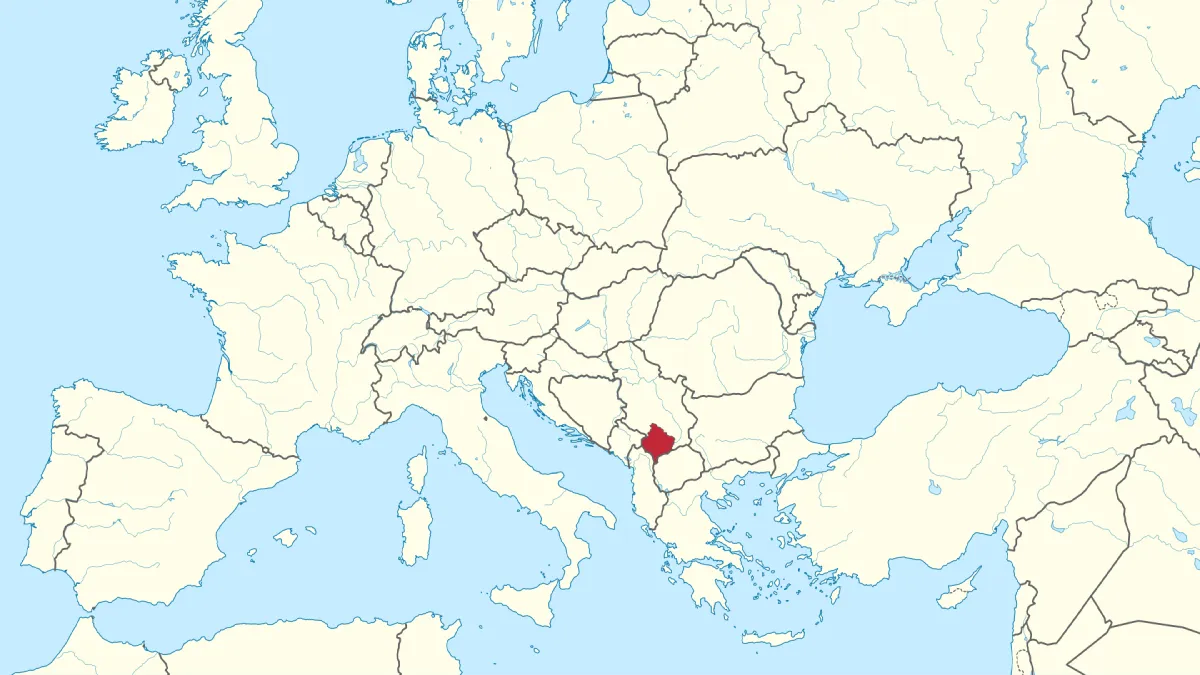
Kosovo remains the exposed gap in the first wave of announced projects. It has no developed natural gas infrastructure and was not directly included in the headline LNG, pipeline and AI deals unveiled around Dubrovnik. That absence matters because the new network is being built around countries with ports, LNG access, pipeline routes or larger grid projects, while Kosovo still depends heavily on coal-fired electricity and has yet to define a clear gas infrastructure path.
U.S. officials have avoided framing Kosovo as excluded from the regional strategy. Volz described Kosovo as an important partner and said the modernization of its energy system offers opportunities for American industry. He also pointed to the Krk LNG terminal, the Croatian route and the Southern Interconnection pipeline as steps that could eventually open ways to bring natural gas deeper into the Western Balkans.
That leaves Kosovo in a difficult position. It is not outside Washington's stated regional strategy, but it is outside the first major wave of announced projects. Pristina held an American investor conference in the same period, but the agenda focused on urban infrastructure, transport, health and sports facilities rather than large-scale energy agreements.
The shift also matters for Türkiye. The new U.S.-backed Balkan corridor does not directly target Ankara, but it affects the same regional gas map where TurkStream, Greek LNG routes, the Adriatic corridor and Türkiye's own transit ambitions overlap. Bosnia's reliance on gas delivered through the TurkStream route makes the Southern Interconnection project especially relevant to Türkiye's wider energy environment, even if Ankara is not a party to the agreement.
Greece's entry into the Three Seas Initiative in 2023 and Washington's growing LNG diplomacy through the Eastern Mediterranean add another layer. The U.S. is using Adriatic and Balkan routes to build alternatives to Russian supply, while Türkiye continues to position itself as a central energy bridge between the Black Sea, the Caucasus, the Middle East and Europe.
The American push also carries political friction. Environmental groups and some European observers argue that new gas infrastructure risks clashing with EU climate targets and slowing the region's transition toward renewables. Those concerns will grow if U.S.-backed LNG and pipeline projects become the dominant near-term answer to Balkan energy insecurity.
The strategic direction is already visible. Washington is trying to connect energy security, industrial investment and digital infrastructure in the Balkans before Russian gas influence can recover and before China or other outside investors capture future AI and data center projects. Kosovo's challenge is to secure a place in that system before the first routes, terminals and grid investments harden into a new regional map.
Sources: Reuters, Associated Press, Radio Free Europe / Radio Liberty, U.S. Department of Energy, U.S. Department of State.