
A Confident Message Meets a More Complicated Reality
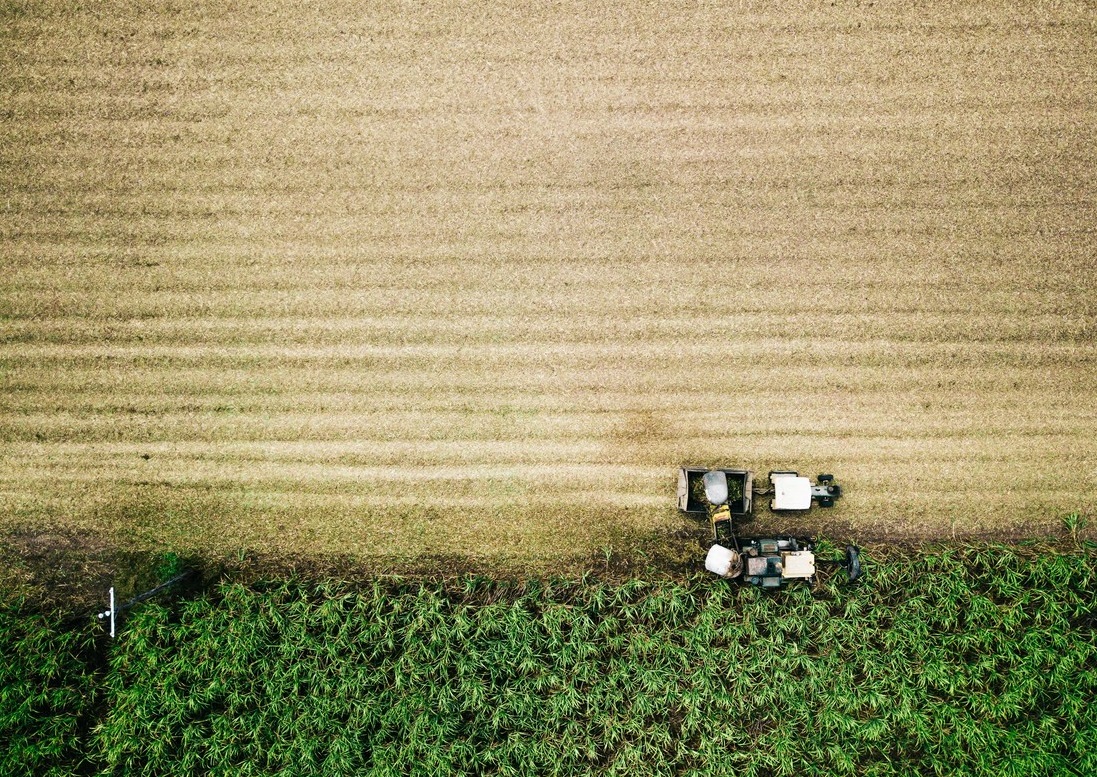
Government officials and pro-government media outlets have been consistent in their message: there is no structural problem in Türkiye's agricultural sector. Production, according to this narrative, remains resilient, supply chains are intact, and recent challenges—particularly climate-related risks—are being managed through reform, investment, and technological transformation.
This framing is echoed in coverage highlighting state-led agricultural "transformation" efforts. Climate risks are acknowledged, but largely presented as catalysts for modernization rather than symptoms of deeper stress. Public investments, insurance mechanisms, digitalisation, and international financing are cited as evidence that the sector is adapting and that food security remains firmly under control.
When the Numbers Start Telling a Different Story
Yet a parallel story emerges from the state's own data—both on output and on costs.
According to the latest figures released by the Turkish Statistical Institute (TÜİK), plant-based agricultural production declined in 2025 across multiple categories. Total crop output fell year-on-year, with notable contractions in cereals, fruits, and several high-value products. Grain production recorded particularly sharp declines, including double-digit drops in staples such as wheat and barley.
These figures alone complicate claims of stability. The pressure becomes clearer when production data is read alongside input costs.
Costs Rise First, Decisions Follow
Over the twelve months from December 2024 to December 2025, Türkiye's agricultural producers faced broad-based increases in key production inputs. Official data from TÜİK's Agricultural Input Price Index (Tarım-GFE) shows that overall input costs rose by around 33.7 percent year-on-year, indicating that the cost of producing food increased by at least one-third in official terms. At the same time, agricultural experts and opposition figures note that once market prices, financing conditions, and effective access to inputs are taken into account, the real cost burden on producers may be considerably higher, with some estimates placing the increase at up to 80 percent.
The sharpest pressure came from fertilisers, where annual increases approached 50 percent. Diesel prices—critical for land preparation, irrigation, and transport—rose by roughly 13 to 15 percent, while seed, feed, and agricultural chemicals also posted sizeable gains, further tightening producer margins.
Taken together, these cost increases help explain why production volumes can decline even in the absence of an overt policy shock. Higher input prices shape farmer behaviour directly—through reduced fertiliser use, delayed planting, crop switching, or exit from production altogether.
Imports as a Stress Valve, Not an Exception
The picture becomes even clearer when production and costs are read alongside import behaviour.
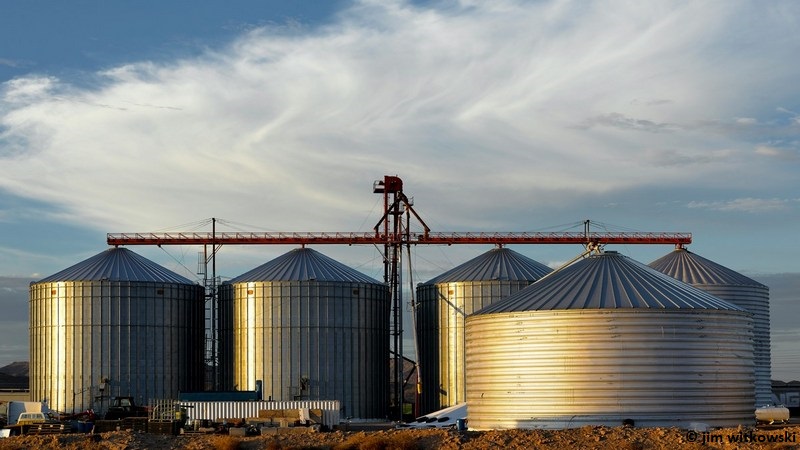
Over the past five years, Türkiye's grain imports have fluctuated sharply, shaped by the pandemic, the Russia–Ukraine war, domestic harvest outcomes, and shifting policy choices. Data compiled from the Turkish Grain Board (TMO) and official trade statistics shows that imports have functioned less as an exception and more as a systemic balancing tool.
Between 2020 and 2023, wheat imports climbed to historically high levels, peaking at nearly 12 million tonnes in 2023. While a portion of this volume was linked to export-oriented processing, the scale of imports nonetheless underscored growing reliance on external supply during periods of domestic stress.
The Year Imports Were Paused—and Why That Matters
This pattern is perhaps most clearly illustrated by what happened in 2024. That year effectively became a restriction year for wheat imports. In order to prevent further pressure on domestic producer prices and to manage swelling public stocks, wheat imports were fully banned between June and October.
The ban did not reflect a sudden improvement in production conditions. It was a policy choice made possible by exceptionally high TMO stock levels. Once those stocks began to erode, the logic shifted. By early 2025, restrictions were gradually lifted and imports resumed, returning to levels broadly consistent with previous years.
The sequence matters. Imports were curtailed not because underlying pressures had disappeared, but because inventory buffers temporarily allowed the state to step back from the market. When those buffers weakened, import dependence re-emerged. The issue, in other words, is not whether imports can be paused—but how quickly they return once stocks run out.
When Emergency Measures Become Routine
This dynamic was reinforced by a subsequent policy decision. A presidential decree published in the Official Gazette of the Republic of Türkiye on 8 November 2025 authorised the duty-free import of 1 million tonnes of maize and 1 million tonnes of barley. The move expanded external supply at a time when domestic producers were already grappling with declining output and sharply rising input costs.
Taken together, these steps point to a familiar sequence: production pressure emerges, imports are expanded to stabilise prices, restrictions are applied when stocks allow, and lifted once buffers are exhausted. Imports, in this sense, operate less as a contingency and more as a recurrent adjustment mechanism.
A Different Way to Read the Same Bill
At this stage, a counterfactual often raised by agricultural economists becomes difficult to ignore. If even a portion of the billions of dollars spent annually on agricultural imports were redirected toward domestic producers in the form of direct production premiums, the incentive structure would shift at the source rather than at the border. Instead of compensating for shortfalls after they occur, such support would lower input pressure upfront—encouraging planting decisions, stabilising yields, and restoring producer confidence.
Under this logic, experts argue that a two- to three-year horizon could be sufficient for Türkiye to materially reduce its reliance on external supply in key staples. The constraint, in this reading, is not productive capacity but sequencing: whether public money is spent fixing shortages after they appear, or preventing them by supporting production in advance.
What the Data Leaves Unresolved
This does not point to an imminent supply crisis. But it does challenge the assertion that Türkiye's agricultural sector is free of structural problems. When output declines, costs surge, and imports return as soon as buffers are exhausted, the issue is not volatility alone, but dependence.
For now, what emerges is not a single truth but two coexisting realities. One is strategic and declarative, focused on direction and intent. The other is statistical and immediate, grounded in what farmers harvested, what they paid to do so, and how frequently the system turned outward to compensate.
*** This analysis is based on official data published by the Turkish Statistical Institute (TÜİK), the Turkish Grain Board (TMO), and the Official Gazette of the Republic of Türkiye.