
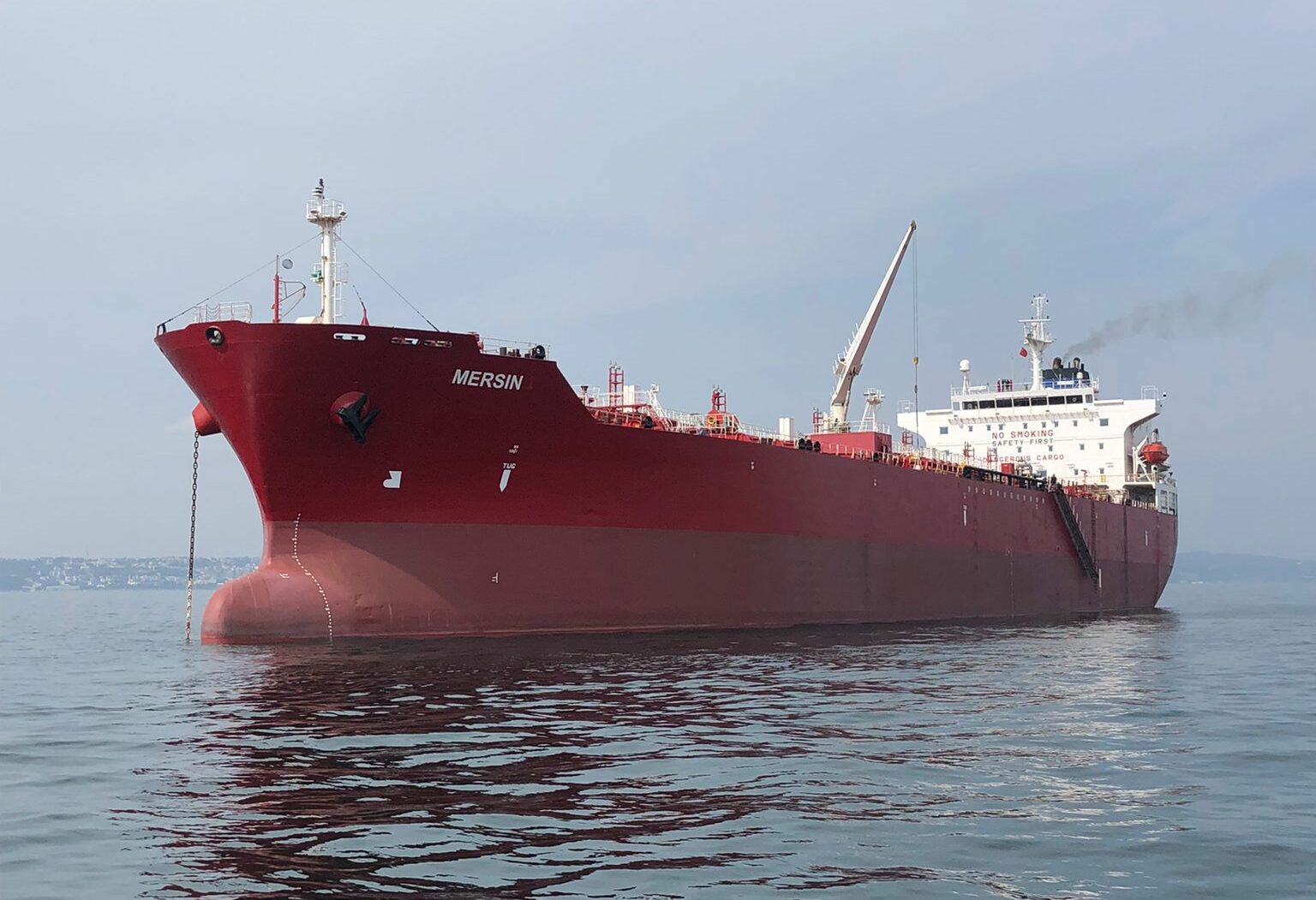
Maritime security has been severely tested following a highly unusual incident off the coast of West Africa, where a Turkish-owned oil tanker, the M/T Mersin, was severely damaged after being rocked by a series of external explosions.
The vessel, managed by Istanbul-based Besiktas Shipping, was anchored near Dakar in the late hours of November 27, 2025, when it suffered four distinct external blasts. These powerful impacts caused immediate and significant seawater ingress into the engine room, prompting the crew to issue a distress signal and raising fears of a major environmental disaster.
While images circulated online showing the tanker's stern sitting perilously low in the water, Besiktas Shipping moved quickly to reassure the public. In a statement released Monday, the manager confirmed that the situation was brought under control, and crucially, all personnel were safe with no injuries or loss of life reported among the crew. Furthermore, immediate anti-pollution measures, including the deployment of containment booms by Senegalese authorities and naval units, have so far prevented any fuel leakage from the vessel, which was carrying up to 50,000 tons of fuel (gasoil).
The unexplained nature of the blasts, however, has triggered intense speculation. Technical and forensic teams are working with Senegalese authorities to determine the cause, but the fact that the explosions were confirmed as external has raised the alarm globally.
The Panama-flagged Mersin has been identified in shipping data as a key participant in the "shadow fleet," the network of older, often less-insured tankers involved in transporting Russian crude and petroleum products outside of Western sanctions regimes.
This incident off Dakar occurred just hours before reports emerged of Ukrainian naval drone strikes hitting two sanctioned Russian-linked tankers in the Black Sea. While no direct connection has been established between the attack in West Africa and the Black Sea maritime conflict—a distance of nearly 10,000 kilometers—the event has amplified concerns that vessels linked to the Russian trade are increasingly becoming targets, regardless of their location.
Salvage operations are ongoing, with teams racing to stabilize the hull and safely offload the cargo, while investigators try to piece together how a commercial vessel anchored off a major African port could suffer such a devastating and mysterious attack.