
By Bosphorus News Geopolitics Desk
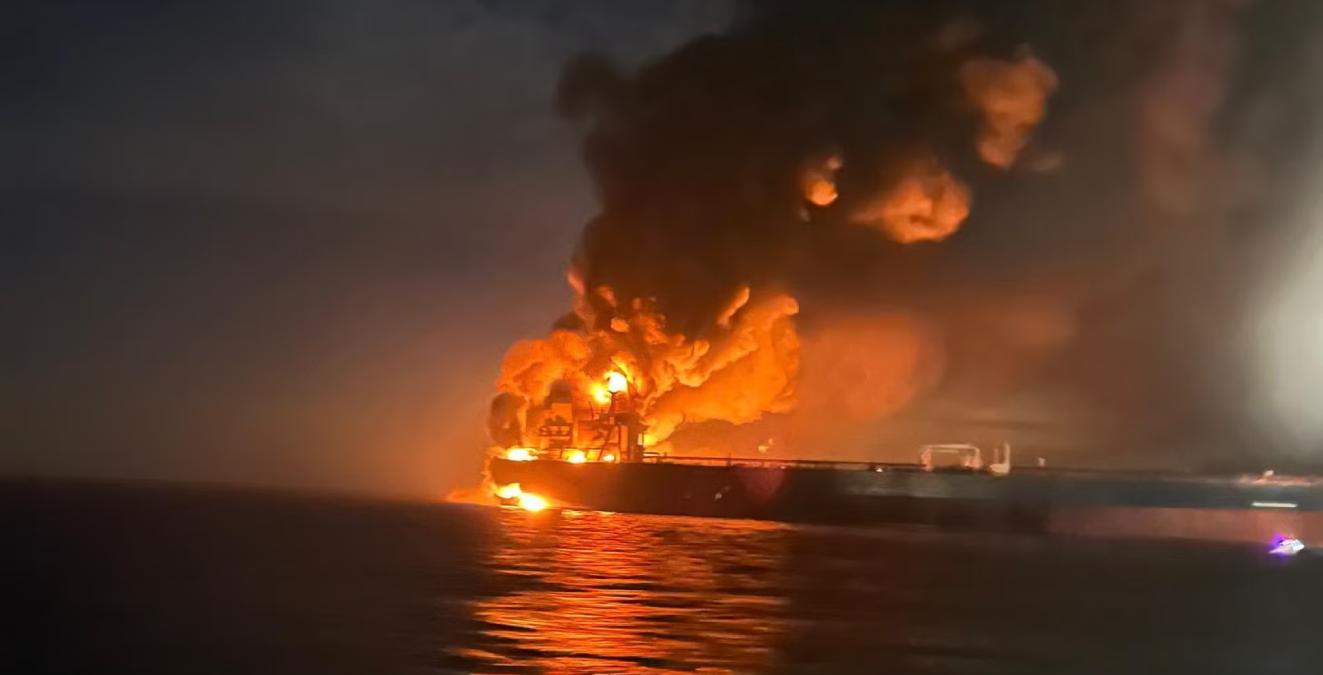
A Turkish owned dry cargo vessel sailing from Ukraine's Odesa port to Türkiye was hit by a drone in the Black Sea on the night of May 28, Türkiye's Foreign Ministry said, in a new incident that places civilian shipping and Turkish linked maritime interests closer to the direct risks of the Russia Ukraine war.
The ministry said the vessel was Vanuatu flagged and was carrying dry cargo from Odesa to Türkiye when it came under an unmanned aerial vehicle attack. Two Turkish crew members were lightly injured, and their condition is being followed by Türkiye's Consulate General in Odesa, the ministry said in a statement on May 29.
Ankara did not identify the attacker. The ministry framed the incident as part of a broader risk of uncontrolled escalation in the Black Sea and called for the safety of civilian navigation to be protected.
"We stress once again the importance of avoiding steps that could lead to an uncontrolled escalation of the war in the Black Sea and of ensuring the safety of navigation of civilian vessels in the region," the Turkish Foreign Ministry said.
Ukraine's navy identified the ship as ANT, a Vanuatu flagged Turkish owned cargo vessel, according to Reuters. Ukrainian officials blamed Russian drones for the attack and said the vessel was one of three foreign flagged commercial ships targeted while moving through Ukraine's Black Sea maritime export corridor.
The other vessels were reported to be sailing under the flags of Comoros and Panama. That wider pattern matters to Ankara because the incident was not limited to a Ukrainian military target, port facility or Russian asset. It reached commercial shipping on a corridor that connects Ukraine's wartime exports to Türkiye and global markets.
The case should not be confused with a separate set of reported drone attacks on tankers near Türkiye's northern Black Sea coast on May 28. Those incidents involved the tankers James II, Altura and Velora, and were reported separately by shipping sources and Reuters. Bosphorus News previously examined those tanker strikes as part of a widening Black Sea risk pattern with direct relevance for the Bosphorus and Türkiye's maritime security posture. The ANT incident concerns a Turkish owned dry cargo ship sailing from Odesa to Türkiye.
Türkiye's Black Sea posture now faces a sharper test. Ankara has kept the Montreux Convention at the centre of its wartime policy, closed the straits to belligerent warships, maintained communication with both Moscow and Kyiv, and repeatedly warned against actions that could widen the conflict at sea. The growing number of drone incidents around commercial vessels is now testing the line between naval warfare and civilian maritime risk.
That pattern has already reached Turkish security decision making. In a separate Black Sea incident, Türkiye downed an uncontrolled drone over the Black Sea, underscoring how unmanned systems from the Russia Ukraine war can cross from battlefield dynamics into Turkish airspace and maritime security calculations.
The Foreign Ministry's decision not to name an attacker is also significant. Türkiye's statement condemned the danger to civilian shipping without turning the incident into a direct bilateral accusation. That language keeps Ankara's diplomatic room open while still placing the protection of Turkish citizens and Turkish linked maritime trade at the centre of its response.
The Black Sea is producing a different kind of escalation pressure. It is no longer only about ports, naval assets, mines or grain corridor politics. Civilian vessels, mixed ownership structures, flags of convenience and wartime export routes are increasingly becoming part of the operational environment. That makes maritime security less abstract and more immediate for Ankara: a Turkish owned ship was hit, Turkish crew members were injured, and Türkiye is being forced to manage another spillover from a war it has tried to contain at sea.
***Sources: Türkiye Ministry of Foreign Affairs, Reuters and Bosphorus News reporting.