
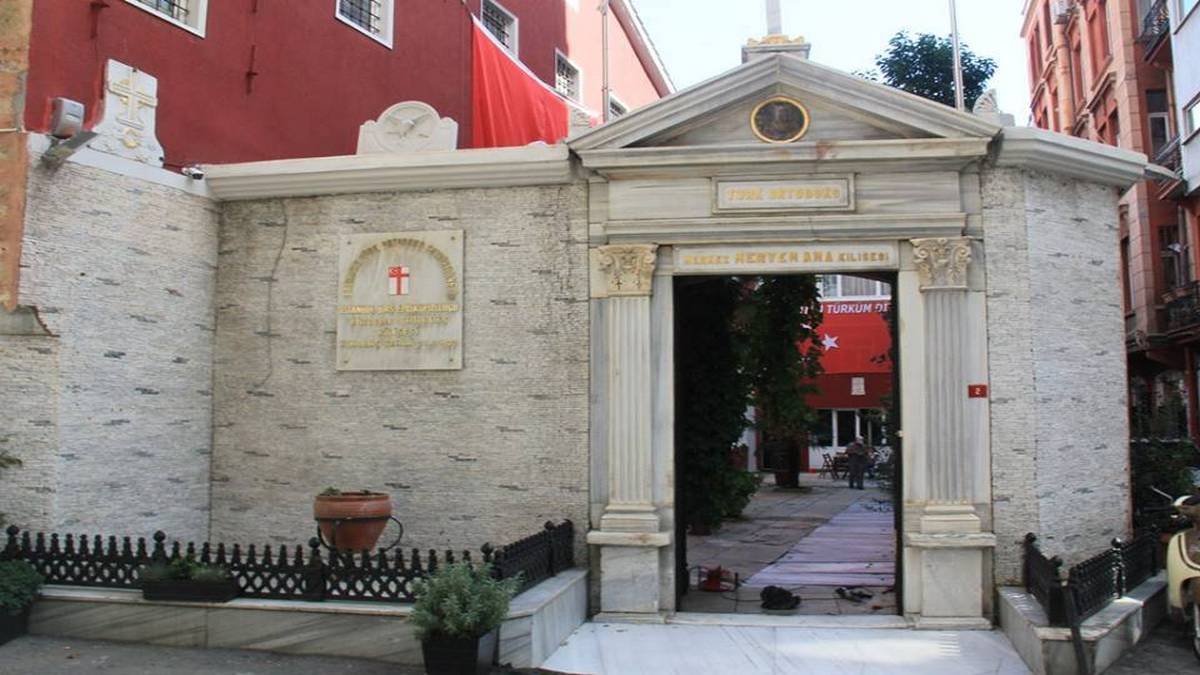
The Turkish Orthodox community has announced that it is ending its institutional relationship with its existing patriarchate and will continue its activities independently. The decision marks a rare and public rupture within one of Türkiye's smallest but most symbolically distinctive religious communities.
The move does not involve the Ecumenical Patriarchate of Constantinople or the wider Greek Orthodox Church. Instead, it concerns the Turkish Orthodox Patriarchate, a separate body established in the early 1920s that has long operated outside the mainstream Eastern Orthodox communion.
Unlike internationally recognised Orthodox patriarchates, the Turkish Orthodox Patriarchate has never been acknowledged by the global Orthodox world. It emerged during the early republican period with a distinctly national orientation, adopted Turkish as its liturgical language, and positioned itself as independent from external ecclesiastical authority. Its status has remained unique, both institutionally and symbolically, within Türkiye's religious landscape.
In a written statement, representatives of the community said the separation followed prolonged internal disputes over governance, representation, and decision-making. They argued that the current patriarchal leadership no longer reflected the collective will of the community and accused it of acting without sufficient consultation or accountability.
According to the statement, religious practice will continue uninterrupted, but administrative and institutional ties with the existing patriarchate structure have been severed. The group said it would proceed under an independent organisational framework, emphasising continuity of faith alongside a clear break in authority.
The decision has effectively produced two competing claims within the Turkish Orthodox sphere. One remains centred on the existing patriarchate leadership, while the other asserts legitimacy through an independent, community-based identity. Both sides invoke historical continuity, underscoring the symbolic sensitivity of the split.
The Turkish Orthodox tradition has long occupied an unusual position. Formed in deliberate distinction from Greek Orthodoxy and never fully integrated into state-recognised religious structures or the global Orthodox hierarchy, it has existed at the margins of both. As a result, internal fractures carry significance beyond theology, touching on questions of identity, heritage, and institutional survival.
No immediate legal or official response has been announced. However, the separation raises practical questions about representation, property, and recognition going forward.
For now, the split exposes how questions of authority and representation can destabilise even long-standing religious structures. In the case of the Turkish Orthodox community, the rupture underlines a deeper uncertainty over who speaks for the institution, on what basis, and with what legitimacy. How that question is resolved will shape whether the division becomes permanent or forces a redefinition of authority within a community that has long existed on the margins of the Orthodox world.