
Bosphorus News Geopolitics Desk
Türkiye has submitted a new letter to the United Nations dated 16 February 2026, challenging maritime claims by Greece, the Republic of Cyprus, and Egypt and reiterating its objection to Greece's Maritime Spatial Plan declared on 16 April 2025. The letter was circulated as United Nations General Assembly document A/80/642 and is signed by Türkiye's Permanent Representative to the United Nations, Ahmet Yıldız.
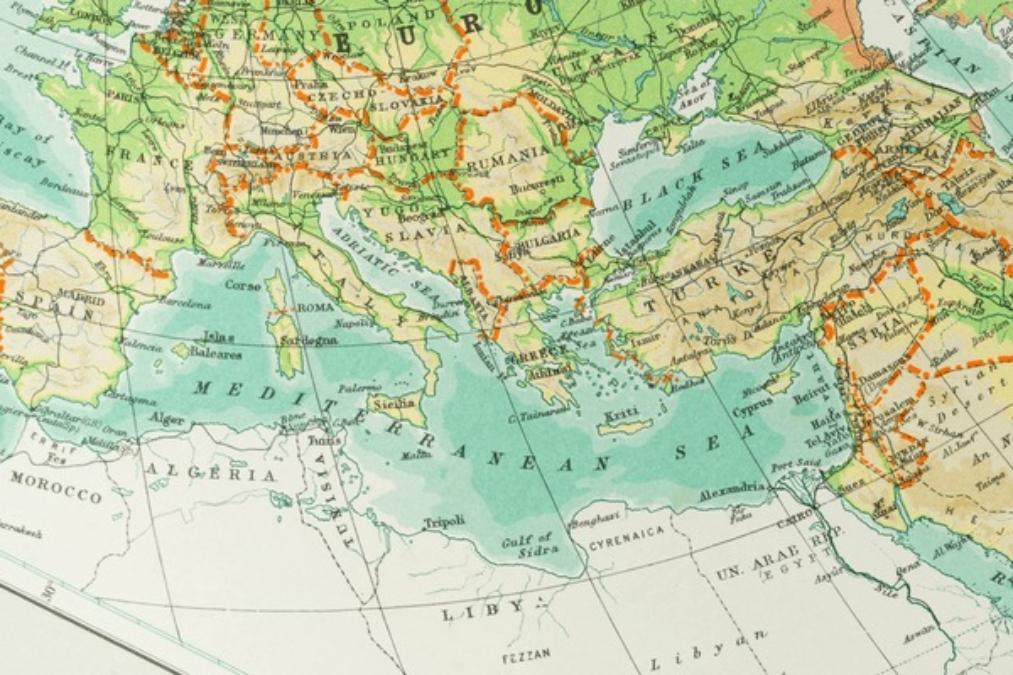
In the text, Ankara argues that parts of Greece's maritime plan overlap with what it describes as Türkiye's maritime jurisdiction areas in the Aegean Sea and the Eastern Mediterranean, and says unilateral steps cannot generate legal consequences for Türkiye.
The letter also restates Türkiye's wider Eastern Mediterranean line. It defends the 2019 Türkiye–Libya maritime memorandum of understanding as a legitimate basis for its claims and describes arrangements such as the Greece–Egypt partial EEZ delimitation as invalid from Türkiye's perspective.
On Cyprus, Ankara again questions the Republic of Cyprus's authority to represent the entire island in maritime arrangements, framing Turkish Cypriots as holding separate and direct rights in the file.
Athens, cited via diplomatic sources in regional coverage on 27 February 2026, described the UN letter as a repetition of known positions and signaled a response through UN channels. The UN system typically circulates such correspondence as official documents without endorsing any side's claims.
The latest letter lands on top of a longer running UN paper trail. In earlier Aegean focused exchanges, Greece has rejected Türkiye's argument that alleged breaches of island demilitarization could affect sovereignty, and has invoked Article 51 of the United Nations Charter in its reasoning on island defence.
The escalation in paperwork comes despite a parallel dialogue track. On 11 February 2026 in Ankara, President Recep Tayyip Erdoğan and Prime Minister Kyriakos Mitsotakis publicly framed dialogue and international law as the route for managing disputes, while acknowledging that core maritime disagreements remain unresolved.