
By Bosphorus News Defense Desk
The war between the United States, Israel and Iran has put Türkiye's air and missile defence capabilities under renewed scrutiny. Two Iranian ballistic missiles have been intercepted over Turkish territory since the conflict began on February 28, with NATO assets destroying one on March 4 and a second on March 9. The incidents have sharpened attention on what Türkiye can field from its own production lines.
The answer, according to publicly available material from state-owned defence manufacturer Roketsan, is a portfolio that now spans guided rockets, tactical ballistic missiles, cruise missiles, anti-ship weapons, torpedoes and layered air defence systems.
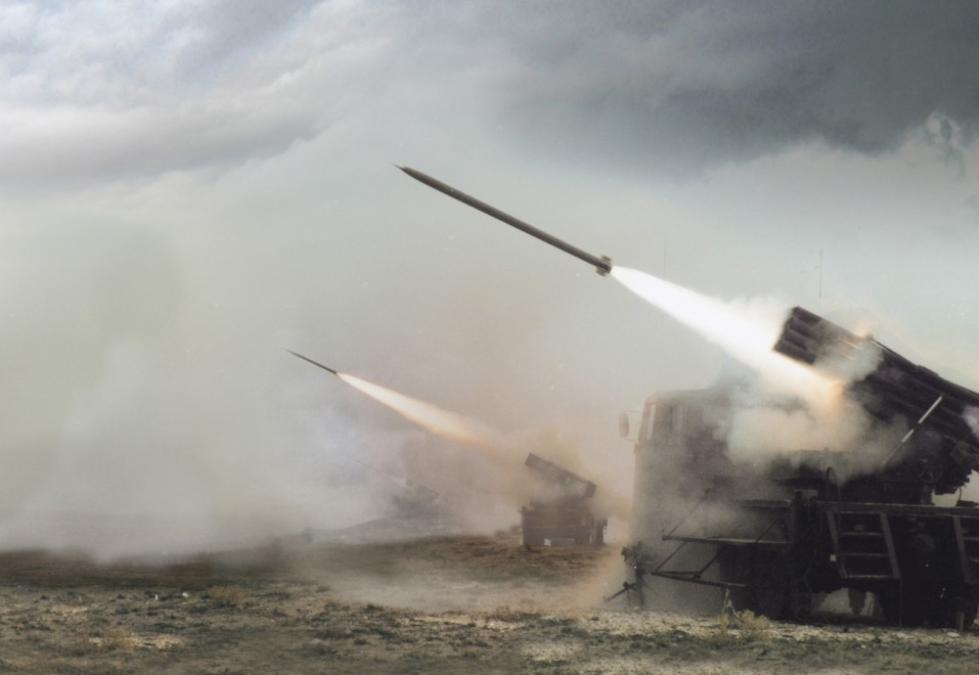
On the land side, Roketsan lists the 122 mm TRG-122 guided rocket with a range of 13 to 30 kilometres and the TRG-300 guided missile with a range of 20 to 120 kilometres, alongside the BORA tactical surface-to-surface ballistic missile and TAYFUN, described as a system designed for deep targets. The shift from unguided rocket artillery toward precision-guided variants reflects a broader move toward lower circular error probable values across the land fires inventory.
At sea, ATMACA is presented as a high-precision anti-ship missile suitable for integration on assault boats, frigates and corvettes. AKYA is a fully indigenous heavyweight torpedo designed to engage both submarines and surface targets.
The air defence layer has become the most immediately relevant part of the portfolio given the current threat environment. Roketsan's HİSAR family is designed to protect bases, ports and troops against fixed-wing and rotary-wing aircraft, cruise missiles, air-to-ground missiles and unmanned aerial vehicles. SUNGUR is also listed as part of the company's current short-range air defence offering.
Turkish state broadcaster TRT Haber, citing Roketsan Chairman Faruk Yiğit, reported this week that some systems are already in inventory, some are nearing entry into service and others remain under development. That distinction carries weight. The HİSAR family and several guided rocket variants are fielded. Others are still moving from test and exhibition to operational deployment.
The gap that remains most visible is at the upper tier. Recent Turkish defence analysis has pointed to ballistic missile defence as the most demanding part of the air defence problem, with indigenous capability still maturing at that layer. The two recent intercepts were carried out by NATO assets, not Turkish systems, a detail that the current inventory picture does not fully obscure.
The Roketsan portfolio reflects a structural shift in Türkiye's defence industrial base. Domestic missile production now reaches across land, sea and air, with a growing emphasis on precision, survivability and sovereign production. The war on Türkiye's doorstep has made that story harder to ignore.