
By Bosphorus News Geopolitics Desk
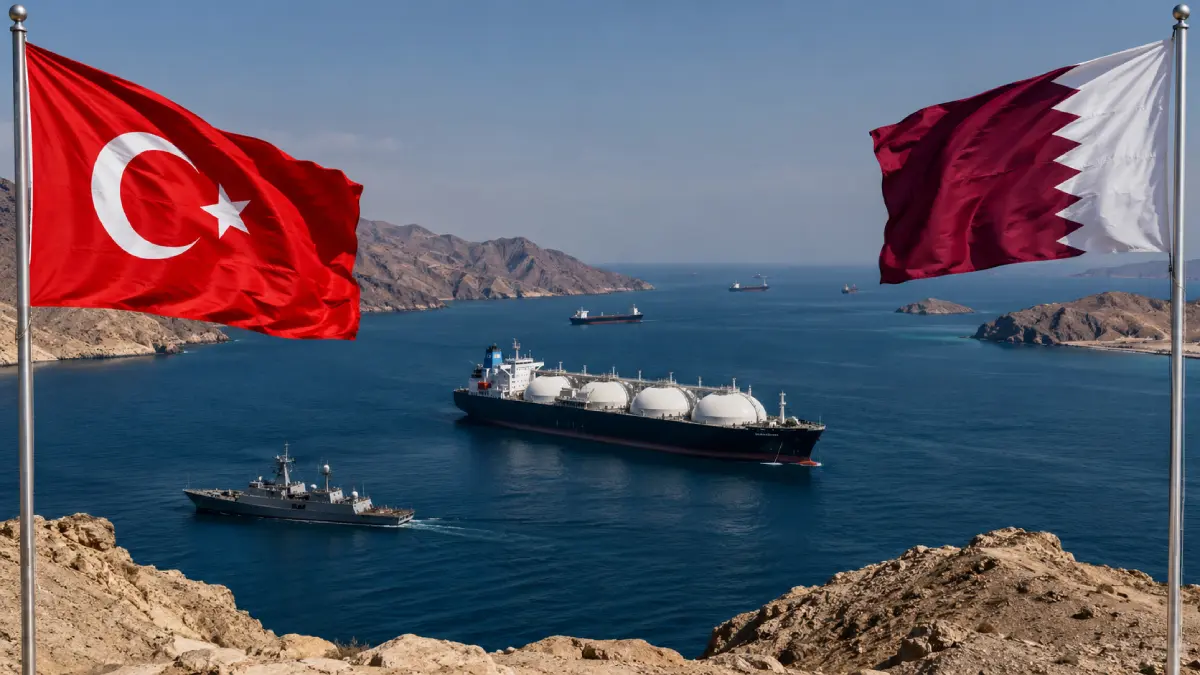
Türkiye and Qatar warned against renewed military escalation in the Gulf after Foreign Minister Hakan Fidan's talks in Doha, backing Pakistan-led ceasefire efforts and rejecting the use of the Strait of Hormuz as diplomatic leverage.
Fidan visited Doha on May 11–12 and was received by Qatar's Emir Sheikh Tamim bin Hamad Al Thani at Lusail Palace. Türkiye's Foreign Ministry said he also met Qatar's Prime Minister and Foreign Minister Sheikh Mohammed bin Abdulrahman Al Thani and Deputy Prime Minister and Minister of State for Defence Affairs Saoud bin Abdulrahman Al Thani.
Qatar's Amiri Diwan said the talks covered strategic cooperation between the two countries and regional developments, with particular focus on the ceasefire between the United States and Iran, de-escalation efforts and the consolidation of a diplomatic solution.
The strongest post-visit message came from Qatar's Foreign Ministry, which said Doha and Ankara warned against the resumption of military operations and supported Pakistan-led mediation efforts aimed at a ceasefire, an end to the war and the reopening of the Strait of Hormuz.
The ministry also said both countries opposed treating Hormuz as a "negotiating chip," describing the waterway as an international passage where freedom of navigation must be guaranteed.
Fidan used the joint press setting in Doha to frame Hormuz as a global economic security issue. Anadolu Agency quoted him as saying the strait should not be "used as a weapon" and that Türkiye supported efforts to reopen the route and ensure safe passage.
The statement moves the Doha visit beyond a routine diplomatic stop. It places Türkiye and Qatar on the same line over three connected files: preventing a renewed military phase, supporting mediation, and keeping Hormuz open to energy and commercial traffic.
The visit had already placed Türkiye inside the overlapping Hormuz, Gulf security and LNG diplomacy files, as Bosphorus News reported in its preview of Fidan's Doha talks. The post-visit statements shifted the story from expectation to official positioning, with both capitals backing ceasefire efforts and warning against the strait being turned into leverage.
That distinction matters for Türkiye's role. Ankara is not presenting itself as a direct party to the Gulf crisis, but as a diplomatic actor working through mediation channels, energy security language and coordination with Qatar, one of the Gulf's central diplomatic platforms.
Reuters had reported before the visit that Fidan's Doha talks would focus on the regional impact of the Iran war, Qatar's concerns over the Strait of Hormuz and Türkiye's support for efforts to reduce the risk to maritime navigation. The official statements released after the talks confirmed that Hormuz had moved to the center of the diplomatic agenda.
The Turkish message also follows Fidan's earlier comments that Türkiye could consider a role in demining the Strait of Hormuz if a peace agreement between Iran and the United States creates the conditions for such work. That earlier position gave Ankara a possible technical security role; the Doha visit now adds a political line built around ceasefire support and safe passage.
For Qatar, the warning carries immediate weight. The Gulf state depends on maritime routes that run through or near the Hormuz security environment, while Doha has also positioned itself as a diplomatic channel in regional crises. Its joint line with Türkiye links those two concerns: ceasefire diplomacy and the protection of navigation.
The risk around Hormuz has become larger than a Gulf energy question. Any prolonged closure or militarisation of the strait would affect oil and gas flows, shipping insurance, port security and Europe's wider search for stable energy corridors. Türkiye's interest is therefore not limited to Gulf politics. It sits at the intersection of energy security, regional diplomacy and the wider debate over alternative routes in a more unstable trade environment.
The Doha statements do not resolve the Hormuz crisis. They show how Türkiye and Qatar want the issue framed: not as a battlefield prize or bargaining chip, but as a route whose closure would damage regional economies and the wider global energy system.
***Sources: Republic of Türkiye Ministry of Foreign Affairs, visit of Hakan Fidan to Qatar, May 11–12, 2026. Qatar Amiri Diwan, HH The Amir Receives Turkish Foreign Minister, May 12, 2026. Qatar Ministry of Foreign Affairs, Qatar and Türkiye Warn Against Renewed Military Escalation and Back Pakistan-Led Ceasefire Efforts, May 12, 2026. Anadolu Agency. Reuters and Bosphorus News Reporting.