
By Bosphorus News Economy Desk
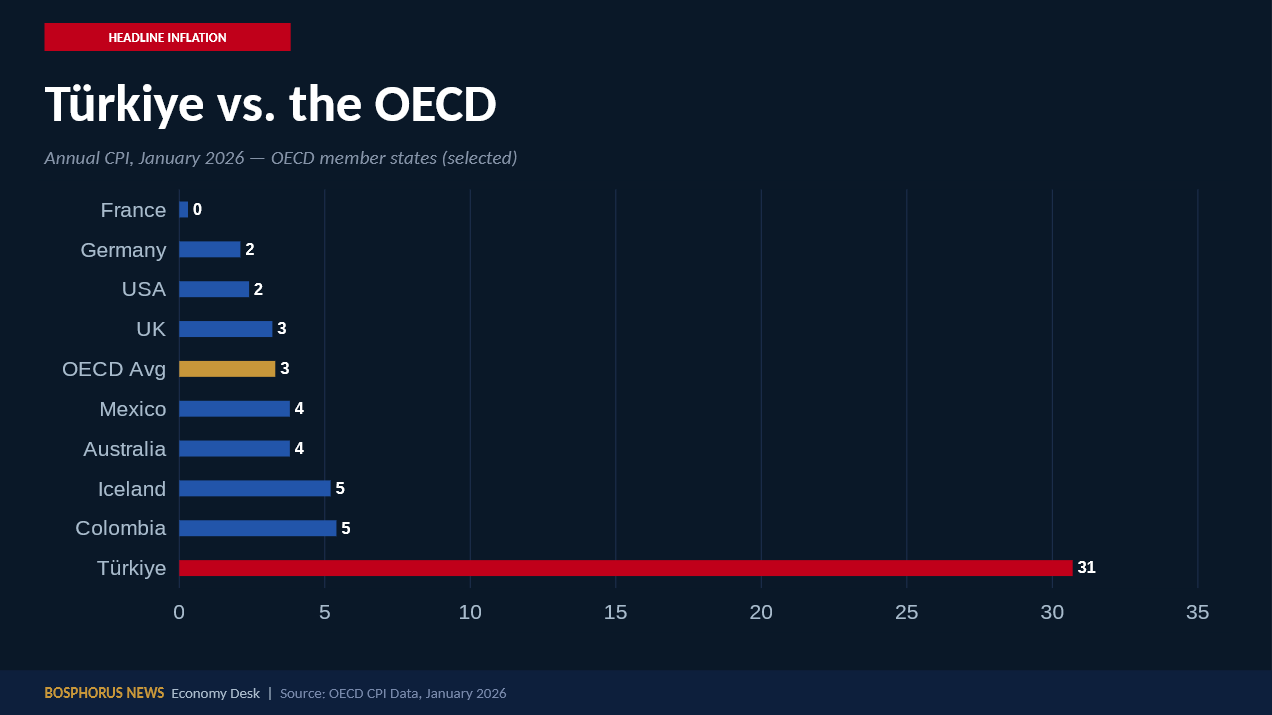
Türkiye ended January 2026 with annual inflation running at 30.7%, according to Consumer Price Index data published by the Organisation for Economic Co-operation and Development (OECD); a rate more than five times higher than the next-closest member state and nearly ten times the group average.
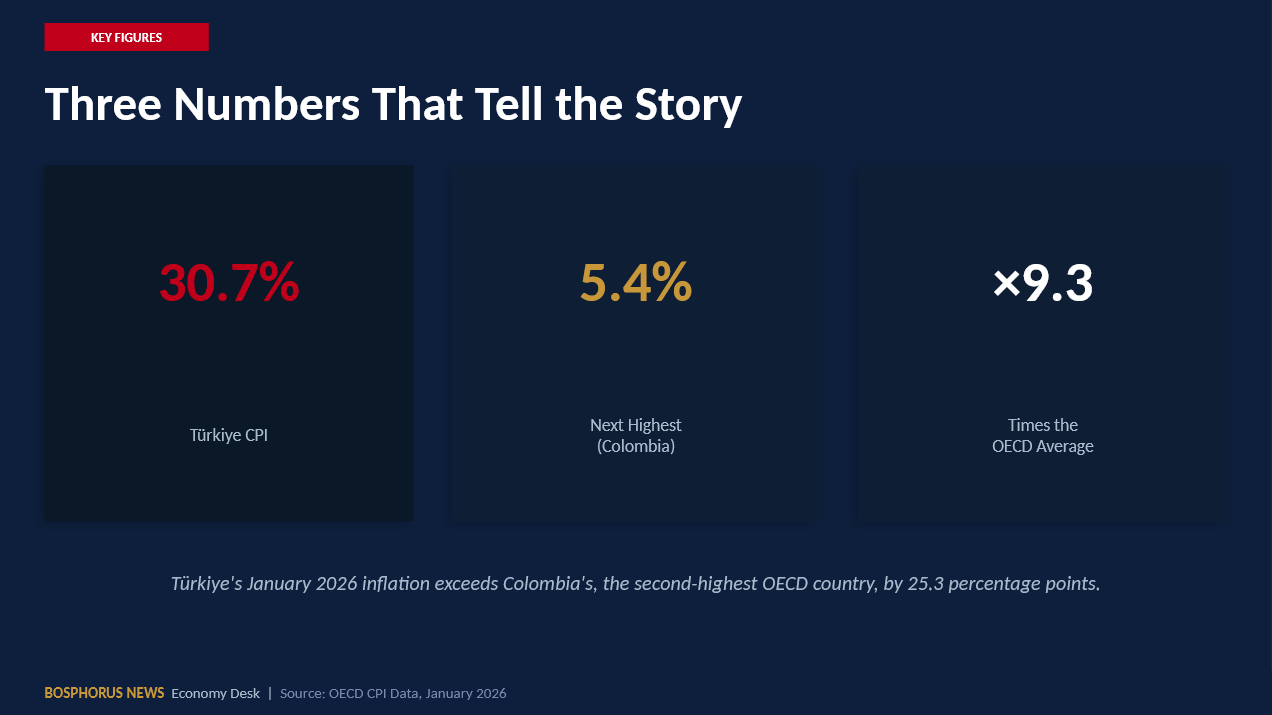
The OECD wide inflation average fell to 3.3% in January, continuing a broad disinflationary trend across developed economies. Türkiye's rate places it in a category of its own within the 38 member bloc, separated from its nearest comparable, Colombia (5.4%), by a gap of 25.3 percentage points.
A Divergence Across All Categories
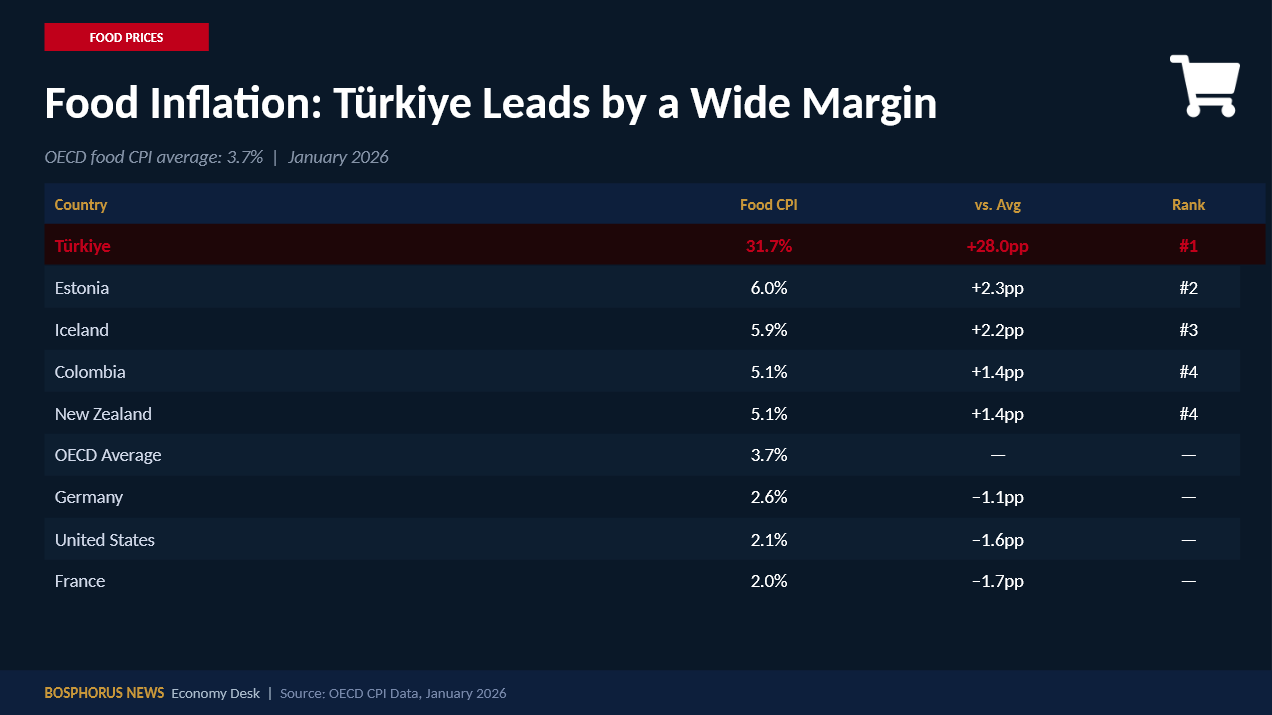
The separation is not confined to headline figures. Türkiye recorded the highest food inflation in the OECD at 31.7%, against a group average of 3.7%. Estonia, in second place, registered 6.0%; less than a fifth of Türkiye's rate. Iceland (5.9%), Colombia (5.1%) and New Zealand (5.1%) rounded out the top five.
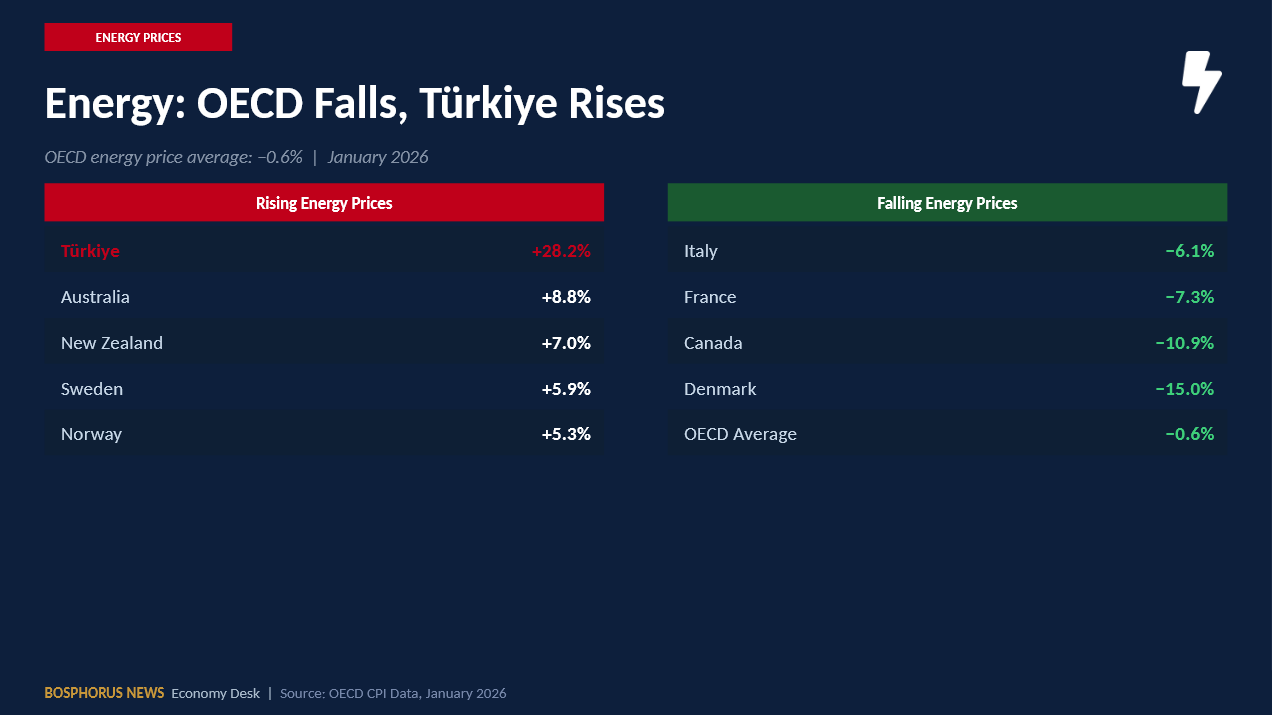
The divergence is sharpest in energy. Across OECD member states, energy prices fell by an average of 0.6% year-on-year in January. In Türkiye, they rose by 28.2%. Several major economies recorded double-digit energy price declines over the same period: Denmark was down 15.0%, Canada down 10.9% and France down 7.3%.
Context: Where G7 and Euro Area Economies Stand
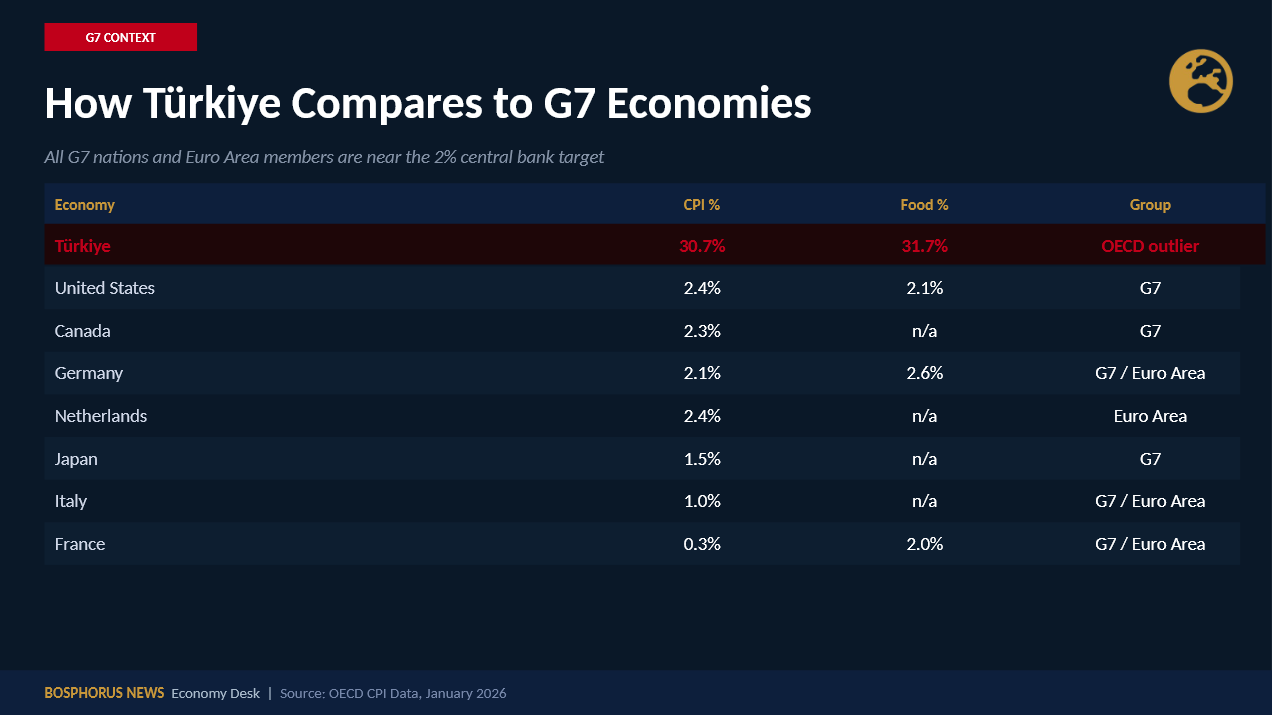
Among the G7 nations and Euro Area economies, price growth is broadly contained near central bank targets. The United States recorded 2.4%, Canada 2.3% and Germany 2.1%. Japan came in at 1.5%, Italy at 1.0% and France at just 0.3%. None of the G7 members came within 28 percentage points of Türkiye's headline rate.
Significance
The scale of Türkiye's separation from OECD norms is without precedent in the current data cycle. While the broader trend across the bloc points firmly toward normalisation, Türkiye's inflation in every measured category: headline, food and energy continues to move at a pace that bears no comparison to any other member state.
Analysts note that the gap between Türkiye and the second-highest country has actually widened compared to prior months, raising questions about the trajectory of the country's disinflation programme and the timeline for convergence toward OECD level price stability.
Source: OECD Consumer Price Index data, January 2026 release. All figures are year-on-year percentage changes.