
By a security and foreign policy analyst | Identity known to the editors
The views expressed are the author's own and do not reflect the editorial position of Bosphorus News.
A Signal, Not a Strike
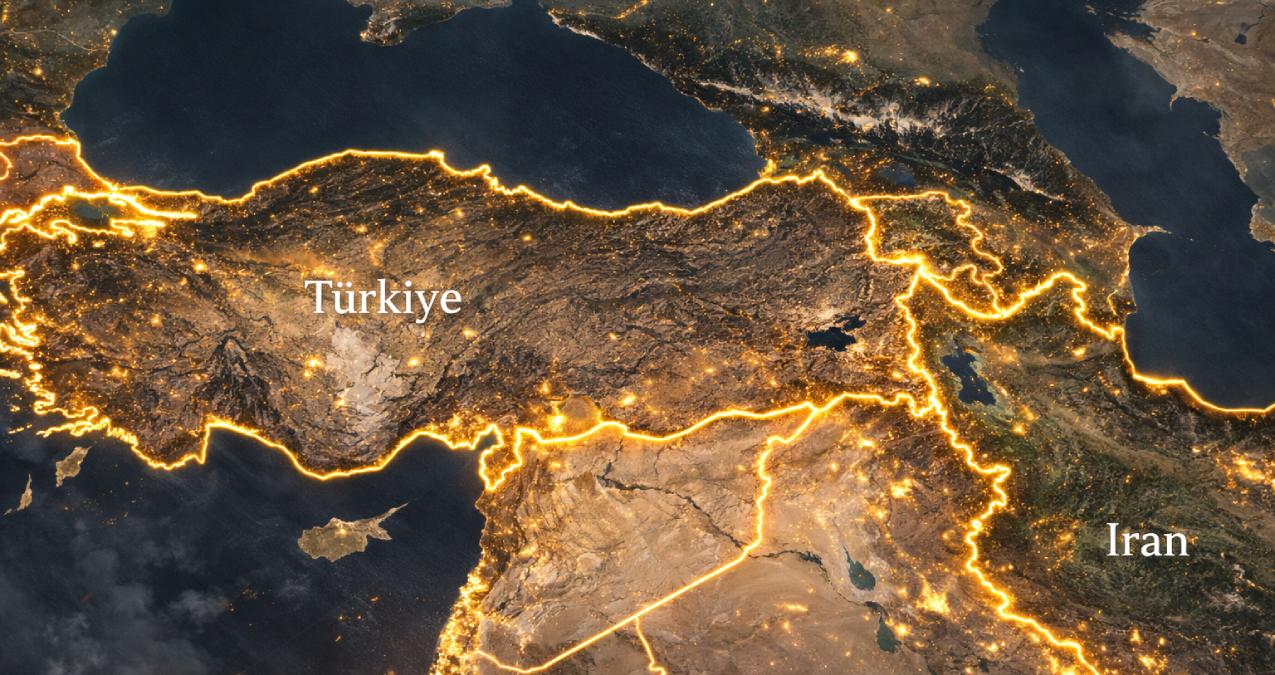
A ballistic missile launched from Iran was neutralised by NATO air-defence systems as it entered Turkish airspace on Friday, marking the third such incident since 4 March. No casualties were reported.
The limited ballistic launches toward Turkish airspace likely point to a calibrated signal rather than a genuine attempt to strike Türkiye. Tehran may be venting frustration with Ankara, particularly over what it perceives as Turkish cooperation with Western intelligence structures during the conflict, while keeping the scale deliberately small to avoid a direct confrontation with a NATO member state.
The Weight of History
Türkiye's own response is likely to remain instinctively cautious. The country's strategic culture has long been shaped by a deep mistrust that Western allies would fully defend it in a major war, a trauma rooted in the collapse of the Ottoman Empire and the spectre of partition embodied in the Treaty of Sèvres. That historical reflex toward caution has repeatedly shaped Ankara's behaviour; Türkiye, for instance, only entered the war against Adolf Hitler's Germany at the very end of World War II. The lesson often drawn in Ankara's strategic circles is simple: avoid entanglement until the outcome is clear.
Equally important is the absence of a recent military precedent. The last direct wars between Ottoman and Persian forces date back roughly two centuries, and the modern Turkish-Iranian border has been one of the most stable in the region. That long record of coexistence has encouraged both sides to manage tensions carefully rather than risk opening a new interstate front.
Domestic Politics as Constraint
Domestic politics further reinforce restraint. A majority of the Turkish public could easily interpret any retaliation against Iran as indirectly supporting Israel, a perception the government of Recep Tayyip Erdoğan would want to avoid ahead of the 2028 elections and amid ongoing economic fragility. For Ankara, neutrality is not only a diplomatic posture but also a political necessity.
Erdoğan also walks a fine line in his dealings with US President Donald Trump over Iran, likely shaped by a wider set of bilateral calculations: the ongoing Turkish state bank Halkbank case in US courts, the future of Russian S-400 defence systems in Türkiye, the fragile post-war situation involving Kurdish actors in neighbouring Syria, F-16 modernisation, and expectations for a return to the F-35 programme.
Iran's Decentralised Doctrine
On the Iranian side, another dynamic may be at play. Iran's decentralised "mosaic defence" doctrine grants significant operational autonomy to regional units. In such a structure, officials such as Abbas Araghchi or Masoud Pezeshkian can plausibly deny responsibility for a launch if it originated from a local command node acting within a broad strategic framework rather than under direct centralised orders. In a possible gesture amid the broader turbulence, Iran also allowed a Turkish vessel to pass through the Strait of Hormuz on Friday.
NATO Anchor Holds
None of this suggests that Ankara is reconsidering its alliance orientation. Despite periodic tensions with Western partners, it is highly unlikely that Türkiye would contemplate leaving NATO or ejecting US forces from bases such as Incirlik Air Base, Kürecik Radar Station, or the alliance's facilities in İzmir as a result of these incidents. For Türkiye, the strategic calculus remains clear: the benefits of NATO membership, deterrence, intelligence integration, and access to Western defence networks, still outweigh the political and diplomatic frictions that periodically accompany it.
***This commentary is based on the author's own analysis. It does not draw on classified or official sources.