
By Murat YILDIZ
The Pattern of Coexistence
Israeli and United States military operations against Iran matter to Türkiye because Iran is not a distant file. It is a neighbour. And in Ankara's thinking, that fact carries a layer outsiders often miss. Between the two sits a long running pattern of coexistence. It tightens, hardens, and sometimes strains, but it does not snap easily.
Turks and Persians have managed a long rivalry in the same geography while speaking different languages and belonging to different schools of Islam. Reading that relationship as ideology alone misses what keeps it functional in crisis. It is closer to a learned habit of managing shocks without letting them break the frame. In that sense it resembles the Türkiye Russia relationship. Severe incidents happen, rhetoric spikes, channels narrow, yet rupture is rarely treated as the default outcome.
The Risk of State Capacity Collapse
That background shapes Ankara's language. President Recep Tayyip Erdoğan's early remarks, describing Iran as a "friend and brother" country, stressing a breach of sovereignty, and calling for a diplomatic solution, do not place Türkiye on Iran's line. They signal something more familiar in statecraft. A weakened neighbour is a direct risk. When state capacity next door starts to crack, the costs cross the border fast.
The ideological distance is real. Erdoğan and the Justice and Development Party have long spoken in the vocabulary of Sunni political Islam. The Islamic Republic of Iran rests on a Shiite revolutionary model. The two do not sit on the same ground, and Iranian power projection has been criticised in Ankara, including through phrases such as the "Shiite crescent." Even so, those criticisms did not turn into a standing posture aimed at shaping Iran from within. Ankara competes and clashes on specific files, but avoids locking the relationship into a regime question. Once that door opens, the crisis starts pulling toward Türkiye's border like a magnet.
Strategic Boundaries and Red Lines
There is another reality in the region that is rarely stated cleanly. Israel and some Gulf capitals may be openly dissatisfied with Iran's current leadership. Beyond that, a strong Iran is not a comfortable scenario for many actors in the neighbourhood. An Iran that is isolated, economically squeezed, and constrained in its room for manoeuvre often looks more manageable. That does not mean everyone shares the same goal. A total collapse is expensive for everyone, especially for Türkiye. A confident Iran projecting power is unsettling for everyone.
Türkiye's line becomes clear in that space. A stronger Iran is not desired. Iran's collapse is not treated as a gain. The red lines are not ideological. Security comes first. Migration follows immediately. The Partiya Karkerên Kurdistanê (PKK), designated as a terrorist organization, and its affiliates add weight to the threat picture. Markets register the shock early, especially when trading opens, but they do not reorder the strategic priorities.
The Question of Governability: Migration
Migration is the first part of such crises that becomes visible inside Türkiye. The Syrian war showed how quickly a movement of people turns into a lasting domestic and political file. The economic, demographic, social, and psychological load of an open door policy is still being carried.
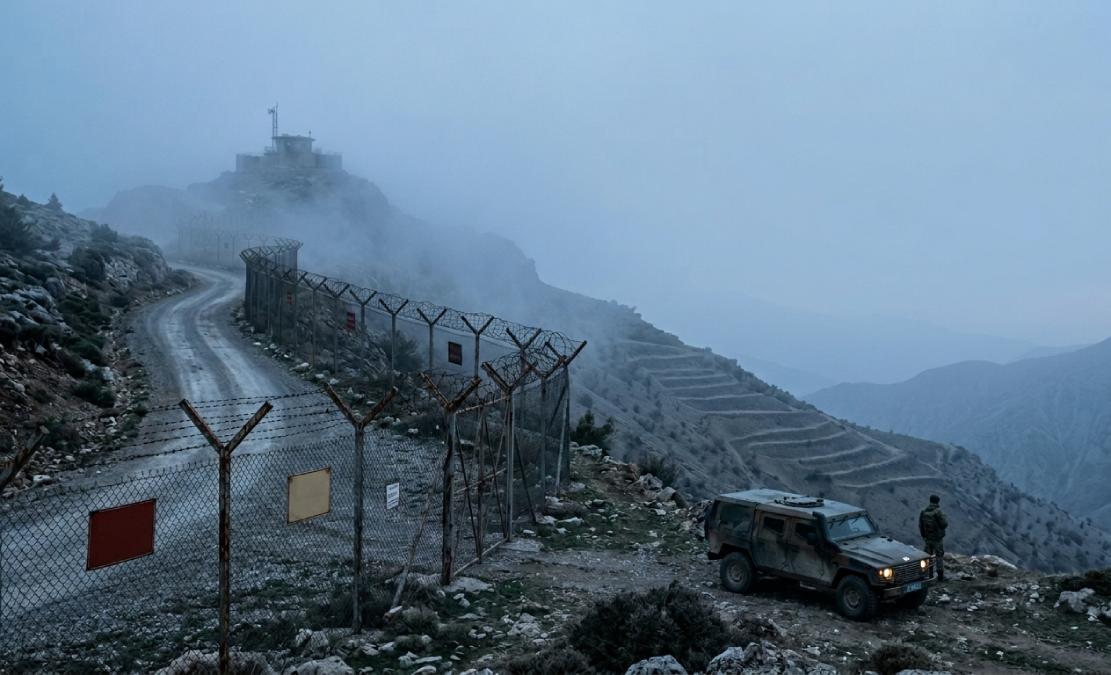
The Iran line is more complex. If movement begins, it is unlikely to remain limited to Iranians. Flows tied to the Afghanistan corridor can activate fast. A border shift never stays a border issue for long. It moves into politics, sharpens public anxiety, and changes daily life. This is why border security is not a slogan about closing gates. It is a question of governability. Once an uncontrolled passage begins, reversing it takes years. Thinking through preventive measures is a capacity reflex. Criticising that reflex is easy. Carrying the burden is not. The Syrian file made that difference painfully clear.
The Danger of Misattribution and Provocation
A sharper risk sits inside the security dimension. Ankara generally treats direct Iranian strikes on Türkiye as a lower probability scenario. The coexistence logic still functions as a brake. The bigger danger is a provocation where attribution blurs.
Türkiye hosts United States and North Atlantic Treaty Organization (NATO) activity on its soil. It also hosts visible NATO operations such as Airborne Warning and Control System flights. That environment can invite third parties to manufacture misattribution. A drone strike, a sabotage attempt, or a limited rocket provocation can be framed quickly as "Iran did it." If that framing hardens before facts do, escalation becomes easier to trigger and harder to stop. Rushed judgement is a costly luxury in this file. A threat should not be dismissed. But if an incident happens, the first requirement is identification. The decision must rest on data, not momentum. Otherwise a wrong response can push two neighbours into a line that is hard to exit.
Most sensitive of all is the risk of attacks by Kurdish militant networks on regime targets in provinces with dense Turkish populations, a scenario that could force Türkiye into a harder security posture.
The Evolving Role of Diplomacy
The outcome Türkiye seeks to avoid is obvious. Border chaos, domestic security pressure, a migration wave, economic strain, and rising terrorism risk hitting at the same time. Diplomacy is not what it was either. Three decades ago, Türkiye's open military and political channels with Israel could have created a wider and more visible role in crisis management. That capacity is limited today. Back channel contact exists, often intelligence heavy, but it does not produce the same diplomatic reach.
The role narrows, yet it does not disappear. What remains is a specific advantage. Türkiye is a NATO country that can still talk to Iran. Two tracks matter here. The NATO channel and a trilateral contact format. The NATO channel becomes more important as provocation risk rises. NATO infrastructure in Türkiye can turn into a symbolic target during regional crises. In that scenario, technical verification, a shared operational picture, early warning, and coordination become essential. It also helps frame the crisis as a southern flank risk and manage domestic sensitivity without inflaming it.
The trilateral format matters for a narrower purpose. It is not a grand peace conference. It is a crisis communication arrangement. It reduces misreading of thresholds. It helps contain uncontrolled acts before they grow. Turning this format into theatre produces little. In a crisis, visibility often costs flexibility.
A Posture of Cost Limitation
The practical posture starts at the border and ends at the table. Border management requires physical control and administrative capacity. Domestic security must account for terrorism risk and provocation risk at the same time. Diplomacy, with Israel channels limited, rests on the ability to talk to Iran and on Türkiye's position inside NATO. The economy reflects the shock early, but the main line still runs through security and migration.
Türkiye cannot reshape the main direction of this conflict on its own. It cannot manage Iran's internal political trajectory. It cannot hold every actor in Iraq and Syria under control at once. Yet it can limit costs. It can make spillover harder. It can keep channels open. It can protect decision making discipline against provocation.
If the crisis turns toward Türkiye, the first signs appear on the border. Sudden movement, revived routes, and a flow that becomes multi layered are early signals. Domestic security pressure follows. Drone or sabotage attempts against critical points, efforts to pin incidents quickly on Iran, and simultaneous movement by the PKK network can intensify the picture. New security gaps in Iraq and Syria accelerate the chain. If the market shock stops behaving like a wave and turns into sustained pressure, domestic tension rises further.
The line holds. Ankara does not want chaos on its border. It does not want state collapse next door. This is not a matter of sympathy. It is a cost calculation. A collapse sends its bill first to the neighbour, and it sends it to Türkiye. The rational course is to limit escalation without entering Iran's regime debates, strengthen border management, keep identification and decision discipline intact against provocation, use the NATO channel for technical coordination, and keep crisis communication open through a trilateral track. It does not promise a grand solution. It aims at something simpler. Keeping the crisis from landing inside Türkiye.