
Bosphorus News Defense Desk
Türkiye's Defence Minister Yaşar Güler used EFES 2026 to frame Ankara's security posture across three files at once: Cyprus, the Aegean and the Strait of Hormuz.
His remarks, published by Türkiye Today on the sidelines of the exercise, turned EFES from a multinational military drill into a platform for Türkiye's wider regional messaging. Güler warned that Ankara would not hesitate to use its guarantor powers over Cyprus, criticised Greece's reported Patriot deployment on Karpathos and kept open a possible Turkish role in humanitarian mine clearing in Hormuz if an agreement is reached.
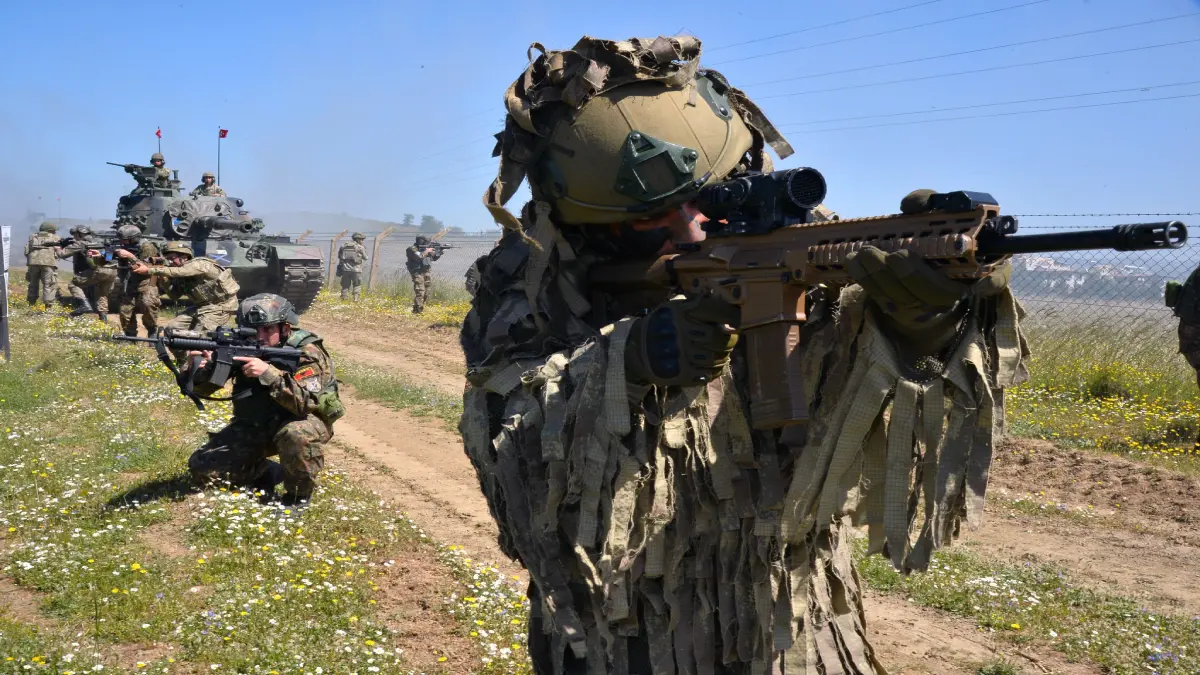
EFES 2026 had already brought Syria, Libya and NATO partners into the same field, as Bosphorus News reported. Güler's interview moved the exercise into a sharper political register, tying the same platform to Türkiye's active security concerns from the Eastern Mediterranean to Gulf maritime routes.
The Cyprus message was the strongest. Güler said Türkiye was closely following every development related to the island and would not refrain from using its guarantor powers. The wording placed Cyprus inside Türkiye's live security agenda rather than leaving it as a frozen diplomatic file.
That line comes as Ankara is also moving to deepen the Turkish Cypriot side's infrastructure connection to Türkiye. The planned Alanya to Northern Cyprus gas pipeline, a 97 kilometre route targeted for 2028, has already given the island's energy file a wider strategic dimension by raising the possibility of a future reverse flow route for Eastern Mediterranean gas toward Türkiye and Europe.
Güler's Aegean remarks added a second layer. He described Greece's reported Patriot deployment on Karpathos as "meaningless" and linked the move to the demilitarised status of the islands. His criticism placed air defence deployments inside the wider argument over island militarisation, where Ankara sees Greece's military posture as part of a broader Aegean security problem.
The minister also addressed the Israel, Greece and Greek Cypriot defence triangle. Güler said Türkiye was watching the alignment carefully, while adding that it did not currently constitute a direct military threat. That formulation allowed Ankara to keep the file under active observation without presenting it as an immediate escalation.
The Hormuz section of the interview widened the geography of the message. Güler said Türkiye supports freedom of navigation under international law and could support multinational initiatives that preserve maritime security in the Strait of Hormuz. He added that Türkiye could participate in humanitarian mine clearing activities if the parties reach an agreement.
That position follows Foreign Minister Hakan Fidan's earlier remarks in London, where he said Türkiye could consider joining a technical mine clearing effort after a possible Iran U.S. agreement. Bosphorus News detailed how Trump's claim that an Iran deal is nearing completion has brought Hormuz reopening talks and Türkiye's mine clearing option back into focus.
The distinction in Ankara's language is important. Türkiye is not announcing a deployment, and it is not presenting itself as a party to a confrontation in Hormuz. The Turkish line is conditional, technical and tied to a future agreement. Safe passage, energy security and maritime stability are the operative terms.
EFES 2026 therefore carried two messages at once. The first was military visibility, with multinational participation and Turkish defence systems on display. The second came through Güler's interview, which used the exercise setting to place Cyprus, the Aegean and Hormuz inside a single Turkish security reading.
The political value of that setting is clear. EFES gave Ankara a military stage, but Güler used it to define the limits of Türkiye's tolerance in Cyprus and the Aegean while leaving a controlled opening in Hormuz. The result is a defence message that reaches beyond the exercise area: Türkiye is treating its nearby maritime disputes, Turkish Cypriot security and global energy chokepoints as connected parts of its regional security posture.
***Sources: Türkiye Ministry of National Defence; Reuters; Bosphorus News.