
By Bosphorus News Geopolitics Desk
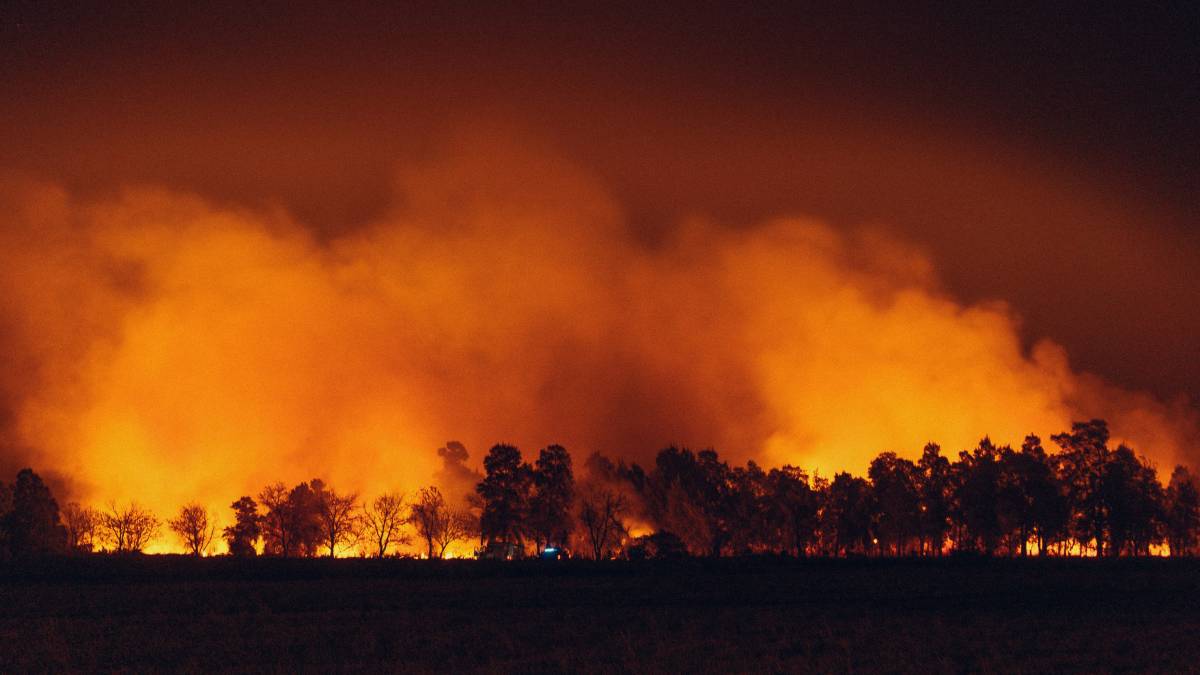
Western Türkiye and parts of Greece are emerging as megafire-prone zones within Mediterranean Europe, according to a new peer-reviewed study that tracks wildfire behaviour across the region over more than a decade.
The research analyses 11,403 summer wildfires recorded between 2008 and 2022, covering Mediterranean Europe from the Iberian Peninsula to the Balkans and explicitly including western Türkiye in its dataset.
Most fires remain relatively small. Medium-sized events (30–100 hectares) account for 45.1% of cases, while large fires (100–1,000 hectares) represent 48.1%. The upper end of the scale is far thinner. Very large fires (1,000–10,000 hectares) make up 6.4%, and megafires above 10,000 hectares account for just 0.4% of all recorded events.
That imbalance reverses when measured by impact. Very large fires and megafires together account for 57.6% of total burned area, despite representing only 6.8% of events. Megafires alone are responsible for 17.7% of all burned land, confirming that a small number of extreme events drives most of the damage.
Geographically, the main concentration sits in Portugal and north-western Spain. The study then identifies a secondary belt that includes Sardinia, Greece and western Türkiye, placing the Aegean basin inside a wider zone where extreme fire behaviour appears more likely.
The mechanism behind that pattern is not reduced to seasonal heat. The study finds that fire escalation depends on a sequence of conditions that do not always align. Prolonged drought reduces fuel moisture over weeks and months, creating a receptive landscape. What determines whether a fire remains contained or expands rapidly is the timing of short-lived atmospheric conditions. Strong winds and persistent heat matter, but the decisive signal comes from nighttime conditions.
The paper identifies nighttime land-surface temperature as one of the most reliable indicators of escalation. Warmer nights allow fires to sustain intensity after sunset, limiting the slowdown that fire crews traditionally rely on. The loss of that nighttime window changes the rhythm of suppression. Fires that continue spreading overnight are harder to contain and more likely to cross into larger size classes.
This behaviour is not confined to a single country. The dataset treats western Türkiye and Greece within the same environmental system, and the results point to a shared exposure. The Aegean basin emerges as part of a continuous zone where drought-conditioned fuels and short bursts of extreme weather can combine quickly and with little margin for response.
The modelling results reinforce that shift. In transitions from very large fires to megafires, the study reports prediction accuracy of around 67%, despite the rarity of such events. In broader transitions, recall rates reach up to 78%, indicating that the largest fires are increasingly linked to identifiable environmental conditions rather than random spread.
Not all variables carry equal weight. Vegetation indicators such as NDVI and leaf area index show limited ability to distinguish the largest fires once drought conditions are already in place. Fuel presence matters, but it does not explain escalation on its own. The decisive factor appears when extreme weather overlays an already stressed landscape, particularly through warm nights and strong winds.
Cyprus is not examined as a standalone case in the study, and no direct findings are reported for the island. That absence limits direct comparison. The proximity of identified clusters in Greece and western Türkiye still points to a tightening regional pattern, where shifts in nighttime heat and wind behaviour are shaping fire dynamics across the Eastern Mediterranean.
Megafires remain rare events. The study's numbers make clear that their frequency is low, but their impact is not. A small fraction of fires is responsible for the majority of burned land. The conditions that produce those events are becoming easier to identify, even as they remain difficult to control.
***Full study: https://www.nature.com/articles/s44304-026-00197-5