
By Bosphorus News Economy Desk
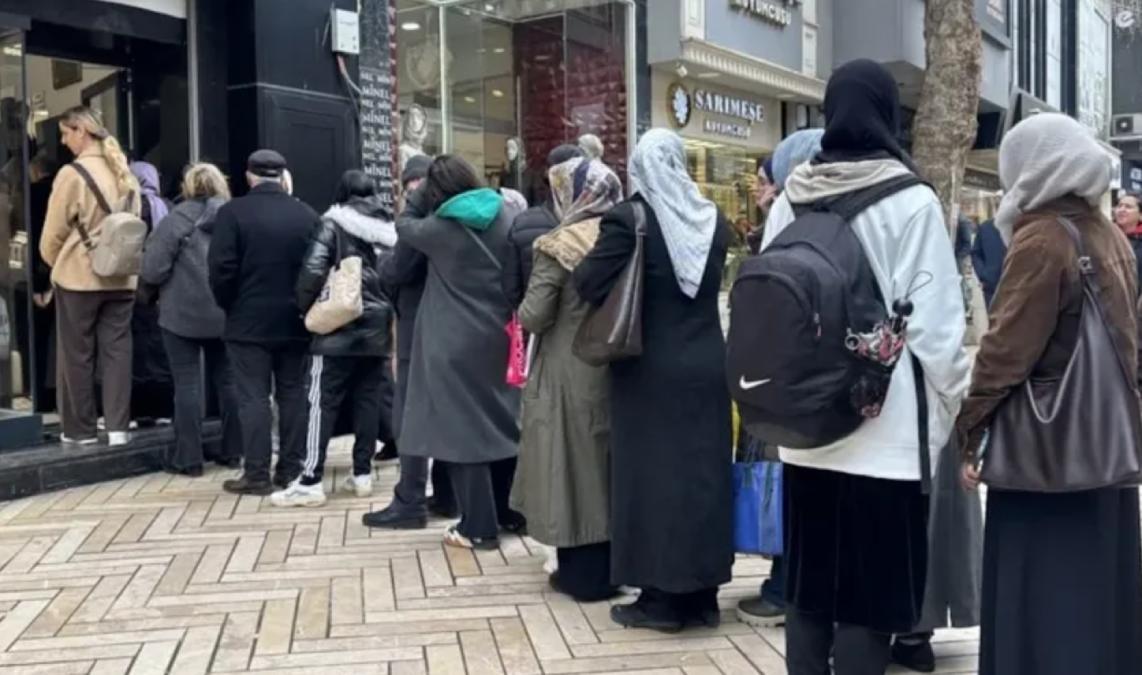
Gold buying surged across Türkiye on 24 March, with queues forming in Istanbul's Grand Bazaar and jewellery districts in several cities after a drop in prices triggered a rush into the market, as uncertainty linked to the Iran war spilled into household buying decisions.
Turkish media reported that jewellers struggled to keep pace as customers lined up outside shops, especially in Istanbul's Kapalıçarşı, one of the world's oldest and largest covered markets. Traders described heavy foot traffic through the day, with buyers treating the price decline as a short-lived opening.
That reaction is familiar in Türkiye, where gold remains one of the first places households turn when uncertainty rises. This time, falling prices and regional tension hit together, pushing retail demand sharply higher within hours.
Reports said the move was fast and visible. In several locations, queues extended beyond shop entrances, while some retailers faced pressure on available stock as purchases clustered into a narrow window. The Grand Bazaar drew the most attention, not only because of its scale but because it often reflects shifts in broader retail sentiment before they appear elsewhere.
Similar scenes were reported in other cities, where local jewellery shops saw a sharp increase in customer traffic. Coverage across Turkish outlets pointed to the same pattern: households moved quickly to secure physical gold as prices eased and the regional backdrop darkened.
The price drop appears to have acted less as a warning than as an invitation. Buyers seem to have read it as a temporary opening in a market still shaped by volatility, not as the start of a sustained decline. That expectation helped turn a routine price move into a visible retail rush.
Türkiye's gold market makes those shifts easy to see. Physical purchases of coins and jewellery remain widespread, so changes in sentiment move quickly from screens to shop counters. In markets dominated by financial products, that response is often absorbed more quietly. In Türkiye, it forms queues.
The wider backdrop has been set by the Iran war, which has added pressure across energy markets and deepened financial uncertainty across the region. Those effects are now visible far beyond wholesale pricing or currency screens. They are reaching ordinary consumer behaviour, and nowhere was that more visible on 24 March than in the Grand Bazaar.
Jewellers were left managing a surge in customers, tighter stock conditions and prices that were moving at the same time. In high-traffic areas such as Kapalıçarşı, that combination turned a price dip into one of the busiest trading days seen in recent weeks.
The rush shows how quickly regional shocks can reach the street in Türkiye, where a conflict hundreds of kilometres away can feed directly into the oldest reflex in the market: buy gold before the window closes.