
By Bosphorus News Economy Desk
President Recep Tayyip Erdoğan announced on April 24 that Istanbul Park will return to the Formula 1 calendar from 2027, with Türkiye set to host the race for at least five consecutive seasons through 2031 after talks with Formula 1 CEO Stefano Domenicali and FIA President Mohammed Ben Sulayem. The announcement restores one of the country's most visible global sports platforms after a long absence. It also revives the harder question behind every modern Formula 1 deal: who actually makes money from the race?
Officials project an annual economic contribution of $200 to $250 million and around 200,000 visitors during race week. Those figures are large enough to support the political case for Formula 1's return, but they do not answer the commercial question. A race can fill hotels, lift restaurant spending and generate global exposure while the organiser still struggles to cover hosting fees, race operations, security, logistics and the cost of turning visibility into profit.
That is why the new financial structure matters, but does not settle the issue. TOSFED, the Turkish Automobile Sports Federation, is expected to serve as the delivery partner, shifting the race away from the direct state-backed model that helped sustain the Turkish Grand Prix before it disappeared from the calendar in 2011. The risk may sit in a different place this time, but the economics still have to work.
Istanbul Park was never the weak part of the Turkish Grand Prix. The circuit, designed by Hermann Tilke, was widely praised by drivers, with Turn 8 becoming one of the most respected corners on the calendar. The problem sat outside the asphalt. Attendance reached about 110,000 at the inaugural race in 2005, then fell steadily. By 2011, the final ticketed race before the calendar exit drew about 25,000 spectators in a venue built for roughly 125,000, a utilisation rate of around 20 percent.
That figure strips the argument down to demand. Ticket prices were difficult to square with local purchasing power, promotion weakened, and the circuit's location in Tuzla, far from central Istanbul, made race-day access a recurring obstacle rather than a minor inconvenience. The pandemic-era 2021 return drew about 190,000 across the weekend, but that was a special case: Formula 1 was coming back after a long absence, global calendars were distorted, and the novelty effect was unusually strong.
Academic work has already treated Istanbul's first Formula 1 era as a warning rather than a simple missed opportunity. Ferhan Gezici's 2014 study in Cities described an event built on high expectations but weak local embedding, with participation below capacity and a legacy that failed to build durable legitimacy among local audiences. Later research on Istanbul's Grand Prix experience reached a similar point: the circuit could deliver spectacle, but the market around it never became strong enough to carry the cost.
The burden is heavier now than it was in Istanbul Park's first era. Türkiye's Ecclestone-era deal was reported at roughly €115 million over seven years, or about $16–17 million a year depending on exchange assumptions at the time. The current Formula 1 market is far more expensive. Hosting fees are now commonly estimated around $30 million, with European classics often cited around $20–26 million and Gulf races such as Qatar and Saudi Arabia reported near $55 million. Annual escalator clauses of about 5 percent are also common. Even if Istanbul receives terms below the Gulf tier, the 2027 cost base is unlikely to resemble the one that already proved difficult before 2011.
The official $200 to $250 million figure may describe gross economic activity around the event, but it does not show how much of that money stays with the local promoter, how much returns through taxation, or how much leaks into international hotel groups, airlines, corporate hospitality providers and Formula 1's commercial structure. Indianapolis officials reached a similar conclusion when they estimated that a race could generate roughly $200 million in regional activity while leaving the city with a $25–35 million net loss once hosting costs were included.
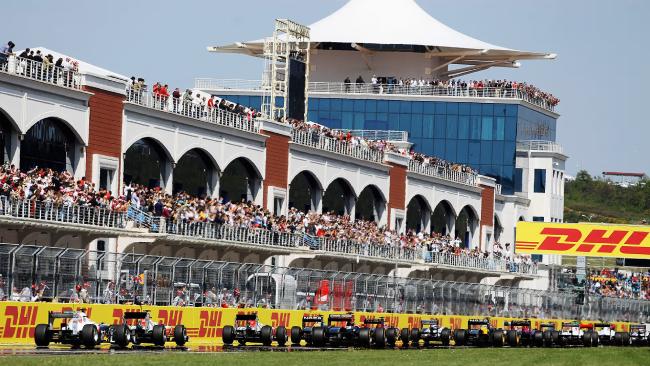
That distinction matters because Istanbul Park's earlier problem was not the absence of spectacle. It was the inability to convert spectacle into a sustainable economic base. Formula 1's commercial model centralises some of the most valuable revenue streams, while local promoters depend heavily on ticketing, hospitality, local sponsorship and the wider visitor economy. If the hosting fee is high and repeat attendance weakens after the initial return effect, gross economic activity can look impressive while the organiser's balance sheet remains exposed.
The global record makes that risk harder to dismiss. The Indian Grand Prix reportedly lost about $24 million in its final year in 2013. The Korean Grand Prix reportedly lost about $37 million in 2012 before disappearing from the calendar. Both races operated in markets with limited domestic motorsport depth and circuits located away from the strongest urban demand zones, which makes the comparison uncomfortable for Istanbul Park.
Formula 1 can generate real value when the race is integrated into a dense tourism economy, when international visitors spend inside the host city, and when the event becomes part of a broader entertainment ecosystem. Singapore and Las Vegas are the obvious examples. Both are city centred events built around hotel capacity, nightlife, corporate hospitality and international tourism flows that remain close to the circuit.
Istanbul Park does not fit that model. It is a permanent circuit on the city's Asian edge, physically separated from the tourism corridors that make Istanbul one of the world's major destinations. That does not make the project impossible, but it means the race cannot be judged by the economics of city-centre events. The more relevant comparison is with circuits where headline impact numbers looked attractive while local demand, access, sponsorship and operating costs failed to line up over time.
The strongest economic case for Istanbul therefore depends less on Türkiye's large Formula 1 television audience and more on whether the race can draw enough non-local, high-spending visitors while also filling the grandstands with repeat domestic spectators at prices the market can sustain. Erdoğan cited Formula 1's estimate of nearly 19 million fans in Türkiye, a useful figure for measuring reach and branding potential. It is not, on its own, proof that Istanbul Park can produce the revenue base required for five consecutive seasons.
The new structure reduces the direct political problem that ended earlier attempts to keep the race alive. If TOSFED and private partners carry the burden rather than the Treasury, the immediate fiscal exposure changes. That is a real shift. It also gives the government an easier story to tell: Türkiye is returning to one of the world's most visible sports platforms without presenting the project as a conventional subsidy-driven prestige event.
Still, private delivery does not mean the public sector disappears from the cost side. Major sports events require transport planning, policing, road management, emergency services, administrative coordination and, often, infrastructure support. If those costs are absorbed by public institutions while the headline hosting fee sits elsewhere, the financial risk has not fully left the public sphere. It has only become harder to see in one line item.
That leaves the 2027 return with a practical test. The organisers need a transport plan that makes Tuzla feel connected to Istanbul rather than detached from it. They need ticket pricing that does not turn the race into a one-time luxury event for a narrow audience. They need sponsorship deep enough to absorb a hosting fee that has become far more expensive than it was during the Ecclestone era. Most of all, they need to prove that Formula 1's return can create demand beyond the novelty of being back on the calendar.
Türkiye's regional profile, tourism base and global visibility are stronger than they were when Istanbul Park first fell off the calendar. Formula 1 itself is also a different product, with a younger global audience and a much larger digital footprint. Those changes give the return a better commercial environment than the one Türkiye left behind in 2011, but they do not remove the basic arithmetic.
The race has to generate enough repeat attendance, sponsorship, hospitality income and non-local visitor spending to cover a hosting fee that is likely to be far higher than the one Istanbul struggled with before. If public institutions carry transport, security and coordination costs while the promoter carries the fee, the risk will be divided rather than eliminated.
That is the economic test behind the 2027 return. Istanbul Park does not only need to fill seats in its comeback year. It needs to prove that the money created around the race can be captured by the people and institutions paying for it. Without that, Formula 1 may deliver visibility for Türkiye while leaving the same old question unanswered: who actually makes money from Formula 1 in Istanbul?
***This analysis draws on Formula 1's April 2026 announcement, Ferhan Gezici's 2014 study in Cities, the 2022 Danish Institute for Sports Studies and NTNU Business School research on European Formula 1 host regions, GPDestinations attendance data, and industry reporting on the economics of recent and former Grand Prix markets.