
By Bosphorus News Geopolitics Desk
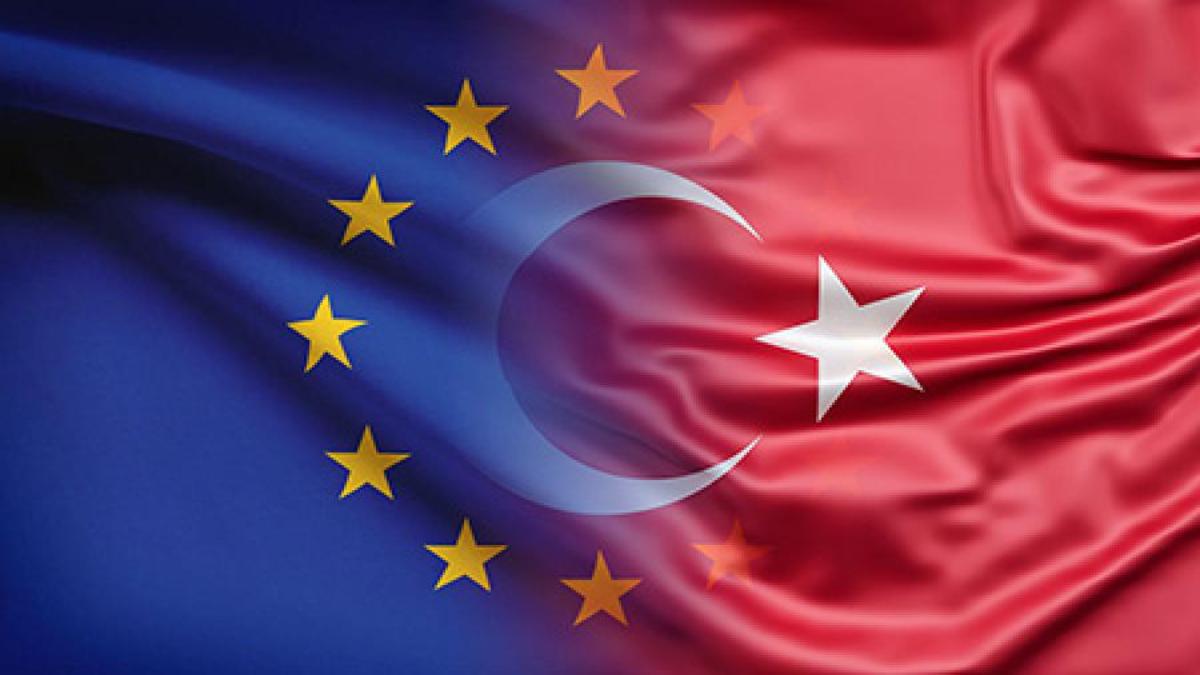
Türkiye moved across three European tracks in quick succession, aligning bilateral deals, multilateral platforms and EU-facing diplomacy into a single sequence. The pattern was not symbolic. It showed how Ankara is structuring access to European systems at a time when formal accession remains frozen but operational cooperation is expanding.
Dubrovnik: connectivity meets energy pressure
The Dubrovnik stop carried the week's clearest strategic signal. Türkiye attended the Three Seas Initiative summit as a strategic partner for the first time, stepping into a framework that links infrastructure, energy and digital systems across the EU's eastern corridor. Foreign Minister Hakan Fidan positioned Türkiye not as an external route but as an integrated node, presenting the Middle Corridor and the Iraq-Türkiye Development Road as complementary extensions of European connectivity.
The argument gained force from energy disruption. The regional conflict triggered in late February pushed Iran to restrict passage through the Strait of Hormuz, driving up European import costs and exposing maritime vulnerabilities. Türkiye's message in Dubrovnik was direct: overland routes are no longer optional redundancy. They are becoming structural.
Fidan also met Croatian and Bosnian officials on the margins of the summit, keeping the Balkans inside the same connectivity map. The engagement extended Türkiye's role beyond transit geography into regional alignment.
Vienna: economic depth, political friction
Vienna exposed the contradiction at the centre of Türkiye-EU ties. Austria remains among the most resistant EU members on Türkiye's accession, with long-standing opposition across the political spectrum. The institutional position in Brussels is also unchanged. The accession process has been effectively frozen since 2018.
Yet the bilateral track continues to deepen. Trade exceeded 4.3 billion dollars in 2025, investment flows remain substantial and the Turkish-origin population in Austria forms a large economic and social bridge. Fidan's meetings with Austrian Foreign Minister Beate Meinl-Reisinger and senior officials centred on energy, digitalisation, connectivity and defence industry cooperation.
Ankara's message stayed consistent. Türkiye continues to state full EU membership as a formal objective, but it is pressing for a strategic relationship that is not held hostage by stalled accession politics. The distance between the formal EU file and day-to-day cooperation is growing.
The Vienna programme added a multilateral layer through talks with Organisation for Security and Cooperation in Europe Secretary-General Feridun Sinirlioğlu. The meeting placed Türkiye inside Europe's security architecture from a Vienna-based institutional centre, alongside the bilateral agenda.
London: the only signed output
The London stop delivered the week's only concrete agreement. Türkiye and the United Kingdom signed a Strategic Partnership Framework covering defence, trade and diplomatic coordination. The UK's post-Brexit positioning has favoured bilateral structures, and the agreement fits that pattern. While details were not fully disclosed, the framework formalises a relationship that has already been expanding in practice.
Compared with Dubrovnik and Vienna, London was less about signalling and more about locking in an existing track.
A coordinated sequence, not a tour
Türkiye used the same week to work three doors into Europe: the Three Seas Initiative for connectivity, the United Kingdom for bilateral security and trade, and Austria for the difficult EU-facing conversation. None of these tracks reopens the accession process. Each gives Ankara a way to remain inside Europe's practical decision space.
European institutions have not moved to reopen negotiating chapters, and political resistance in key member states continues. Still, high-level dialogues, trade modernisation talks and sectoral cooperation are expanding.
That is the core of Ankara's approach. Türkiye is not waiting for accession talks to restart. It is building parallel entry points into European security, energy and infrastructure systems, using geography, industrial capacity and diplomatic sequencing to make itself harder to ignore.