
By Bosphorus News Geopolitics Desk
The foreign ministers of Türkiye, Egypt, Pakistan and Saudi Arabia have met three times in six weeks, established a permanent senior officials track, and received a mandate to draft a regional security arrangement. The format has moved faster than any comparable multilateral initiative to emerge from the Iran war.
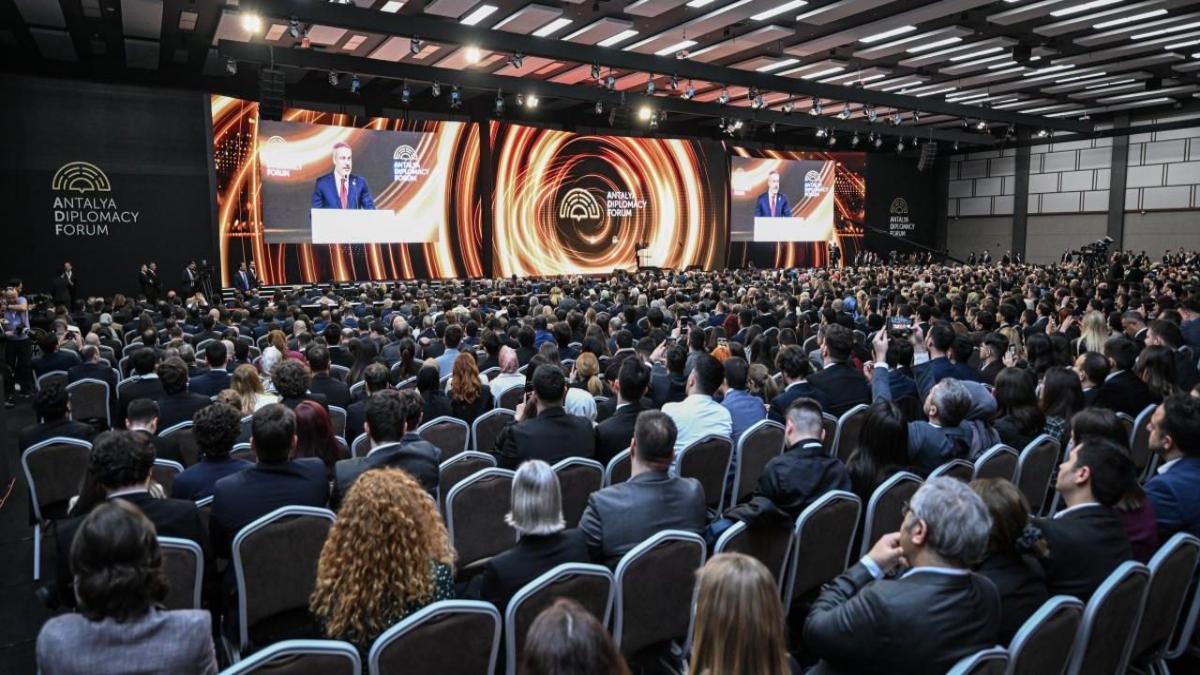
The first meeting took place in Riyadh on March 20 on the margins of a broader Islamic consultative ministerial. The second convened in Islamabad on March 29 as a dedicated standalone session. The third met on April 17 on the sidelines of the Antalya Diplomacy Forum, where Türkiye used the platform to run multiple diplomatic tracks simultaneously, as reported by Bosphorus News. Between the second and third ministerials, deputy and assistant foreign ministers from all four countries met in Islamabad on April 14 to prepare conclusions for Antalya. That preparatory tier is now a standing feature of the format.
Egyptian Foreign Minister Badr Abdelatty confirmed on April 18 that the four countries are working toward a security arrangement designed to end the current conflict and prevent its recurrence. No draft text has been published.
The quartet's combined weight is substantial. Türkiye holds NATO's second-largest standing army and a domestic defence industry that exported 10 billion dollars in 2025. Saudi Arabia is the world's largest oil exporter. Pakistan brings nuclear and missile capacity. Egypt controls the Suez Canal. None of the four fought in the Iran war. All four were directly affected by it: through energy disruption, drone and missile overflight, or economic pressure on supply chains linked to the Strait of Hormuz.
The bilateral defence tracks running alongside the multilateral format reinforce its credibility. Türkiye and Pakistan conducted the Atatürk-XIII and Jinnah-XIII bilateral exercises in 2025. Egypt and Türkiye held the Friendship Sea-2025 naval drill. Saudi Arabia and Pakistan signed a comprehensive defence agreement last year. All four participated in the Pakistan Army Team Spirit 2026 competition. The quartet is not building from zero. It is formalising ties that already exist.
Analysts watching the format are cautious about its ceiling. A NATO-style mutual defence pact is not on the table. The four countries hold divergent positions on several regional files, including Libya, Sudan and the future governance of Gaza. Egypt and Israel maintain a functional but strained relationship. Saudi Arabia's alignment with Washington constrains how far Riyadh can move inside a format that carries implicit distance from US-managed security architecture.
What is taking shape is something more limited: a coordination mechanism with institutional depth, a regional framing, and enough bilateral trust to produce joint statements and shared negotiating positions. Pakistan's role as the primary technical mediator in US-Iran talks has given the format direct relevance to the most urgent file in the region. Türkiye's position as facilitator, rather than lead actor, is deliberate. Ankara is not trying to lead the region. It is trying to remain indispensable to it.
The quartet's next step will depend on whether Egypt's security deal mandate produces a text that the other three can support. If it does, the format will have generated its first concrete output. If it does not, the three ministerials will remain a signal of intent rather than a structure with binding weight.
***Sources: Pakistan Today, Türkiye Today, Thotharis Substack analysis, Egyptian Foreign Ministry statement (April 18, 2026), Anadolu Agency, Bosphorus News reporting.