
By Bosphorus News Geopolitics Desk
Israeli offshore gas production has started feeding back into the regional system after a month of disruption triggered by the February 28 escalation involving Iran. Gas from the Leviathan field resumed flows to Jordan on April 3, restoring a supply line that went offline at the height of the security risk. Israeli authorities had halted operations at both Leviathan and the Karish platform as a precaution against missile threats in the early phase of the conflict. The restart followed a formal decision on April 2 to bring Leviathan back online. Jordanian officials expect volumes to rise gradually as pressure stabilizes across the system. This still falls short of a return to the pre crisis flow pattern. The process is moving forward in stages and under tighter security assumptions than before. Egypt linked exports are likely to benefit as volumes build, yet the broader offshore picture remains uneven. Parts of the system are still operating with constraints, and operators are clearly prioritizing continuity over speed. Disruptions in the Eastern Mediterranean energy network feed directly into a wider regional equation shaped by supply security, political leverage and corridor competition, and Türkiye sits close to the center of that equation.
(Image: Bosphorus News)
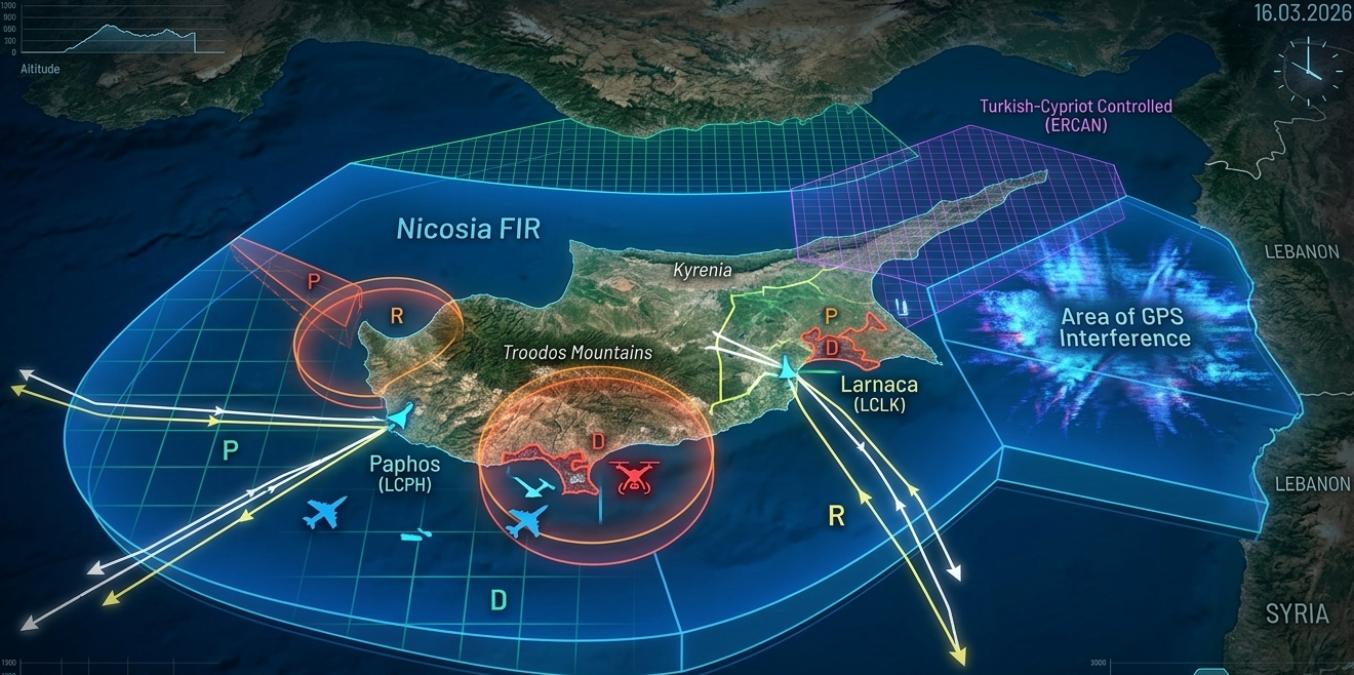
Airspace across the Eastern Mediterranean remains shaped by a dense electronic warfare environment. Updated safety guidance from United States and European aviation authorities continues to flag the region, including the Nicosia Flight Information Region, as an area where interference affecting satellite based navigation is routinely observed. Pilots report false terrain alerts, sudden position shifts and inconsistent navigation data, especially during approach segments. These are not isolated glitches. They match disruption patterns that aviation regulators have been tracking for months. A more important shift is visible in the institutional response. European authorities are now working directly with air navigation service providers on mitigation measures, treating the issue as part of daily operations rather than as a passing anomaly. The interference remains embedded in the operating environment across the region. Crews adapt, systems compensate and traffic continues, yet the margin for error is narrower than before. Positioned at the intersection of regional air corridors, military activity and maritime competition, Türkiye is directly exposed to these changes as part of the same operational picture.
Türkiye's naval activity in the first quarter of the year was built around a wide area deployment centered on TCG Anadolu and supported by surface units including TCG İstanbul, TCG Derya and TCG Kınalıada. The group left port on January 20 with a schedule that tied national tasking to NATO exercise cycles across several theatres, from the Mediterranean to northern European waters. It took part in exercises such as Steadfast Dart 2026 and Dynamic Mariner, operating alongside allied forces in demanding scenarios that tested coordination and readiness. By mid March, the Turkish Ministry of National Defense indicated that the group had begun its return transit after completing northern deployments, with the final leg of the voyage concluding toward the end of the month. Even after the mission's end, the scale and geography of the deployment continue to stand out. Over the course of the first quarter, Turkish naval; ground and air assets operated across a broad geography while remaining integrated into NATO activity cycles, reinforcing a pattern of sustained reach that extends well beyond immediate waters.
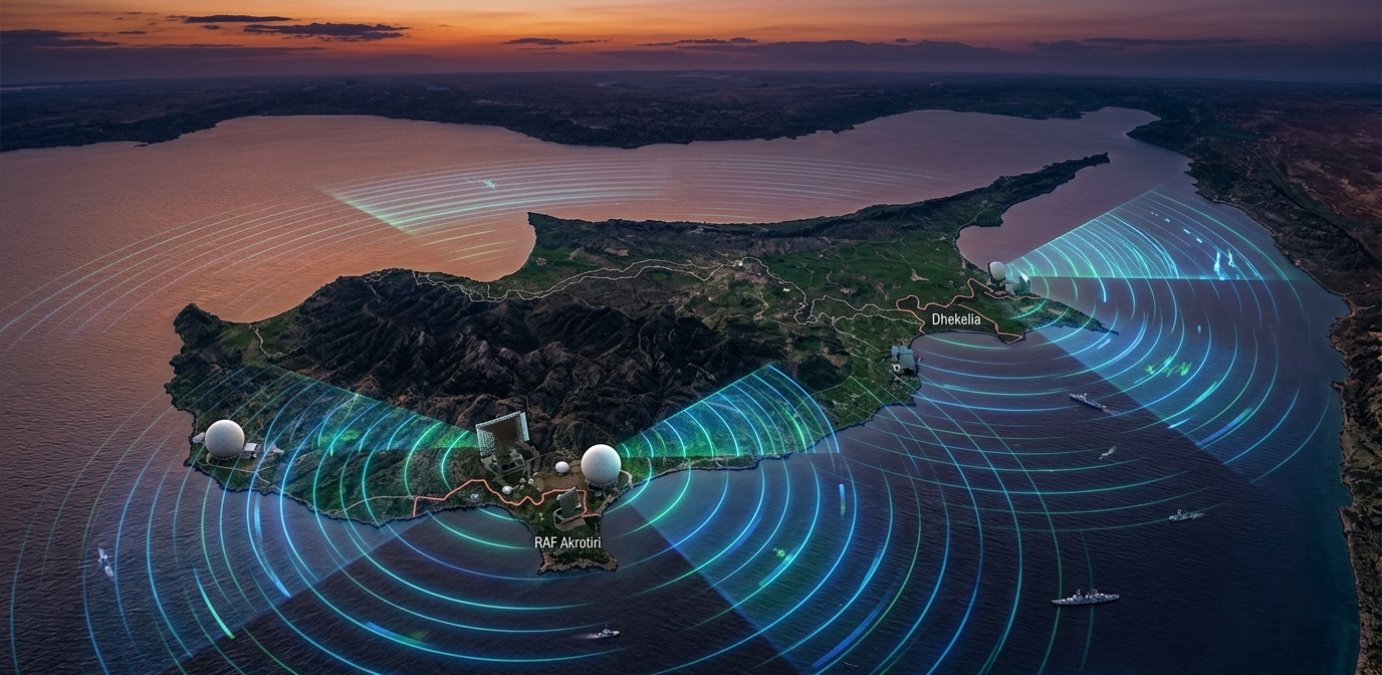
Tension around the British sovereign base areas in Cyprus has moved beyond public statements and into a more structured exchange between London and Nicosia. The March 1 drone strike near RAF Akrotiri forced the issue into the open. Cypriot officials made clear in the days that followed that the presence of the bases carries direct security implications for the island, even when Cyprus is not part of the conflict driving the risk. Government spokesman Konstantinos Letymbiotis said the authorities were not satisfied with the level of prior information provided about how the bases were being used. Since then, the discussion has shifted toward the framework itself. Cypriot leadership has opened talks with the United Kingdom on how the 1960 arrangements operate under current conditions. British officials have said the bases are not being used for offensive missions, but that assurance has not closed the gap. The debate now touches directly on how security exposure is distributed across the island and how future arrangements might be shaped. Türkiye is part of that discussion through longstanding legal arrangements as well historical ties on Cyprus, alongside its position within NATO, with responsibilities that run in parallel and beyond.
***For our latest Eastern Mediterranean Strategic Brief see: https://www.bosphorusnews.com/article/eastern-mediterranean-security-brief-april-3-2026-1775246222950