
By Bosphorus News Staff
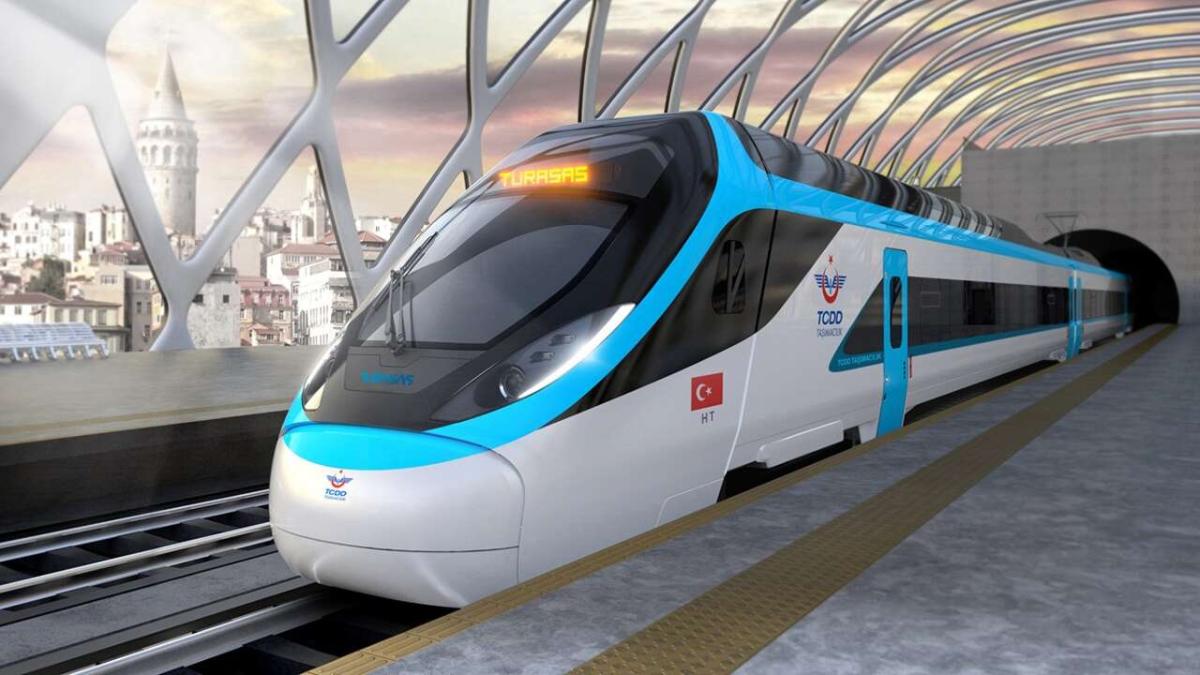
Türkiye has started testing its first domestically developed high-speed train designed for 225 km/h operation, the Ministry of Transport and Infrastructure said on March 12.
The ministry said the prototype trainset had been placed on the rails and that testing had begun. In its statement, it said that "Türkiye's first domestically developed high-speed train has been placed on the rails."
The project is part of a broader effort to build a domestic platform for intercity high-speed rail services.
Technical characteristics
The prototype is designed for a maximum operating speed of 225 kilometers per hour, placing it below the 250 to 300 km/h class trainsets currently used on parts of Türkiye's high-speed rail network.
At this stage, the reported technical profile includes:
- Design speed: 225 km/h
- Electric multiple unit architecture for high-speed intercity service
- Domestic engineering and manufacturing within Türkiye's rail industry base
- Compatibility with standard gauge electrified high-speed lines in Türkiye
The platform appears intended for routes where 300 km/h trainsets are not necessary, which could make it a more suitable option for certain corridors.
Testing phase
The testing process is expected to examine:
- traction and acceleration performance
- braking systems
- ride stability at increasing speeds
- onboard control and signaling integration
- infrastructure compatibility
Such trials usually proceed in stages, with speeds raised gradually before certification for passenger operations.
Rail industry significance
Türkiye has expanded its high-speed rail network over the past decade, connecting major cities including Ankara, Istanbul, Konya, and Sivas. The trainsets currently operating on those lines have mostly been supplied by foreign manufacturers.
This prototype is an early test of whether Türkiye can pair network expansion with a domestically produced high-speed rolling stock platform. The next phase will depend on test performance, certification results, and whether the project advances toward serial production.