
By Bosphorus News Economy Desk
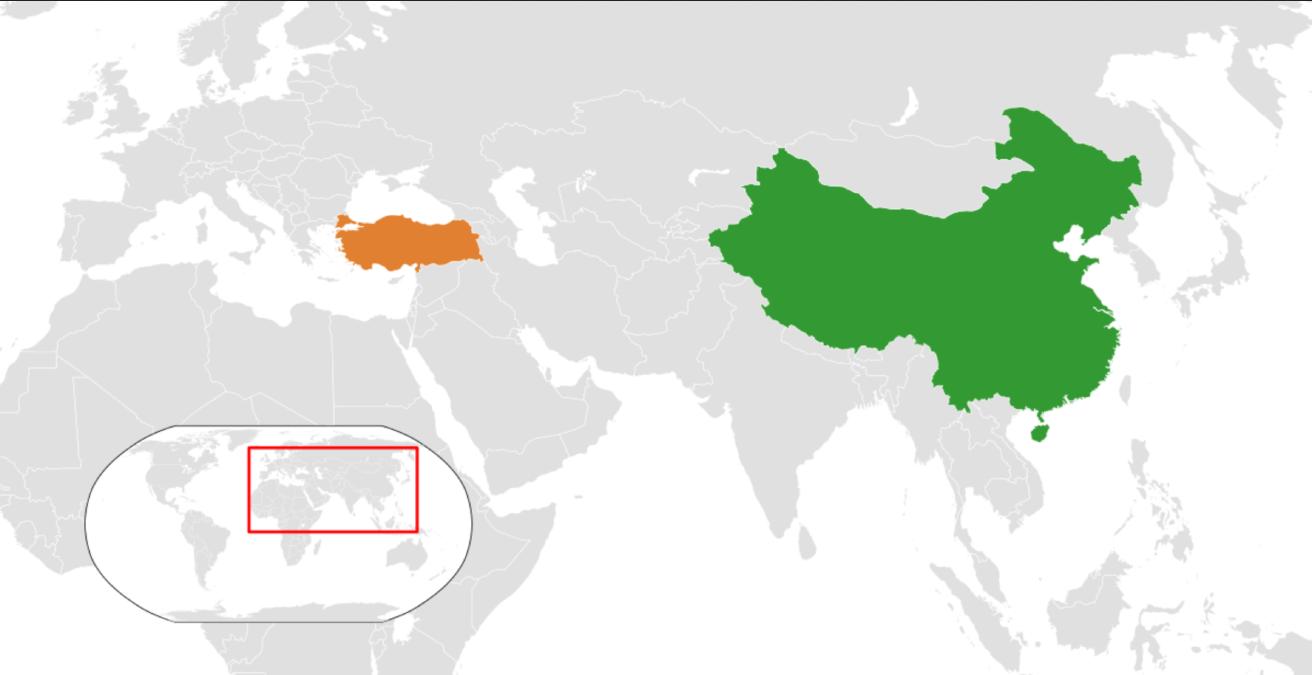
Deputy Culture and Tourism Minister Gökhan Yazgı completed a two-day visit to Beijing on 16 March 2026, meeting his Chinese counterpart Gao Qing along with arts institutions, media regulators and tourism industry representatives. The visit, reported by Hürriyet Daily News, covered joint planning in tourism and culture, including talks with China's National Radio and Television Administration on screening Turkish TV series and films on Chinese platforms.
Yazgı also met Chinese influencers and travel agency representatives, and highlighted Chinese visitor interest in Cappadocia, Göbeklitepe, and outdoor activities such as rafting, skiing, trekking and cycling, a profile that departs from the conventional sun-and-sea model that dominates Türkiye's Mediterranean coast.
The Beijing trip is the latest in a chain of policy and promotional moves that have unfolded since mid-2024, all pointed in the same direction: making China a priority source market for Turkish tourism.
The Policy Stack
The foundation was laid in June 2024, when Culture and Tourism Minister Mehmet Nuri Ersoy and his Chinese counterpart Sun Yeli signed a Tourism Cooperation Agreement during Sun's visit to Istanbul. That agreement covered marketing, investment, program exchanges and cultural heritage preservation, and established the formal bilateral track on which subsequent steps have been built.
In May 2025, Türkiye and China signed an aviation memorandum that raised weekly scheduled passenger flight rights from 21 to 49, the first major expansion in roughly 15 years. The agreement also opened new Chinese destinations for Turkish carriers, including Chengdu, Xi'an and Ürümqi.
On the Ürümqi route specifically, Turkish Airlines announced in February 2026 that its board had approved the launch of scheduled service, subject to market conditions. The route carries distinct commercial and political dimensions given Ürümqi's location in the Xinjiang Uyghur Autonomous Region.
The most visible step came on 2 January 2026, when a presidential decree took effect granting Chinese ordinary passport holders visa-free entry to Türkiye for tourism and transit, for up to 90 days within any 180-day period. As Bosphorus News reported at the time, the decision was published in the Official Gazette on 31 December 2025, positioning Türkiye as a more accessible destination ahead of the 2026 tourism season.
The visa waiver is unilateral. Chinese citizens can enter Türkiye without a visa, but Turkish citizens still require one for China.
Arrivals and Targets
The hard numbers show a clear growth trajectory. Türkiye's Foreign Ministry puts Chinese tourist arrivals at approximately 409,000 in 2024, a 65 percent year-on-year increase. In the first nine months of 2025, around 313,800 Chinese tourists visited the country, according to Xinhua.
Regional data adds texture. Nevşehir Governor Ali Fidan said Chinese visitor numbers to Cappadocia rose from 26,000 in 2023 to 89,000 in 2024 and reached 115,000 in 2025, a fourfold increase in two years.
No confirmed full-year arrivals figure for 2025 has been published. The strongest official baseline remains the 2024 number.
Ersoy told Xinhua that Türkiye aims to attract one million Chinese tourists by the end of 2026. TÜROB President Müberra Eresin has set the same figure as a medium-term target. At the Year of the Horse ceremony in Cappadocia in February, Yazgı identified China as a priority market and set Türkiye's overall 2026 tourism revenue target at $68 billion, up from $65.2 billion generated by approximately 64 million visitors in 2025.
Cultural Branding and Soft Power
Türkiye's approach to the Chinese market has moved beyond policy facilitation into active cultural positioning.
The most elaborate example is the Year of the Horse campaign, launched on 14 February 2026 in Göreme. The Chinese zodiac designation for 2026 aligned with Cappadocia's historical identity as the "Land of Beautiful Horses," and Turkish authorities built a year-long program around the connection: horse shows, themed festivals, a "Chinese Village," 3D mapping displays, drone performances and specially designed hot air balloons carrying bilingual greetings. Chinese Ambassador to Türkiye Jiang Xuebin attended the ceremony alongside Yazgı. Jiang called the visa waiver "a wonderful gift" marking the 55th anniversary of diplomatic relations between the two countries, established in 1971.
On the digital front, Türkiye's Tourism Promotion and Development Agency has been running influencer campaigns, inviting selected Chinese content creators via Turkish Airlines to experience the country and promote it on Chinese platforms, Hürriyet Daily News reported. The March visit to Beijing extended this track by bringing Turkish officials into direct contact with Chinese travel agencies and social media figures.
The TV and film screening discussions with China's National Radio and Television Administration signal a further layer. Turkish drama series already have a following in China, and formalizing access to Chinese broadcast and streaming platforms would give Türkiye a promotional channel that operates independently of paid advertising.
Open Questions
Several points remain unresolved.
The visa arrangement carries no reciprocity. Turkish citizens must still obtain a visa from a Chinese diplomatic mission before traveling. The asymmetry drew criticism on Turkish social media when the waiver was announced, with some commentators questioning the one-sided nature of the concession.
The spending profile of Chinese visitors is also under scrutiny. After the visa waiver took effect, early arrivals reported unexpectedly high costs in Türkiye, driven partly by multi-currency pricing. Businesses in tourist areas frequently quote prices in euros or dollars rather than Turkish lira, and the gap between expectations and reality generated sharp commentary on Chinese social media platforms including Xiaohongshu.
There is also no published 2025 full-year arrivals figure from the Culture and Tourism Ministry or the Turkish Statistical Institute. The one million target for 2026 is ambitious relative to the confirmed 2024 baseline of 409,000. Whether the visa waiver, expanded flights and cultural programming can deliver that scale of growth within a single year will be the clearest test of the strategy.
What is visible is the direction. Türkiye has assembled a set of coordinated instruments, visa access, aviation capacity, cultural diplomacy, digital marketing, and deployed them within a compressed timeline. The March visit to Beijing confirms that the effort is still accelerating, not leveling off.