
Bosphorus News Research Desk
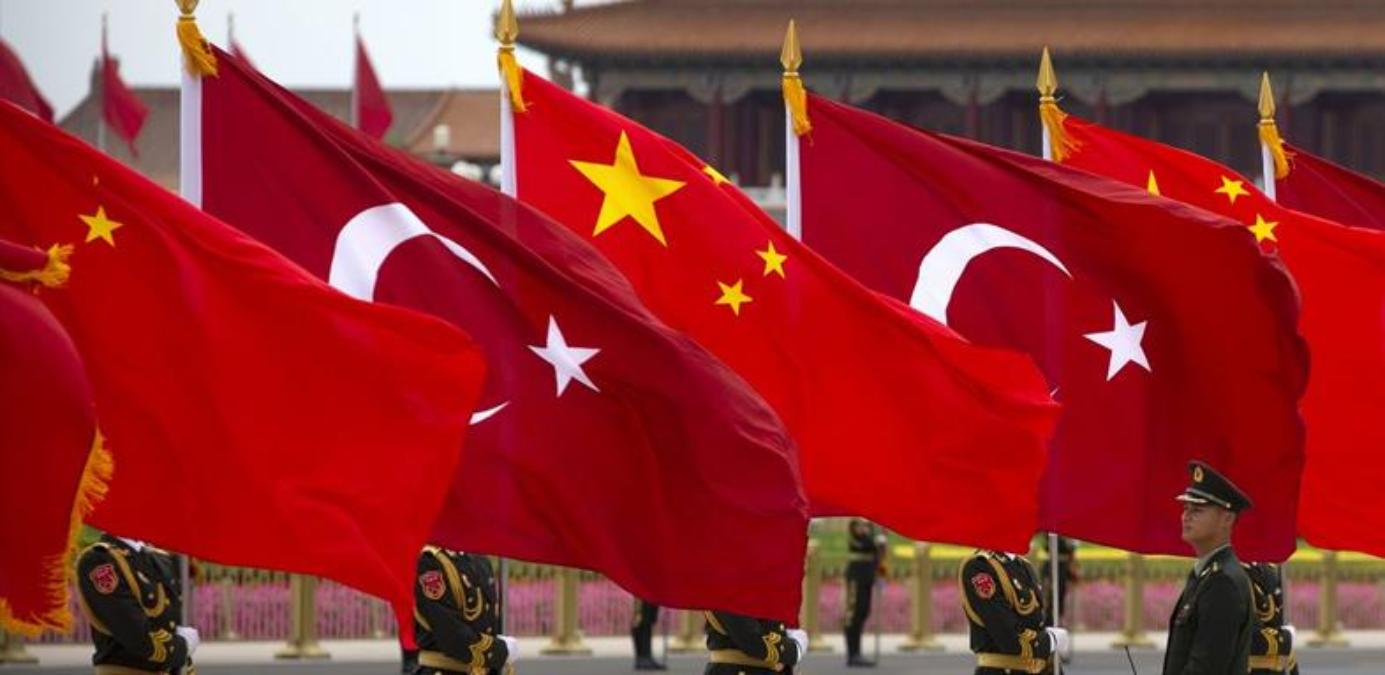
Türkiye's expanding engagement with China is often described as a shift in alignment. That reading oversimplifies a more complicated reality. Ankara is not abandoning one bloc for another. It is managing its exposure in a system increasingly shaped by rivalry.
The objective is practical. Türkiye seeks to attract investment, protect export access and preserve room to maneuver while remaining anchored in the Western security and financial structures that continue to underpin its economy. In an environment defined by competition between Washington and Beijing, fixed alignment reduces options. Adjustment preserves them.
A hinge state does not declare loyalty and settle. It absorbs pressure and recalibrates.
Keeping options open without stepping outside the system
President Recep Tayyip Erdoğan's appearance as Guest of Honor at the August 2025 Shanghai Cooperation Organization summit in Tianjin drew attention, but the substance lay in what did not change. Ankara has pursued BRICS Partner Country status rather than full membership, keeping access open to the New Development Bank without entering commitments that could complicate its obligations to the OECD or NATO.
At the same time, Türkiye's trade and capital flows remain closely tied to the Western financial system. SWIFT based transactions, dollar liquidity and access to European capital markets continue to shape external financing. Discussions on local currency trade with BRICS members reflect an effort to widen options, not to disengage. The Western financial architecture remains central to how the Turkish economy operates.
This is not a departure from the existing order. It is an attempt to reduce vulnerability while staying within it.
The Customs Union and the logic of production inside Türkiye
The most significant dimension of Türkiye's relationship with China today lies in industry rather than diplomacy.
The 1995 Customs Union places Türkiye inside the European production chain while leaving it outside the European Union's political institutions. It applies European trade rules without shaping them. Over time, that limitation has acquired strategic value.
When Brussels imposed anti subsidy duties ranging from 17.4 to 38 percent on Chinese electric vehicles, manufacturers searched for alternative production routes. Chinese EV producer BYD is building a 1 billion dollar facility in Manisa, scheduled to begin production by mid 2026 with annual capacity of up to 150000 vehicles.
Producing inside Türkiye changes rules of origin calculations, the criteria used to determine a product's tariff nationality. With sufficient local value added, vehicles can qualify for export to the European Union under the A.TR framework, reducing exposure to duties applied to direct imports from China.
Domestic policy reinforces this dynamic. Vehicles manufactured in Türkiye are not subject to the 40 percent additional levy imposed on direct Chinese automotive imports into the Turkish market. Local production helps stabilize pricing while maintaining protective barriers.
The trade off is visible at home. Increased Chinese linked production places additional pressure on domestic manufacturers, including Türkiye's emerging EV sector. The same strategy that broadens external room for maneuver also intensifies competition within the domestic market. Managing that tension is part of the calculation.
For Ankara the investment brings technology and scale. For Beijing it lowers tariff risk. For Europe it complicates enforcement without breaching existing agreements. None of this circumvents the Customs Union. It follows from its structure.
Geography as leverage through the Middle Corridor
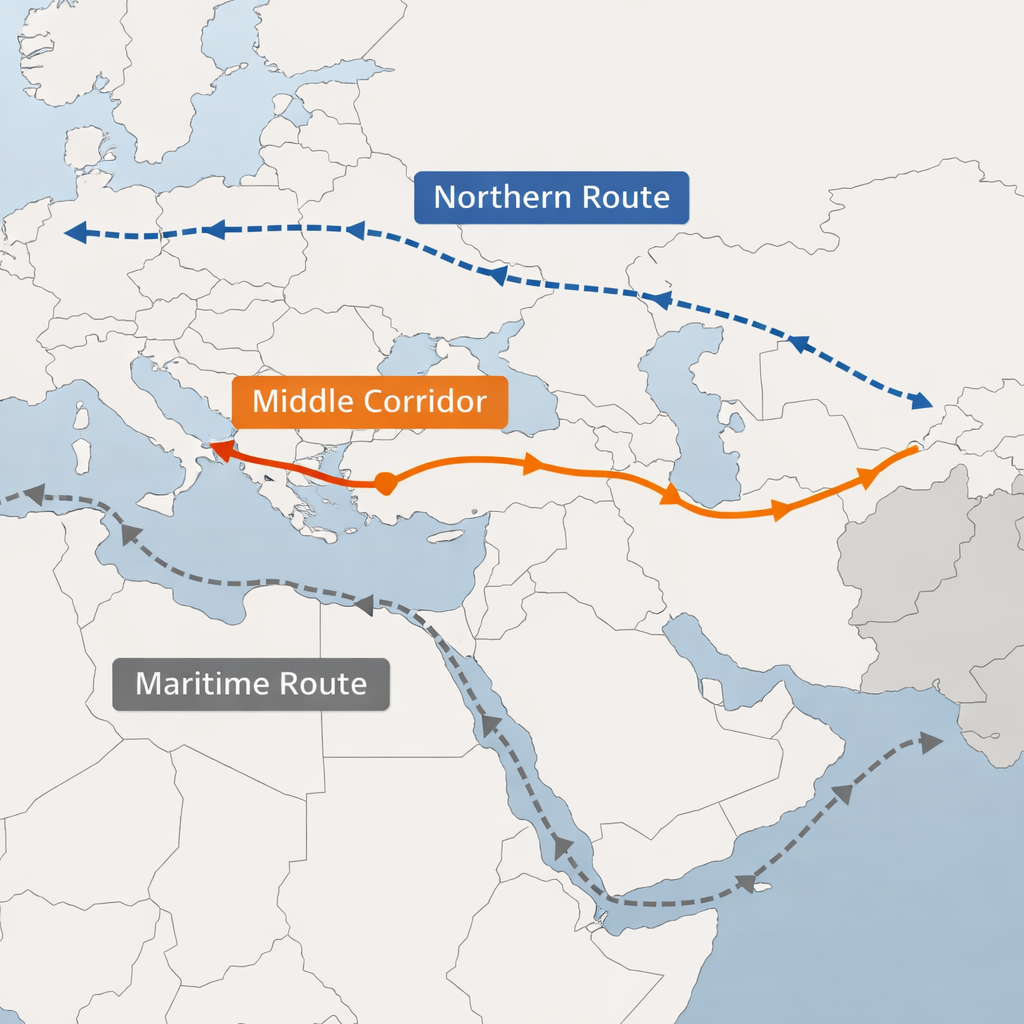
Since 2022 northern Eurasian trade routes passing through Russia have carried higher political and financial risk. Sanctions exposure and rising insurance costs have altered corporate calculations about how goods move between China and Europe.
Freight volumes along the Middle Corridor have increased sharply, rising by roughly 60 percent year on year since 2024. The route through Central Asia, the Caspian and Türkiye is no longer treated as a contingency. It has entered mainstream supply chain planning.
The 2025 backed Trump Route for International Peace and Prosperity initiative seeks to stabilize the Caucasus segment through Armenia and Azerbaijan. Debate over the Zengezur Corridor and alternative transit arrangements in southern Armenia highlights where the corridor remains most sensitive. Stability in that narrow stretch determines whether Türkiye functions as a gateway to Europe or risks becoming a bottleneck.
For Beijing the corridor spreads exposure. For Ankara it enhances leverage. For Europe it deepens interdependence. Infrastructure in this context is less about prestige than about reducing disruption risk.
De risk ing without cutting ties
Washington's China policy centers on de risk ing, export controls and restrictions on sensitive technologies. De risk ing does not mean de coupling. The aim is to reduce vulnerability without severing economic ties.
Ankara's approach fits within that distinction. Manufacturing in Türkiye does not eliminate Chinese connections, but it relocates parts of the supply chain into a NATO economy and distributes risk across jurisdictions.
Scrutiny is nonetheless increasing. Economic cooperation must remain clearly industrial and avoid sectors likely to trigger export control disputes. The margin for miscalculation is narrow, and pressure can arise from Washington as readily as from Beijing.
Closer economic ties with China raise the likelihood of Western pushback, just as remaining anchored in Western finance and security limits how far Ankara can move. Standing between systems is rarely comfortable and requires steady adjustment together with a willingness to absorb friction from more than one direction.
If the European Union tightens enforcement under the Customs Union, if rules of origin are interpreted more narrowly, if access to dollar liquidity or SWIFT based transactions becomes conditional, the space for maneuver will shrink. If stability weakens along the Middle Corridor, the logistical case for deeper engagement will narrow as well.
Türkiye's position is therefore tied less to rhetoric than to the continued functioning of these technical frameworks. As long as trade regimes, financial channels and transit routes remain open, Ankara can continue operating across systems. When those frameworks harden, the room for balance will narrow with them.