
By Murat Yıldız
"Blue Homeland" has become the central narrative framing Türkiye's maritime posture. First articulated by retired Rear Admiral Cem Gürdeniz and later expanded through the cartographic doctrine associated with Admiral Cihat Yaycı, it has moved from intellectual thesis to official state vocabulary. It is invoked at the presidential level and embedded in military exercises and public diplomacy.
The question is no longer whether the doctrine is original. The question is whether it has expanded Türkiye's strategic leverage or narrowed its diplomatic theater.
Reassessing it is not about weakening Türkiye's maritime position. It is about strengthening its ability to convert legitimate claims into durable agreements.
A Political Mediterranean and a Legal Mediterranean
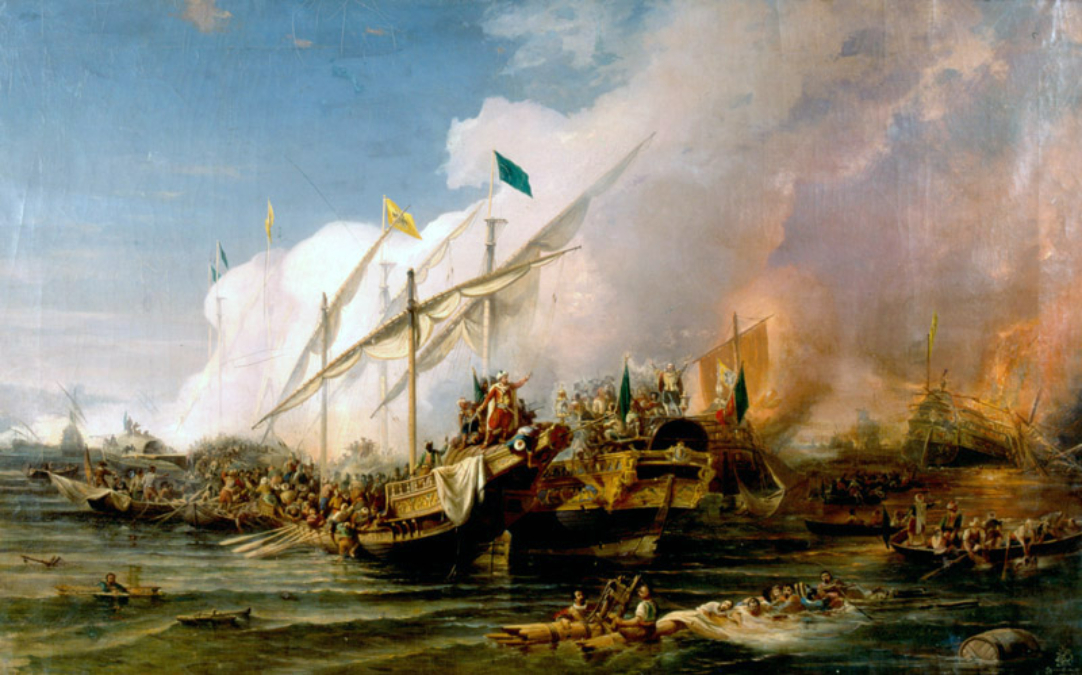
The idea that a state treats surrounding seas as a sphere of influence is not new. Rome called the Mediterranean Mare Nostrum. In the sixteenth century, the Ottoman Empire achieved naval superiority across much of the Eastern Mediterranean after the Battle of Preveza.
Yet imperial precedent does not generate modern jurisdiction.
The Ottoman Mediterranean was political. It was structured by naval supremacy, tribute systems, and the balance of power. Control flowed from capacity.
The contemporary Mediterranean is legal. Maritime space is structured through proportionality, coastline configuration, and negotiated coordinates. Authority flows from recognized delimitation, not dominance.
Ottoman naval superiority did not create enduring jurisdictional entitlement under modern law. Today's maritime order is determined less by historical reach than by legal articulation.
Invoking history to reinforce confidence is understandable. Translating it into jurisdictional framing is costly.
Where Türkiye Is Strong
Türkiye's maritime claims are grounded in legally serious principles that deserve full consideration in any equitable delimitation process.
The dominant mainland coastline principle remains Türkiye's strongest structural advantage. In international jurisprudence, extensive continental coasts typically carry greater weight than maritime projections generated by small islands. Türkiye's long Anatolian mainland creates a natural geometric leverage that cannot easily be neutralized in equitable delimitation.
That mainland geometry is the center of Türkiye's legal leverage. When the narrative shifts away from proportional coastline analysis toward expansive maritime imagery, that leverage becomes less visible.
By responding to maximalist island claims with its own expansive mapping language, Ankara narrowed what could have remained a technical argument into a visual confrontation. In doing so, it diluted the asymmetries that strengthened its legal case. When all claims are presented at their outer limit, distinctions between core legal principles and broader projections become less visible. Türkiye's most defensible arguments risk being perceived as part of an undifferentiated maximal position.
The issue is not whether Türkiye is right on core principles. The issue is whether the chosen narrative maximizes the probability of securing those principles in treaty form.
When law is displaced by cartography, diplomacy overtakes jurisprudence.
Domestic Coherence, External Friction
Blue Homeland has been institutionalized in state rhetoric and official signaling.
Domestically, it has produced coherence. It reinforces maritime awareness and provides a unifying geopolitical language. As a mobilizing doctrine, it has succeeded.
As a negotiating framework, however, it has narrowed flexibility.
What consolidates internally can polarize externally. The doctrine increasingly functions as a domestic asset while generating international resistance.
It has coincided with counter alignment dynamics, including the consolidation of the Greece, Cyprus, Israel and Egypt alignment and the institutionalization of the EastMed Gas Forum. Whether intended or not, the perception environment surrounding Blue Homeland has accelerated coalition building among actors who previously operated with looser coordination.
There is also a secondary constraint. When maritime claims are framed as elements of a Homeland, negotiation acquires a zero sum character. Compromise ceases to appear as technical adjustment and begins to resemble territorial concession. This dynamic does not affect only adversaries. It raises the political cost of compromise for potential partners as well. For states such as Italy or Egypt, any agreement that appears to dilute a proclaimed Homeland risks being portrayed domestically as legitimizing expansion rather than resolving delimitation. The room for pragmatic bargaining narrows accordingly.
When mapping triggers counter mapping, leverage contracts.
The Revisionism Trap
Greece and the Greek Cypriot Administration advance maximalist interpretations of their maritime rights.
Countering maximalism with mirrored maximalism entrenches deadlock. As rhetoric escalates, legal nuance recedes and identity framing dominates technical discussion. Blue Homeland did not originate maximalism in the Eastern Mediterranean, but the way it has been perceived externally has contributed to its normalization as the shared vocabulary of the dispute.
Within the EU and NATO, revisionism carries systemic implications. Once Türkiye's maritime posture is interpreted through that lens, its claims risk being filtered less through legal merit and more through alliance cohesion concerns.
There is also a semantic vulnerability embedded in the term itself. Homeland implies sovereign possession. Modern maritime law does not recognize sovereignty over open waters beyond territorial limits. It recognizes jurisdictional rights, economic zones and negotiated delimitations. When language suggests ownership where law recognizes regulated entitlement, critics gain rhetorical advantage. The debate shifts from equity to expansion.
There is a domestic dimension as well. In the digital era, strategic maps circulate widely, acquire symbolic meaning and shape public expectation. Once a maximalist projection becomes normalized in public discourse, any later adjustment risks being interpreted not as negotiated calibration, but as retreat. The state must then manage not only external diplomacy, but also expectations generated by its own rhetoric.
From Assertion to Persuasion
Türkiye's maritime claims warrant serious legal consideration. The principles of proportionality and mainland configuration remain substantial strategic assets.
Credibility depends not only on substance but on framing.
If Türkiye's objective is durable maritime security rather than symbolic assertion, narrative discipline becomes a strategic necessity.
Naval exercises signal capacity. Agreements secure outcome.
Blue Homeland has strengthened domestic mobilization. The evidence increasingly suggests it has constrained diplomatic elasticity.
A recalibration would not require abandoning core principles. It would require shifting emphasis from assertion to persuasion, from cartographic projection to evidentiary argument.
In a legal maritime order, influence is secured less by the scale of the claim than by the strength of the case presented.
The ultimate measure of maritime success is not the scale of the map displayed, but the number of delimitations formalized.