
By Bosphorus News Defense Desk
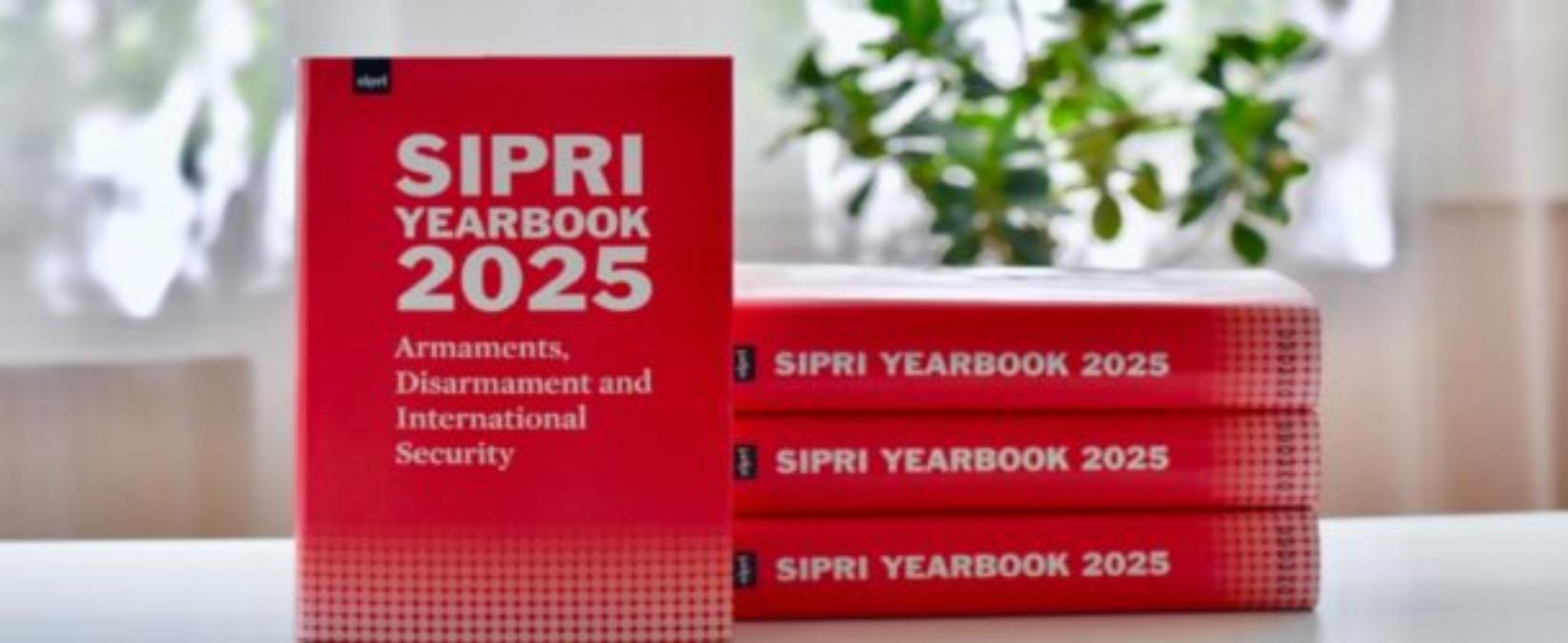
Türkiye's exports of major arms grew by 122 percent between 2021 and 2025 compared with the previous five-year period, according to new data published on March 9 by the Stockholm International Peace Research Institute (SIPRI). The figures place Türkiye 11th among the world's largest arms exporters, with a 1.8 percent share of global transfers.
Compared with the early 2000s, when Türkiye depended heavily on foreign suppliers for most of its major weapons systems, the new data show how far the balance has shifted toward domestic production and export capacity.
Pakistan received the largest share of Türkiye's arms exports in the 2021-25 period, accounting for 16 percent of total deliveries, followed by the United Arab Emirates at 12 percent and Ukraine at 8.4 percent.
The data also highlight Türkiye's growing presence in sub-Saharan Africa. SIPRI lists the country as the region's third-largest supplier after China and Russia, accounting for 11 percent of total arms imports there during the period.
On the import side, Türkiye continued to reduce its reliance on foreign weapons. Its share of global arms imports fell from 1.5 percent in 2016-20 to 1.2 percent in 2021-25, placing the country 24th among the world's largest importers. Germany, Spain and Italy remained its main suppliers, accounting for 31 percent, 29 percent and 19 percent of imports respectively.
The SIPRI data also reflect the shifting arms balance across the Eastern Mediterranean. France's exports to India, Egypt and Greece together accounted for 45 percent of all French deliveries in 2021-25, placing Greece among Paris's three largest arms customers.
Across Europe more broadly, arms imports rose sharply over the same period. SIPRI calculates that purchases by European states increased by 210 percent between 2016-20 and 2021-25, making the continent the world's largest arms-importing region for the first time since the 1960s. NATO's European members drove much of that surge, with the United States supplying 58 percent of their imports.
Globally, the volume of major arms transfers increased by 9.2 percent between the two five-year periods. The United States remained the dominant supplier with 42 percent of global exports, while Russia's share fell sharply from 21 percent to 6.8 percent as its deliveries declined.
SIPRI tracks deliveries of major conventional arms rather than financial values and compares five-year periods to smooth out fluctuations caused by large procurement cycles.