
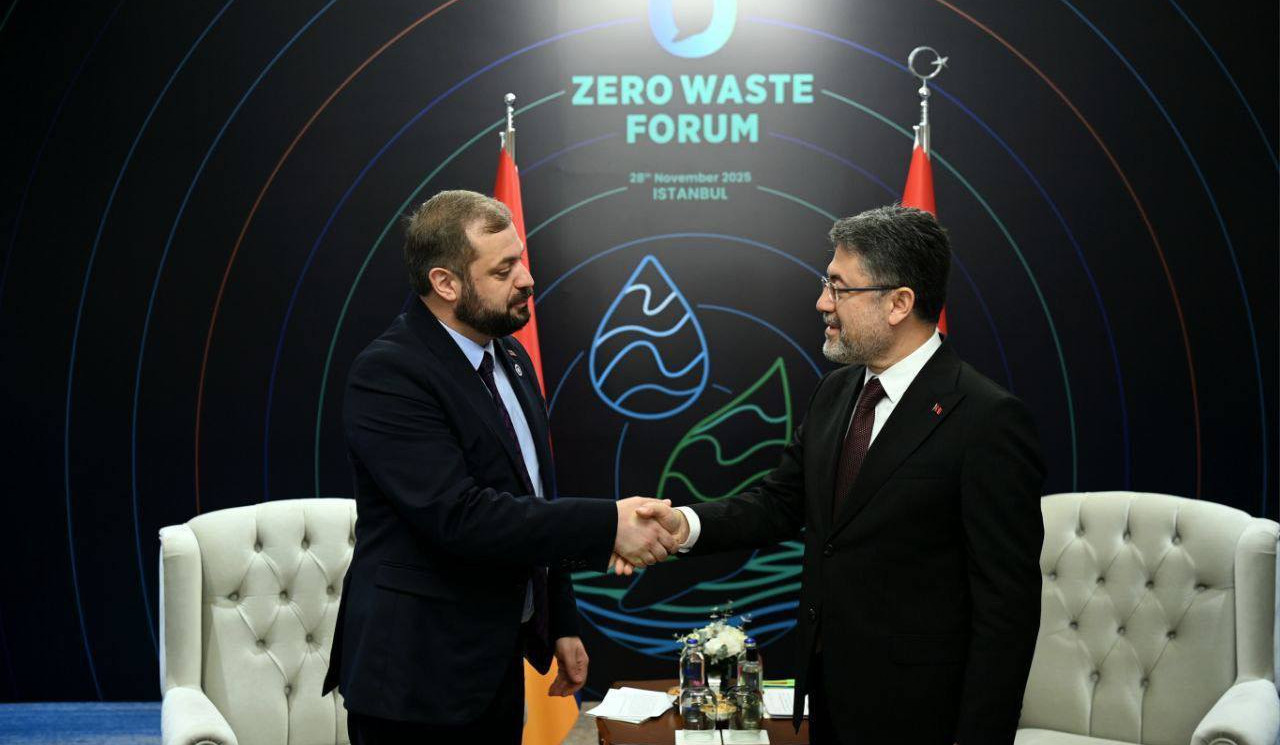
A high-level meeting in Istanbul this past week has decisively punctured the long-standing political freeze between Türkiye and Armenia. Officials from both nations met to discuss not peace treaties, but the practicalities of prosperity—chief among them, a bold plan to revive dormant trade routes and logistics links under the banner of the Trump Route for International Peace and Prosperity (TRIPP).
Armenian Economy Minister Gevorg Papoyan and Turkish Minister of Agriculture and Forestry Ibrahim Yumaklı underscored the necessity of sustained, regular dialogue. While the meeting was focused on economic, trade, and logistics expansion, the very fact that such discussions are taking place at this level is viewed by analysts as a diplomatic earthquake, building on the halting progress of normalization seen since the 2020 Karabakh War.
The central focus of the talks was the potential for the resumption of the historic Kars-Gyumri rail link. This project, a crucial part of the broader TRIPP initiative, would establish new logistics corridors and significantly diversify markets for both countries, boosting mutual economic interests that have long been suppressed by political hostility.
TRIPP: The American-Branded Corridor Reshaping the South Caucasus
The TRIPP project—named after the U.S. delegation that facilitated the initial August 8 agreements in Washington—is far more than a simple infrastructure plan; it is a profound geopolitical undertaking.
Although the route physically aligns with the historically contentious Zangezur Corridor—the Soviet-era railway connecting mainland Azerbaijan with its Nakhchivan exclave—Armenia's leadership has actively sought to brand it differently. Armenian Prime Minister Nikol Pashinyan's choice of the TRIPP designation is a clear attempt to de-escalate the territorial and sovereignty debates that have plagued the Zangezur concept.
For Azerbaijan, the route, regardless of its name, delivers the long-sought, secure land link to Nakhchivan. For Armenia, it represents an unprecedented opportunity: an economic lifeline to the West and a chance to reposition itself as a central regional hub after years of isolation and stagnation.
A Message to Moscow
Crucially, the TRIPP project is seen as a strategic pivot away from traditional Russian influence in the region. The deal bears the unmistakable imprint of Washington's transactional diplomacy, merging private capital, infrastructure development, and geopolitics.
The United States has rapidly operationalized the deal, underscoring its commitment. In addition to securing agreements that reportedly grant the U.S. exclusive rights for 99 years to develop the former Megri road section, the State Department announced a substantial $145 million assistance package for Armenia to kickstart the project's implementation.
This Western-backed investment model—which proposes leasing the territory to a consortium for construction and management—is a clear signal that Washington is prepared to underwrite the first phase of the venture. As American influence asserts itself, regional analysts believe TRIPP is designed to reduce the geopolitical sway of Russia, China, and Iran over this vital corridor linking Europe and Asia.
In essence, the discussions between Türkiye and Armenia about rail lines and trade volumes are merely the economic manifestation of a massive, ongoing shift in the South Caucasus—one that promises to end decades of frozen conflict and introduce major new global players to the regional chessboard.