
By Bosphorus News Türkiye Desk
Türkiye's chargé d'affaires in Kabul said Ankara has issued work visas to 20,000 Afghan citizens for the livestock sector, according to Afghanistan's Ministry of Refugees and Repatriation, placing a politically sensitive labour migration figure into the open as Türkiye continues to manage irregular Afghan movement across its eastern routes.
The remarks were attributed to Sadin Ayyıldız, head of Türkiye's diplomatic mission in Kabul, during a May 13 meeting with Afghanistan's Minister of Refugees and Repatriation, Mawlawi Abdul Kabir.
According to a statement published by Afghanistan's Ministry of Refugees and Repatriation and later carried by AnewZ, Ayyıldız said Türkiye supports a stable and self reliant Afghanistan, backs dialogue to resolve the country's problems and sees Afghanistan as an important country for regional connectivity. The statement then quoted him as saying that the Turkish government had issued work visas to 20,000 Afghan citizens "in the livestock sector alone" and was working to find solutions to irregular migration.
The number is politically sensitive because Türkiye has not publicly announced the 20,000 figure through its own Foreign Ministry, Labour Ministry or migration authorities. Bosphorus News found no separate Turkish government statement confirming the number at the time of publication.
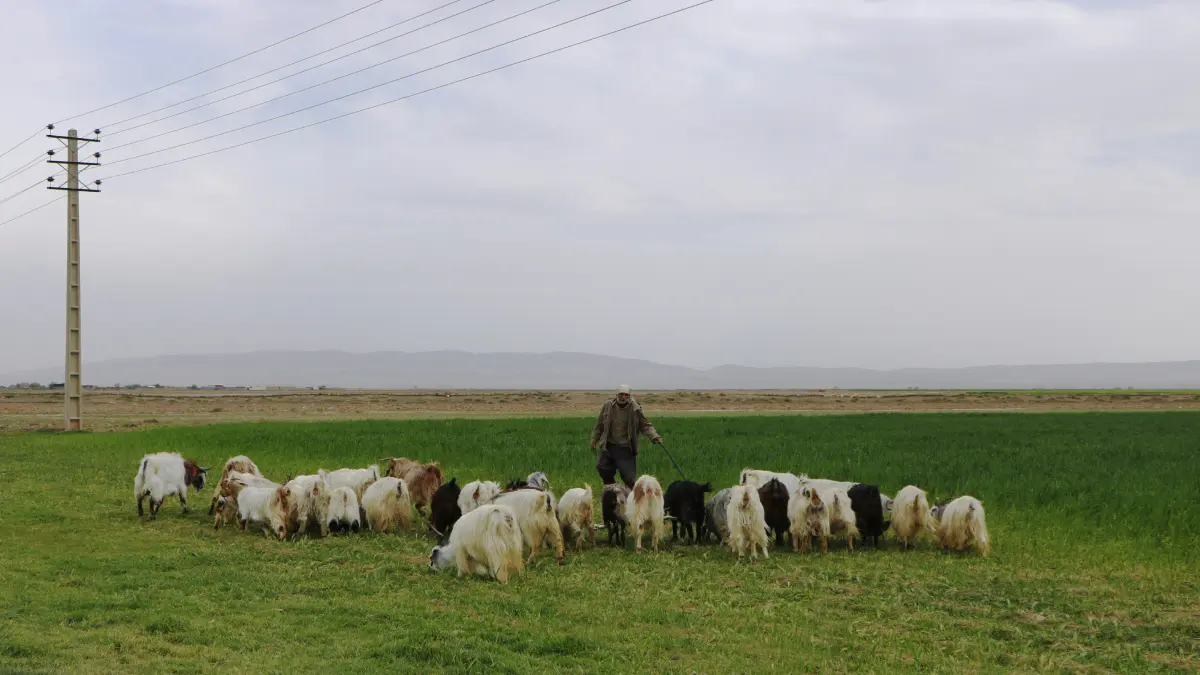
The sectoral focus, however, matches a policy track already opened by Ankara. Türkiye's Ministry of Labour and Social Security announced on June 12, 2025 that work permit applications for foreign shepherds and herd managers in registered livestock enterprises had begun to be accepted, in coordination with the Ministry of Agriculture and Forestry.
The Turkish labour ministry said the mechanism was designed to support the development of the livestock sector and continuity of domestic production when local labour could not meet demand. Its criteria allow work permits for experienced foreign shepherds or herd managers in livestock enterprises meeting specific herd size thresholds.
That makes the Kabul statement more than a routine migration note. If confirmed by Ankara, the 20,000 figure would point to one of the clearest attempts yet to channel Afghan labour into a legal, sector specific route rather than leaving the issue inside the wider and politically charged category of irregular migration.
Afghan migration has long been one of the most sensitive files in Türkiye's domestic debate. Many Afghans have entered Türkiye through Iran, while Turkish authorities have repeatedly increased border controls, deportations and anti smuggling operations. At the same time, rural labour shortages, particularly in livestock and shepherding, have created demand for workers willing to take jobs that local labour markets often struggle to fill.
That tension is now central to the story. The economic argument behind a controlled labour route may be clear to policymakers and livestock businesses, but the public debate in Türkiye is unlikely to treat the issue as a narrow sectoral measure. A figure of 20,000 Afghan workers lands in a country where migration, employment, border security and demographic pressure already sit near the centre of political debate.
The Afghan ministry said Abdul Kabir thanked Türkiye for assistance and cooperation across several fields, described Ankara as a friendly country and called for stronger cooperation between Afghan and Turkish private sectors. He also raised problems faced by Afghan refugees in Türkiye and said Kabul supports voluntary return.
The meeting therefore placed three issues in the same frame: Türkiye's need for labour in livestock, Ankara's search for tools against irregular migration and Kabul's effort to secure a more formal channel for Afghans already drawn toward Türkiye's labour market.
The unanswered question is whether the 20,000 visas have already been issued, are being processed through sectoral work permit channels or refer to a broader quota communicated in diplomatic talks. Until Turkish authorities publish their own figure, the claim rests on the Afghan ministry's official account of Ayyıldız's remarks, as carried by AnewZ.
But the number is large enough to matter. A legal route for 20,000 Afghan workers would mark a significant shift in how Türkiye handles one part of the Afghan migration file, moving it from border pressure and removals alone into a managed labour mechanism tied directly to agricultural production.
The political risk is equally clear. Whatever the economic rationale behind a sector specific labour channel, a figure of 20,000 Afghan workers is likely to trigger a strong reaction across Türkiye's already tense migration debate. The issue cuts into public anxieties over irregular migration, employment, border security and demographic pressure, leaving Ankara with a harder task than administrative rollout alone: explaining to its own people why such a large Afghan labour channel is necessary, how it will be controlled and whether it marks an exception or the start of a broader policy shift.
***Sources: Afghanistan Ministry of Refugees and Repatriation statement cited by AnewZ; Türkiye Ministry of Labour and Social Security announcement on foreign shepherd and herd manager work permits.