
By Bosphorus News Economy Desk
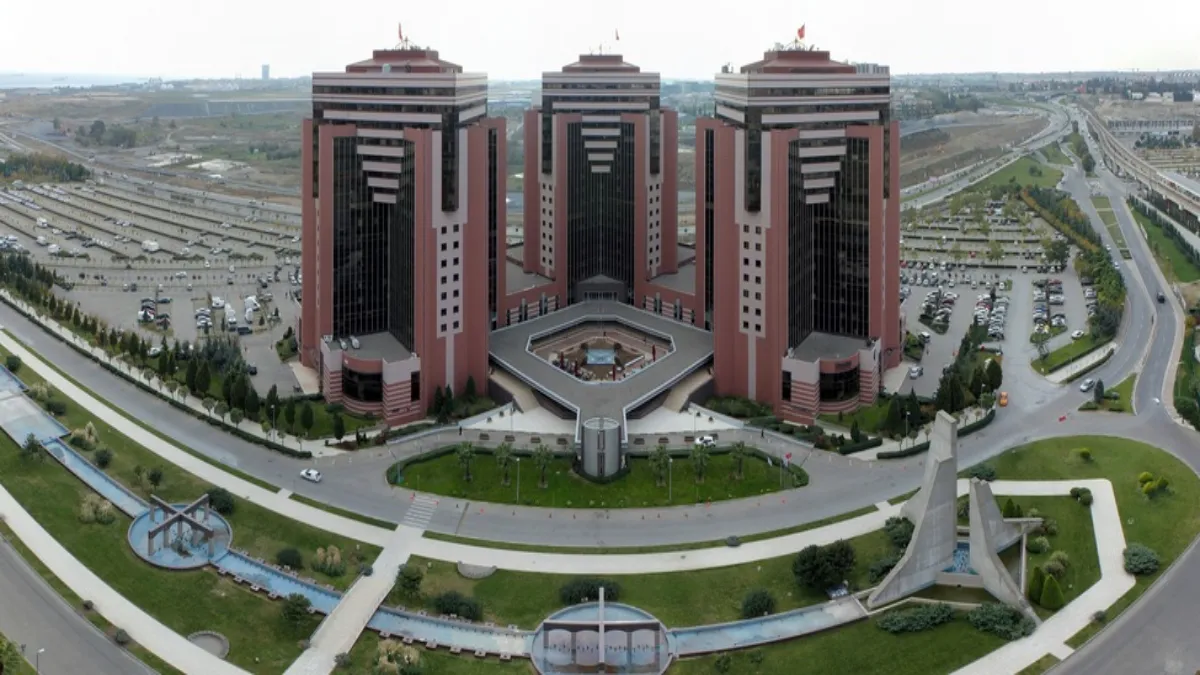
Türkiye is preparing a broad investment reform package aimed at turning Istanbul Finance Center into a stronger regional base for corporate headquarters, transit trade, service exports and foreign-sourced capital.
President Recep Tayyip Erdoğan announced the package on April 24 at the "Türkiye Yüzyılı Investment for a Strong Center Program" held at the Dolmabahçe Presidential Working Office in Istanbul. The measures have not yet become law. Erdoğan said the legislative package would be submitted to the Turkish Grand National Assembly, making implementation dependent on the parliamentary process.
The proposal places Istanbul Finance Center at the core of Türkiye's attempt to attract regional management offices, high-value services, mobile capital and foreign investors at a time when Gulf, European and Asian companies are reassessing supply chains, tax bases and regional headquarters.
Under the proposed framework, companies that move their regional headquarters to Istanbul Finance Center would receive a full corporate tax exemption for 20 years. Companies moving regional headquarters elsewhere in Türkiye would receive a 95 percent corporate tax exemption.
The package would also expand tax advantages for transit trade. Income from transit trade and foreign goods trading inside Istanbul Finance Center would become fully exempt from corporate tax, up from the current 50 percent exemption. Similar income generated outside the center would receive a 95 percent exemption for the first time.
For individuals, the proposal includes a 20 year income tax exemption on foreign-sourced income and capital gains for qualified people moving their tax residence to Türkiye after not having been tax residents in the country in the previous three years. The provision is designed to compete with non-domicile style regimes used by countries such as Italy, Greece and Portugal, while giving Türkiye a longer window.
The reform also targets exporters. According to Reuters, the corporate tax rate would fall to 14 percent for exporters and to 9 percent for manufacturing exporters, compared with the general corporate tax rate of 25 percent. Mehmet Şimşek, Türkiye's Treasury and Finance Minister, described the exporter tax cut as a "radical step."
High-value service exports would also receive a larger incentive. The package includes a full tax exemption for foreign-sourced income in areas such as architecture, engineering, software, design, education, healthcare services and other internationally sold professional services.
Erdoğan framed the package as part of a broader effort to improve Türkiye's investment climate through tax incentives, faster procedures and Istanbul Finance Center focused measures.
"We are creating a strong investment ground with investor-friendly regulations, expanded tax incentives, processes accelerated by the 'one-stop office,' and our new moves centered on Istanbul Finance Center," Erdoğan said, according to Anadolu Agency.
A separate "one-stop office" system is planned to bring company formation, work permits, tax procedures, land incentives and environmental approval processes into a single digital platform. The government says the aim is to reduce bureaucracy and shorten decision times for foreign and domestic investors.
The package also includes measures to encourage the repatriation of assets held abroad, although the final scope will depend on the text submitted to parliament. Türkiye has used similar asset return schemes since 2008, but the new package places the measure inside a wider investment and headquarters strategy.
Another pillar is Terminal Istanbul, a planned startup and technology hub at the former Atatürk Airport terminal. The first phase has been launched as Ankara seeks to connect financial incentives with technology entrepreneurship, venture capital and international talent.
The Economic Coordination Board, chaired by Vice President Cevdet Yılmaz, met on April 28 and said the package would be implemented swiftly. That follow-up gave the reform program political weight beyond Erdoğan's initial announcement, but the legislative timetable remains unclear.
The proposal arrives as Türkiye tries to strengthen Istanbul's position between Europe, the Gulf, Central Asia and nearby emerging markets. That effort fits a wider push to position Istanbul as a capital and logistics hub during regional instability, while the new reform package adds tax, headquarters and service-export incentives to the same strategy.
The package does not only target banks and finance companies. It is designed to pull in trading firms, regional management offices, exporters, technology companies, service providers and internationally mobile professionals.
The main test will be credibility. Tax exemptions can attract attention, but investors will also look at legal predictability, inflation, currency stability, access to skilled labor and the speed of implementation. Until the package is passed by parliament and secondary regulations are published, the reforms remain a policy offer rather than an operating regime.
***Sources: Türkiye Presidency Directorate of Communications, Türkiye Investment and Finance Office, Anadolu Agency, Reuters.