
By Bosphorus News Geopolitics Desk
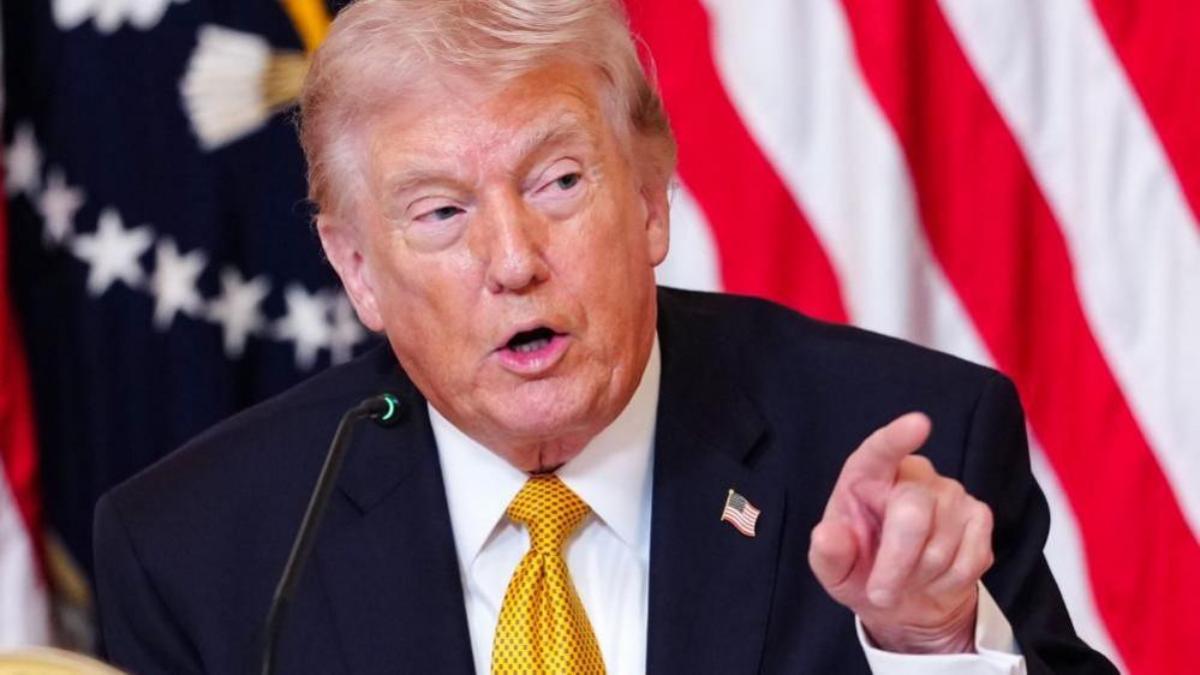
President Donald Trump on 20 March accused NATO allies of cowardice after they refused to join a US-led effort to reopen the Strait of Hormuz, which has been effectively closed to commercial shipping since Iranian attacks on vessels and energy infrastructure escalated earlier this month. In a Truth Social post, Trump said allies were complaining about rising oil prices while refusing to help restore passage through a waterway that normally carries roughly one-fifth of global oil supply.
Washington is also increasing its military presence. Reuters reported on 20 March that the USS Boxer and about 2,500 Marines were being redirected toward the region as the United States looked for options to break the deadlock and restore shipping. No NATO government, however, has committed forces to an escort or combat operation in Hormuz.
Instead, the United States is getting political backing without operational follow-through. A joint statement issued by Britain, France, Germany, Italy, the Netherlands, Japan and Canada condemned Iran's attacks on commercial vessels and civilian infrastructure and voiced support for restoring safe passage, but did not amount to a military commitment.
Türkiye fits that pattern, though its position is more exposed and more complicated than a simple refusal. Ankara is a NATO ally, a neighbour of Iran, a diplomatic channel that has not been closed, and a country already touched by the spillover of the war. Erdoğan has tried to hold the same line since 28 February: oppose the war, keep space for diplomacy, and avoid becoming one of its parties.
That position has been tested repeatedly. Reuters reported on 11 March that Erdoğan warned the war had to stop before the whole region was dragged in. Two days later, Reuters also reported that he said Türkiye would not be drawn into the conflict even after a third Iranian ballistic missile fired toward Türkiye was intercepted.
The balancing act became more visible this week. Hakan Fidan was in Riyadh for regional diplomacy while also maintaining contact linked to de-escalation efforts. Associated Press reported that he described Türkiye's approach as one aimed at staying out of the conflict while continuing diplomatic engagement with both sides. Ankara has also urged Iran to stop targeting Gulf states while keeping the possibility of renewed talks alive.
Greece has drawn a firmer and narrower line. Reuters reported on 16 March that Athens would not take part in military operations in the Strait of Hormuz. Government spokesman Pavlos Marinakis said Greek involvement would remain limited to the European Union's defensive maritime mission Aspides. That matters because Greece controls the world's largest merchant fleet by tonnage and has direct commercial exposure to any prolonged disruption in the Gulf.
Athens is not standing outside the crisis. It is managing a direct economic risk without converting that exposure into combat participation. The Greek government wants navigation restored, but not through a step that could widen its own role in the war. That approach is broadly in line with the European position. Reuters reported on 19 March that EU leaders called for coordinated efforts to maintain freedom of navigation in Hormuz while stressing de-escalation, civilian protection and respect for international law.
Trump's language was unusually blunt, but the caution in Ankara and Athens comes from strategic calculation, not from a lack of concern. A military role in Hormuz would cut directly across the policy Erdoğan has tried to preserve since the war began. In Greece, the pressure comes from another source. The country has more at stake than most in any prolonged disruption to Gulf shipping, yet that same vulnerability pushes Athens toward caution.
Washington wants allied participation. Most allies still prefer condemnation, deterrence and guarded diplomatic language to entry into a US-led combat mission whose political horizon remains unclear. Türkiye and Greece have reached that conclusion by different routes, but both are still holding the same line: neither is prepared to let Hormuz become the gateway to deeper involvement in the war.