
By Bosphorus News Geopolitics Desk
The Turkish Republic of Northern Cyprus says the Greek Cypriot administration blocked Turkish Cypriot citizens from visiting Hala Sultan Tekke; a site widely regarded as one of the holiest in the Muslim world for Eid al-Fitr prayers, after rejecting three separate dates proposed through the United Nations Peacekeeping Force in Cyprus and denying access at the last minute on Saturday.
The TRNC Ministry of Foreign Affairs said the refusal was communicated through UNFICYP. The ministry said it had first requested access on March 21, the second day of Eid, which was rejected. A second date, March 22, was also turned down. A third request, for March 28, was denied at the last minute.
The visiting group, which in previous years numbered between 300 and 500 people traveling in six to ten buses, had already been scaled down to 105 people in two buses for this visit. At the Greek Cypriot administration's request on security grounds, the number was further reduced to a single bus. Access was nonetheless denied.
The TRNC ministry said the Greek Cypriot administration grants a maximum of three group visit permits to Hala Sultan Tekke per year, with difficulties arising each time. It contrasted that record with what it described as its own policy of facilitating more than 100 group religious services at 80 churches in Northern Cyprus annually for Greek Cypriots, without distinction between Cypriot and Greek nationals.
In a statement published Saturday, the TRNC Ministry of Foreign Affairs said it protested "the arbitrary decision by the Greek Cypriot administration to deny permission for the group worship planned at Hala Sultan Tekke on March 28, 2026," adding that the refusal constituted a further violation of the fundamental human rights of the Turkish Cypriot people.
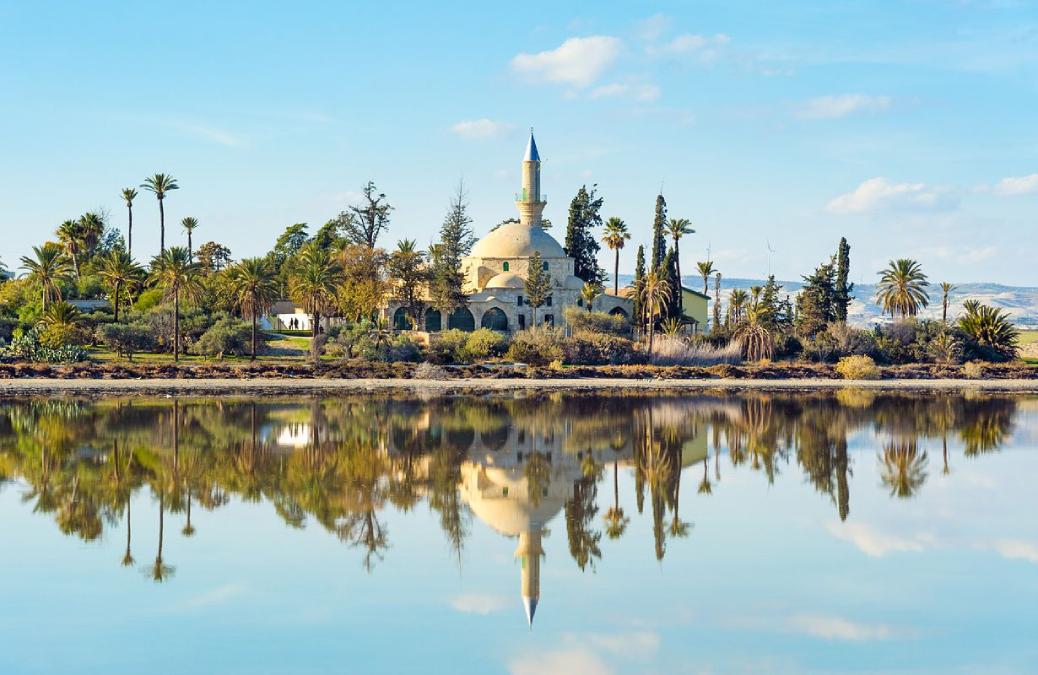
Hala Sultan Tekke is a mosque and pilgrimage complex on the western shore of the Larnaca Salt Lake, built around the tomb of Umm Haram, a close relative of the Prophet Muhammad who died on the island during the first Arab expedition to Cyprus in 647 or 649 AD. The present complex took shape between 1760 and 1817 under Ottoman patronage. It is widely described as one of the holiest Islamic sites outside the Arabian Peninsula, with assessments by scholars and United Nations bodies placing it among the three or four most significant sites in the Muslim world. Because it is located in the southern, Greek Cypriot-administered part of the divided island, pilgrimage visits have remained restricted and infrequent since 1974.