
Murat Yıldız
The common ground shared by Ukrainians and Russians in terms of faith (Orthodoxy) and ethnicity (Slavic identity) is far deeper than what either shares with the West. Both societies are shaped by the same history, geography, and—significantly—the same linguistic heritage. This is an undeniable reality.
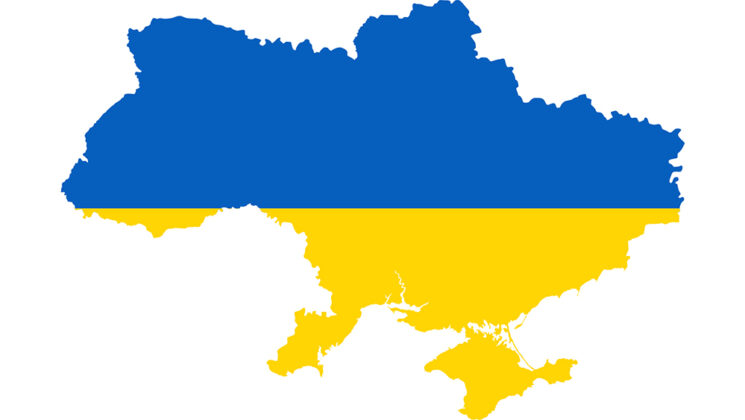
It is precisely for this reason that I view Russia's brutal assault on Ukraine, home to the people closest to it in almost every conceivable sense, not only as an act of aggression but as a profound tragedy. What is unfolding in Ukraine once again exposes a harsh truth: when great-power interests are at stake, shared history, faith, language, and geography quickly lose their binding force. Once state interests take precedence, ethnicity and collective memory cease to matter.
This is a lesson that deserves serious reflection.
Yet what followed the invasion has revealed that the issue extends well beyond the battlefield. Across Western capitals and institutions, the response has increasingly taken the form of collective cultural punishment. Russian conductors and theatre companies have been sidelined; Dostoyevsky and Tchaikovsky treated as liabilities; even Russian-bred cats subjected to bans. At this point, the line between political condemnation and cultural erasure has clearly been crossed.
The decision—briefly entertained—by Italy's University of Milano-Bicocca to remove a Dostoyevsky course from its curriculum because of the invasion is particularly telling. The mere fact that such an idea could be considered is, in itself, a striking indicator of intellectual and civilizational decay.
By the same logic, Leonardo da Vinci would be banned because of Mussolini, Goethe and Nietzsche because of Hitler, or Rousseau because of Napoleon. To ban Dostoyevsky, Tolstoy, or Tchaikovsky because of Russia's aggression is not merely to suspend reason; it is to place civilization itself on leave.
History offers uncomfortable parallels. During the Second World War, the SS organized book-burning spectacles. Today's attempts to marginalize or ban Russian art, literature, and music suggest that, beneath the surface, Europe's mindset has changed far less than it claims. What we are witnessing is the persistence of an inquisitorial reflex—one that remains deeply embedded in the Western subconscious.
There is more. The targeting of Russian oligarchs' assets following the invasion—led primarily by the United States and other Western states—amounts to Western capitalism cutting off the very branch on which it sits.
It is widely accepted that property rights underpin all other rights. For this reason, the right to property occupies a privileged place among fundamental freedoms. Yet we are now witnessing individuals who, prior to the war, faced no criminal charges or legal proceedings, stripped of their property—and effectively of all their rights—once political conditions change. This should alarm anyone who takes the language of rights seriously.
Core principles of Western capitalism—human rights, private property, free markets, and competition—have become morally questionable in light of these asset seizures. Increasingly, Western political leaders appear willing to treat property exactly as Proudhon once described it: as theft. The treatment of Russian oligarchs makes this contradiction unmistakable.
If Russian oligarchs are deemed complicit in war, one must ask why the assets of Western oligarchs—such as George Soros—who have played roles in destabilizing countries through "colour revolutions" and internal conflicts have never been subjected to similar scrutiny.
The double standard becomes even clearer when we recall that the groundwork for the 1953 coup against Mossadegh in Iran was laid by Standard Oil, or that the 1973 coup against Allende in Chile involved ITT, a U.S. multinational corporation. Not only were the assets of those responsible never seized; their influence was often expanded.
Finally, the war in Ukraine has exposed another uncomfortable truth: Western attitudes toward refugees. The stark contrast between the reception afforded to "blond-haired, blue-eyed, white-skinned" refugees and the treatment of Black and non-European refugees has laid bare a hierarchy of human worth that many in the West prefer to deny.
To treat people differently not because they are human, but because of their skin colour, faith, or nationality is nothing less than racism—and it remains deeply ingrained in the Western subconscious. War is unquestionably evil, yet it has one grim virtue: it strips away comforting illusions and reveals realities that many would rather keep hidden.