
By Nurhan Çetinkaya
Editor's Note: Beyoğlu is not just a district; it is a collective memory. In this exclusive memoir for Bosphorus News, the prominent former politician, Turkish-Armenian community leader, social activist, businessman Nurhan Çetinkaya invites us into the narrow streets of his childhood. From the scent of chocolate at the confectioner's to the echoing accordion of Madame Anahid, this is a tribute to an Istanbul that was colder in temperature but warmer in spirit.
When Life Was Black and White, It Was in Color
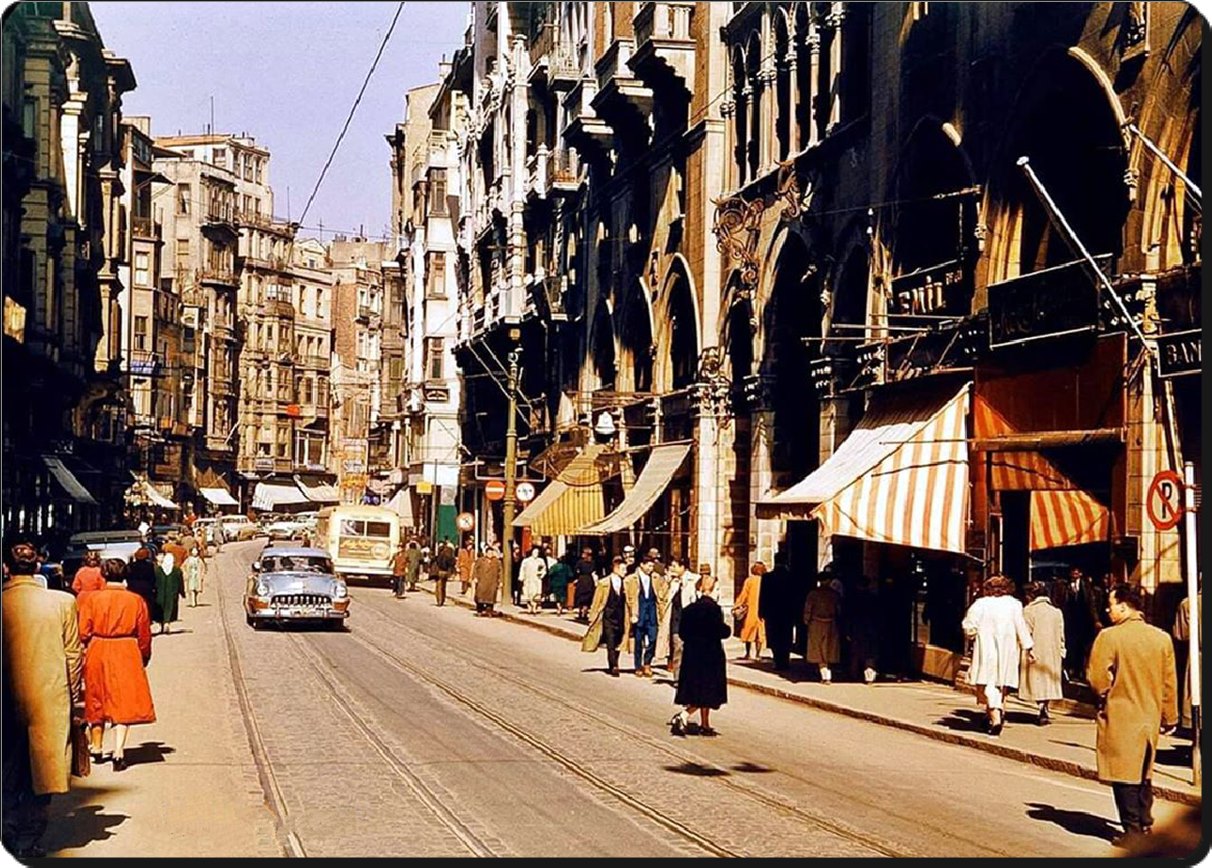
Every time I pass through Beyoğlu, something inside me stirs. The pavements may have changed, the signs renewed, the shop windows grown larger, yet the Beyoğlu I carry within me still echoes with the sound of my childhood.
A bowl of soup shared with my father at Lades.
A small parcel of happiness from the chocolatier.
Standing before Vakko's window, quietly building oversized dreams.
Lunch at Hacı Salih.
When evening fell, our steps would inevitably lead us to Çiçek Pasajı. My father would sit with the uncles at their table, and I would remain at the edge, listening to the grown-ups as if they were speaking another language of importance. Then Madame Anahid would appear. The moment she began to play her accordion, it felt as though even the walls of the passage joined in. It was there that the longing for an accordion first took root in me. I never got one. The desire stayed. Yet if the music remained within me, perhaps it is still playing somewhere. My later ease with rhythm, the period when I played the drums, none of it was accidental.
In our youth, there was the Spor Sergi Hall. Basketball games were played there, yes, but it was never only about sport. Rock concerts, boxing nights. I first saw the late Asım Can Gündüz on that stage; his energy still flickers before my eyes. Once, I attended a match of the legendary Cemal Kamacı. In those days, a boxing match was not routine entertainment. It was an event.
Not every home had a television. We did, though it was black and white. Broadcasts ran only a few days a week. I would gather the neighborhood children, and we would watch together. The screen was monochrome, but our lives were vividly colored.
Today the screens are 4K, the images razor sharp.
Yet something in us has faded to grey.
There was no central heating then. There was a stove. We carried coal up six flights of stairs from the storage shed in the garden. It was lit early in the morning, its ashes cleared at night. It was difficult. But everyone was in the same room. Around the same stove. Inside the same story.
Now the houses are warm, but the rooms feel colder.
Everyone sits before a separate screen.
Tables are crowded, but conversations are thin.
Do we long for the past? Apparently we do.
Not for the discomfort.
For the sharing. The laughter at the table. The trembling sound of the accordion.
Perhaps that is the heart of it:
When life was black and white, we were more colorful.
If melancholy settles in, a glass of rakı may follow in the evening. But that glass is not raised only to the present. It is raised to a father, to Beyoğlu, to the stove's warmth, to the accordion, to the children gathered around a black and white television.
And quietly, one cannot help but think:
What days those were...