
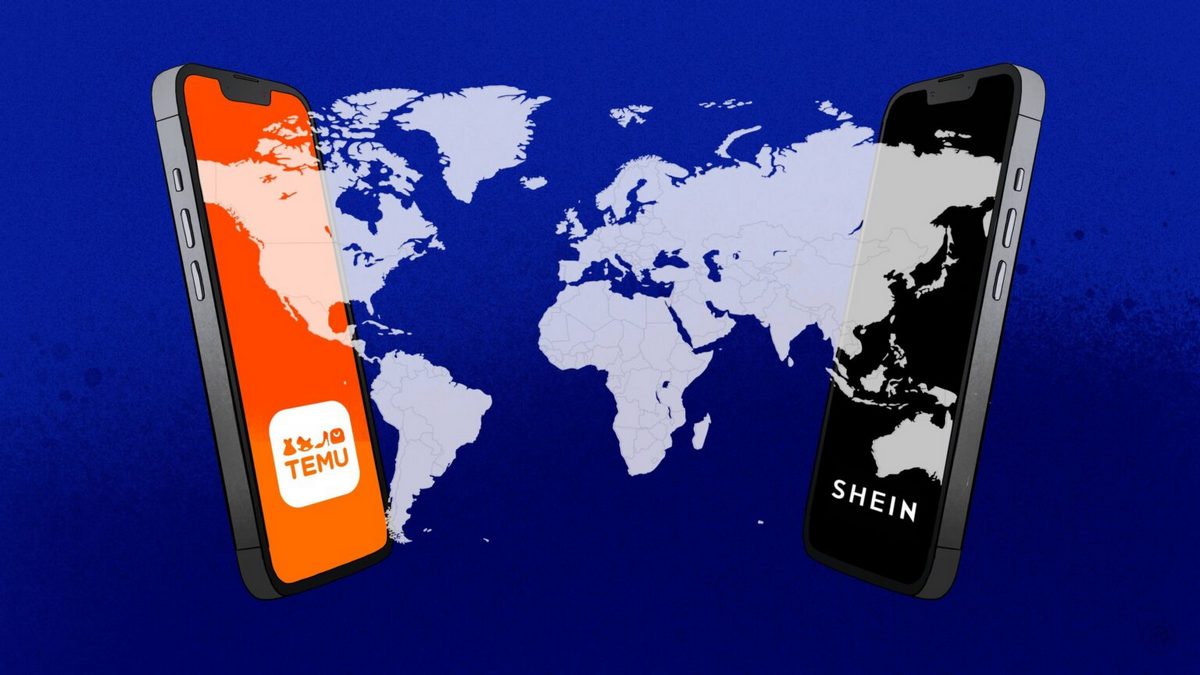
Temu's decision to halt direct-from-China sales to Türkiye was followed, within days, by a regulatory raid on its local office and a tightening of customs rules. Each step has a formal explanation. The issue lies in how closely they unfolded in time.
The sequence raises a simple question: why did multiple levers move at once?
Regulation catching up
Temu's operations in Türkiye relied on low-value cross-border shipments from China. For years, the 30-euro duty-free threshold made this model workable. That threshold no longer performs the same function.
At the same time, Türkiye's Competition Authority carried out a raid on Temu's local office and seized digital equipment as part of an ongoing investigation. The scope of the probe has not been disclosed, but the signal was unambiguous: Temu is no longer treated as a peripheral platform operating outside close oversight.
None of these measures is unusual on its own. Customs regimes change. Competition authorities intervene. Platforms pause activity when compliance costs rise. What stands out is the compression of these actions into a narrow window.
The timing question
Regulatory enforcement typically unfolds in stages. Guidance precedes enforcement. Adjustment periods follow. Sanctions come last. In the Temu case, those stages appear to have collapsed into one another.
That compression points to a choice. Either long-prepared measures were activated simultaneously, or different institutions acted in parallel under a shared policy direction. The distinction matters, because it determines whether Temu is an exception or a preview.
Shein follows the same path
Temu is no longer alone.
Shortly after Temu suspended its sales, Shein announced that it had also temporarily halted online sales in Türkiye, citing the need to adapt to recent regulatory changes. The company said it intends to resume operations once compliance requirements are addressed.
The similarity is difficult to ignore. Two globally active, China-based platforms, both built on ultra-low-cost cross-border delivery, responded in comparable ways within a short span.
This does not establish coordination, but it sharpens the central question: are these independent compliance decisions, or signs of a broader shift in how Türkiye is drawing the boundaries of cross-border e-commerce?
Not just a Türkiye story
Pressure on Chinese ultra-low-cost platforms is mounting well beyond Türkiye. In the United States and across the European Union, regulators are re-examining de minimis thresholds, data practices, and the effects of extreme price competition on domestic retail ecosystems.
Against that backdrop, Türkiye's actions appear less isolated. They resemble a local manifestation of a wider regulatory turn rather than a company-specific dispute.
The overlooked R&D dimension
What has received little attention is how platforms like Temu and Shein were used outside mass consumption.
For small research teams, individual engineers, early-stage start-ups, and university-linked projects in Türkiye, access to inexpensive components mattered. Sensors, connectors, cables, and experimental parts are rarely produced domestically at small scale. When sourced through conventional channels, they often become cost-prohibitive.
Low-cost cross-border platforms reduced that barrier. They enabled rapid prototyping, repeated testing, and small-batch experimentation. For actors operating outside large industrial systems, lower input costs translated directly into faster iteration.
From an innovation economics perspective, these platforms functioned as enablers at the experimental stage. They did not replace domestic production. They filled a gap where local supply was thin or inaccessible. Closing that channel therefore affects more than consumer prices. It risks slowing informal, early-stage research activity that rarely appears in headline data.
This does not negate the regulatory rationale. It complicates it.
A balancing act
The Temu–Shein sequence exposes a broader tension in Türkiye's economic posture. Low-cost Chinese supply has helped contain prices during a period of inflationary pressure. At the same time, regulatory convergence with Western markets remains a strategic objective.
The question is not whether regulation was necessary. It is whether this episode signals a narrow intervention or a redefinition of how cross-border digital commerce will be managed going forward.
External pressure or internal choice?
As scrutiny of Chinese platforms intensifies in Western markets, external context inevitably shapes domestic decision-making. Yet there is no public evidence that either Temu or Shein was targeted as the result of a direct foreign request.
A more restrained reading is anticipatory alignment. Türkiye may be adjusting its regulatory posture in line with evolving international norms, rather than responding to a single external trigger.
What remains open
The Temu and Shein cases do not settle the debate. They open it.
Whether these suspensions remain isolated responses or become reference points for a broader regulatory framework will depend on what comes next — how similar platforms are treated, and whether enforcement remains selective or becomes systematic.
For now, the case leaves more questions open than it answers.