
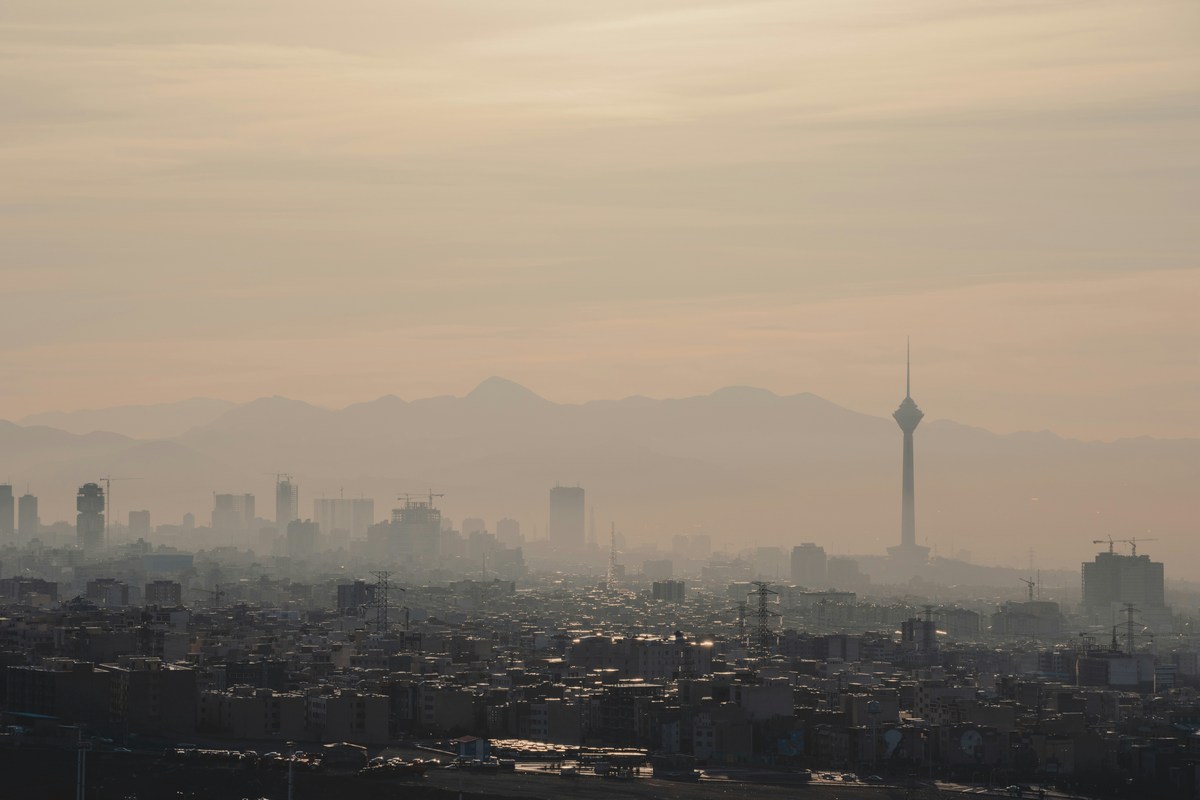
Air pollution in Tehran has reached levels that are significantly disrupting daily life, prompting authorities to close schools, suspend outdoor activities, and cancel professional football matches amid persistent health concerns.
According to real-time Air Quality Index (AQI) data compiled by IQAir, Tehran has repeatedly recorded pollution levels classified as unhealthy to very unhealthy, driven largely by elevated concentrations of fine particulate matter (PM2.5). At several points, AQI readings exceeded 200, a threshold widely regarded as posing serious risks to the general population, not only sensitive groups.
Football Matches Cancelled Across the Capital
The deteriorating air quality has had an immediate impact on sports. Authorities cancelled all scheduled football matches in Tehran, citing medical guidance that outdoor physical exertion under such conditions could endanger athletes, staff, and spectators alike.
Officials emphasized that the decision was precautionary and aligned with public-health protocols, as prolonged exposure during intense physical activity significantly increases respiratory and cardiovascular risks when PM2.5 levels are high. The cancellations affected both professional and lower-league fixtures, underscoring the scale of disruption caused by the smog.
Schools Closed, Classes Moved Online
Education has also been affected. Schools in Tehran were temporarily closed on multiple days, with local administrations either suspending in-person classes or shifting to remote learning formats. Authorities cited the heightened vulnerability of children to air pollution, noting that young people are particularly susceptible to respiratory complications during high-AQI episodes.
Parents were urged to keep children indoors, while schools were instructed to avoid scheduling any outdoor activities until air quality improves.
AQI Data Highlights Severity
IQAir data show that Tehran's AQI has frequently remained above 100, the level at which air quality is considered unhealthy for sensitive groups, and has often climbed into the very unhealthy range. Such readings place Tehran among the most polluted major cities globally at specific points in time, based on real-time measurements rather than annual averages.
Health officials stress that these rankings reflect snapshot conditions, but they nevertheless illustrate the intensity of recent pollution episodes.
Underlying Factors and Seasonal Pressures
Environmental specialists point to a combination of factors behind the crisis:
- Dense vehicle traffic and high fossil-fuel consumption.
- Industrial emissions in and around the metropolitan area.
- Winter temperature inversions that trap pollutants close to ground level.
- Limited wind circulation during colder months.
These conditions tend to intensify seasonally, particularly in large, high-density urban centers.
Public Health Warnings and Official Advice
In response, authorities have issued public advisories recommending that residents:
- Limit time outdoors, especially during peak pollution hours.
- Avoid strenuous physical activity outside.
- Use protective masks and indoor air filtration where possible.
- Follow real-time AQI updates before planning daily activities.
Health experts warn that prolonged exposure to high PM2.5 levels is associated with increased risks of asthma, heart disease, and other chronic conditions.
A Broader Regional Concern
While the immediate focus is Tehran, analysts note that air pollution remains a broader environmental and public-health challenge across the region. Episodes such as this highlight the growing need for long-term structural solutions, including cleaner fuels, improved public transport, and emissions control.
For neighboring countries, including Türkiye, developments in Tehran are closely monitored as part of a wider regional discussion on urban pollution, public health resilience, and environmental governance.