
By Bosphorus News Energy Desk
The Only Overland Route Left
On 28 February 2026, the United States and Israel launched coordinated strikes on Iran. Tehran responded by closing the Strait of Hormuz and striking energy infrastructure across the Gulf. Qatar declared force majeure on all LNG exports after Iranian strikes hit the Ras Laffan and Mesaieed industrial cities in early March.
European natural gas futures surged roughly 30 percent within the first week of the conflict. The Southern Gas Corridor became the only major overland route supplying non-Russian, non-Gulf gas to the EU.
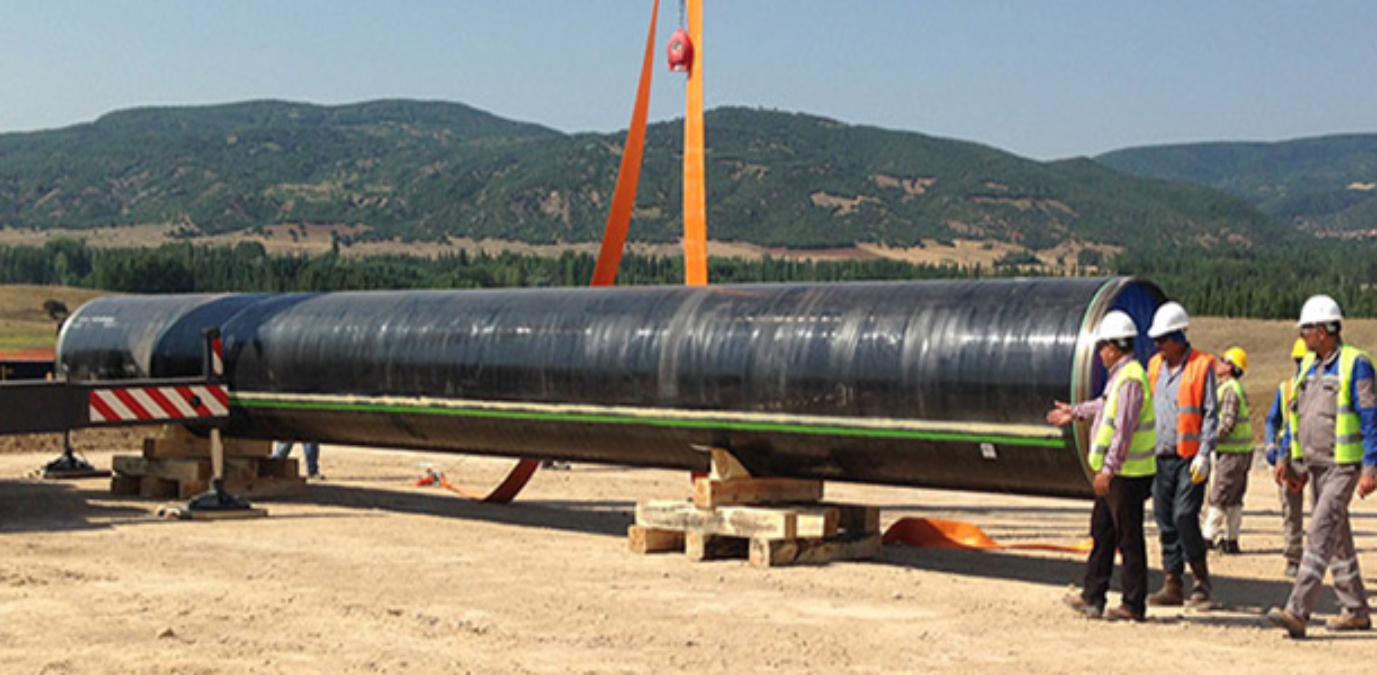
The corridor runs in three sections. The South Caucasus Pipeline carries gas from Azerbaijan's Shah Deniz field to the Turkish border. TANAP, the Trans-Anatolian Natural Gas Pipeline, crosses 1,841 kilometres of Türkiye to reach Greece. TAP, the Trans-Adriatic Pipeline, continues through Greece and Albania to Italy.
SOCAR operates TANAP. BOTAŞ holds a 30 percent stake. BP holds 12 percent. Every molecule of gas bound for Europe via this route transits Turkish territory.
No Data Released
Neither SOCAR nor BOTAŞ has disclosed whether flows through TANAP changed after the Hormuz closure on 28 February. No operational data covering the crisis period has been published.
That is the central gap. Europe is depending on this corridor under acute supply pressure, and the two entities that control it have said nothing about whether it is running harder, the same, or under any operational constraint.
EU gas storage stands at 28 percent capacity. Netherlands storage is at 6 percent. TAP added 1.2 bcm of annual capacity in January 2026 and is targeting 20 bcm by 2027. TANAP is targeting 31 bcm by 2026 and up to 60 bcm at full capacity. None of that matters if actual crisis-era throughput remains undisclosed.
Supply Ceiling in Azerbaijan
Infrastructure capacity is not the binding constraint. Production is.
The Shah Deniz field, operated by BP, has not confirmed expanded output for its second phase. The Absheron field, operated by TotalEnergies, produced 1.6 bcm in 2025. A planned expansion to 6 bcm remains pending a final investment decision. Goldman Sachs and Rystad Energy have both flagged Azerbaijan's limited ability to meet its 20 bcm annual EU supply target in the near term.
The pipeline can carry more gas than Azerbaijan currently produces for export. The bottleneck is upstream, not in transit.
Türkiye's Own Exposure
Türkiye imports roughly 13 percent of its gas from Iran, around 6 billion cubic metres annually. A sustained disruption to those flows would create a monthly shortfall of between 500 and 600 million cubic metres, according to a March 2026 analysis by TEPAV, the Ankara-based Economic Policy Research Foundation.
That creates a direct tension. If Iranian supply to Türkiye is curtailed further, domestic demand pressures could compete with transit volumes bound for Europe. The corridor serves both. The operators have disclosed nothing about how that balance is being managed.
Oil exposure is more contained while gas remains the open question.
Bosphorus News has contacted BOTAŞ and SOCAR requesting operational data for the period since 28 February and comment on current TANAP throughput. Neither had responded by the time of publication.
***TANAP throughput figures for the crisis period are not publicly available. This report draws on pipeline capacity data, TEPAV analysis published March 2026, and reporting by EUalive dated 18 March 2026.