
Bosphorus News Energy Desk
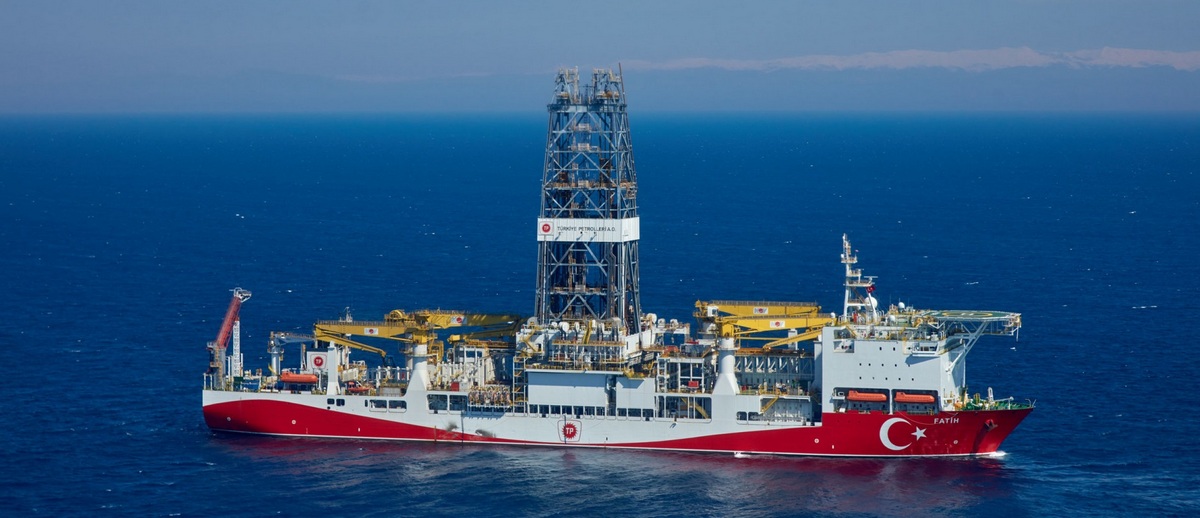
Türkiye is preparing to expand its energy cooperation with Syria into offshore oil and gas exploration, a development drawing close regional and international attention due to its potential impact on the fragile balance in the Eastern Mediterranean. Turkish Minister of Energy and Natural Resources Alparslan Bayraktar has confirmed that Ankara and Damascus are working toward an offshore exploration framework, with 2026 identified as the target year.
Bayraktar's remarks mark the clearest official signal so far that Türkiye's engagement with Syria is moving beyond land-based energy supply and infrastructure rehabilitation toward maritime activity. Until now, cooperation has focused on natural gas deliveries, electricity transmission, and the restoration of basic energy networks in northern Syria. Offshore exploration represents a qualitative shift, introducing legal and geopolitical dimensions that extend beyond bilateral technical cooperation.
Officials describe the process as being at an early, preparatory stage, centred on technical assessments and institutional coordination rather than defined exploration blocks or timelines. Even at this stage, however, the offshore dimension has elevated the file from a reconstruction-oriented initiative into a strategically sensitive domain.
Any Türkiye–Syria offshore arrangement would take shape in an Eastern Mediterranean environment already marked by overlapping maritime claims and unresolved jurisdictional disputes. Ankara's 2019 maritime delimitation agreement with Libya remains a central reference point, having reshaped Türkiye's interpretation of maritime boundaries and challenged existing regional frameworks.
At the same time, recent diplomatic momentum among Greece, Israel, and the Republic of Cyprus has reinforced trilateral formats focused on energy and security cooperation. Within this context, a prospective Türkiye–Syria offshore agreement is unlikely to be viewed in isolation. Regional actors are expected to interpret such a move as part of a broader contest over maritime influence and strategic positioning.
Even if framed by Ankara and Damascus as technical and economically driven, perception will matter. In a region where energy exploration is closely tied to sovereignty claims, the addition of a Syria–Türkiye offshore track risks further hardening positions and deepening existing fault lines. Offshore activity, by its nature, carries strategic signalling power.
For Ankara, the offshore track aligns with a longer-term ambition to move beyond transit toward exploration and production, extending its energy footprint southward. For Damascus, offshore cooperation offers access to investment and expertise, as well as a pathway back into regional energy calculations despite continued political isolation.
Whether the 2026 timeline proves realistic will depend on feasibility, security conditions, and regional responses. What is already clear is that Türkiye–Syria energy cooperation is no longer confined to stabilisation or reconstruction. With offshore exploration now openly articulated by senior officials, the energy file has become a strategic variable—one with the potential to further strain an Eastern Mediterranean landscape already shaped by competition and unresolved disputes.