
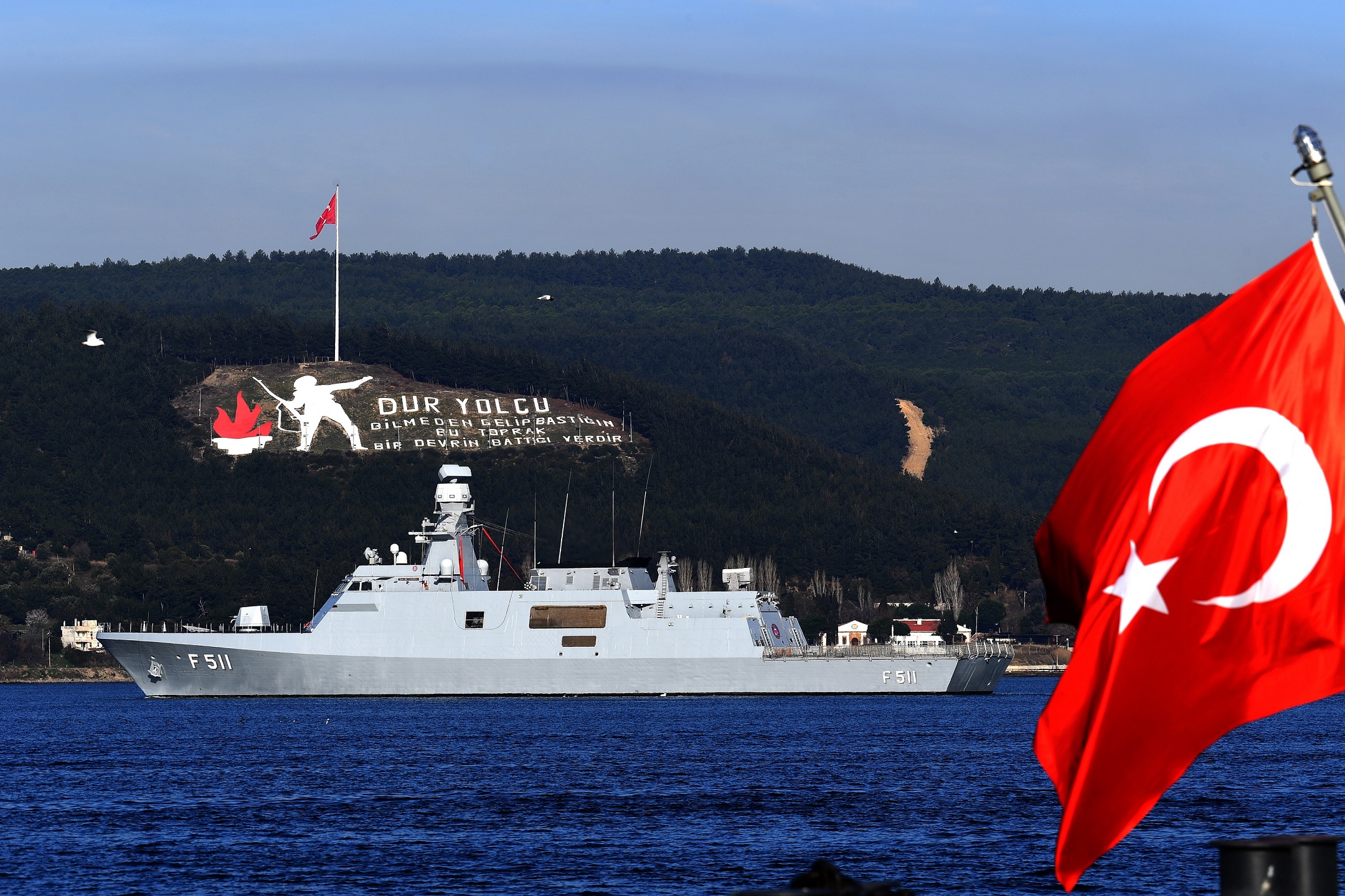
Türkiye has formally launched the initial construction phase of a new, large-scale aircraft carrier, marking a significant step in the country's long-term naval modernization strategy and signaling a shift toward sustained blue-water naval capabilities.
Speaking at a ceremony marking the commissioning of naval platforms and the start of new shipbuilding projects, President Recep Tayyip Erdoğan confirmed that construction processes have begun for an aircraft carrier measuring approximately 300 meters in length. The project is being presented by Turkish authorities as part of a broader effort to strengthen maritime deterrence, enhance operational reach, and deepen defense-industrial capacity.
A New Phase in Naval Modernization
Turkish officials describe the carrier project as the natural next stage following the introduction of TCG Anadolu, which entered service as Türkiye's largest naval platform to date. While Anadolu functions primarily as an amphibious assault ship with aviation capabilities, the new carrier is intended to offer a more advanced and dedicated air-sea integration platform.
According to official statements, the vessel will be domestically designed and built, reflecting Ankara's emphasis on reducing external dependency in critical defense technologies. Turkish shipyards, already involved in a wide range of naval programs, are expected to play a central role.
Capabilities and Strategic Rationale
Although detailed technical specifications have not yet been publicly disclosed, defense officials indicate that the carrier is expected to support fixed-wing and unmanned aerial platforms, alongside rotary-wing aircraft. Analysts note that Türkiye's rapid advances in naval drones and unmanned combat systems could shape the ship's eventual operational concept.
From Ankara's perspective, the project is framed less as an instrument of force projection and more as a platform for deterrence, crisis response, and maritime security in an increasingly contested regional environment. Turkish officials frequently point to expanding responsibilities in surrounding seas, protection of sea lines of communication, and participation in international missions as drivers of naval investment.
Defense Industry Dimension
The aircraft carrier initiative is also closely tied to Türkiye's defense-industrial strategy. Over the past decade, Ankara has prioritized indigenous production across naval platforms, sensors, propulsion systems, and combat management software.
Government messaging stresses that large-scale projects such as this are designed to create technological spillovers, develop human capital, and strengthen Türkiye's position as a competitive defense exporter — particularly in naval construction, where Turkish shipyards have already secured contracts abroad.
Regional and International Context
Türkiye's announcement comes amid a period of intensified naval modernization across multiple regions, as states invest in maritime capabilities to safeguard economic interests, energy routes, and strategic chokepoints. While aircraft carriers remain rare and resource-intensive assets, their symbolic and operational value continues to attract attention.
Officials underline that Türkiye's naval expansion is aligned with international law and defensive doctrines, emphasizing cooperation, deterrence, and stability rather than confrontation. Ankara maintains that a capable navy contributes to regional balance by discouraging escalation and supporting diplomacy.
Official Messaging
President Erdoğan framed the project as a reflection of Türkiye's long-term strategic vision, stating that the country is determined to strengthen its naval power through domestic means and sustained investment. He emphasized continuity, noting that the carrier project fits within a broader roadmap rather than representing a sudden shift in defense posture.
Outlook
Construction of a full-scale aircraft carrier is expected to be a multi-year endeavor involving phased development, testing, and capability integration. Defense experts caution that timelines will depend on technological choices, budgetary priorities, and evolving operational concepts.
Nonetheless, the announcement alone marks a milestone: Türkiye has publicly committed to joining a small group of states pursuing indigenous aircraft carrier capabilities, reinforcing its ambition to operate as a comprehensive maritime power in the decades ahead.